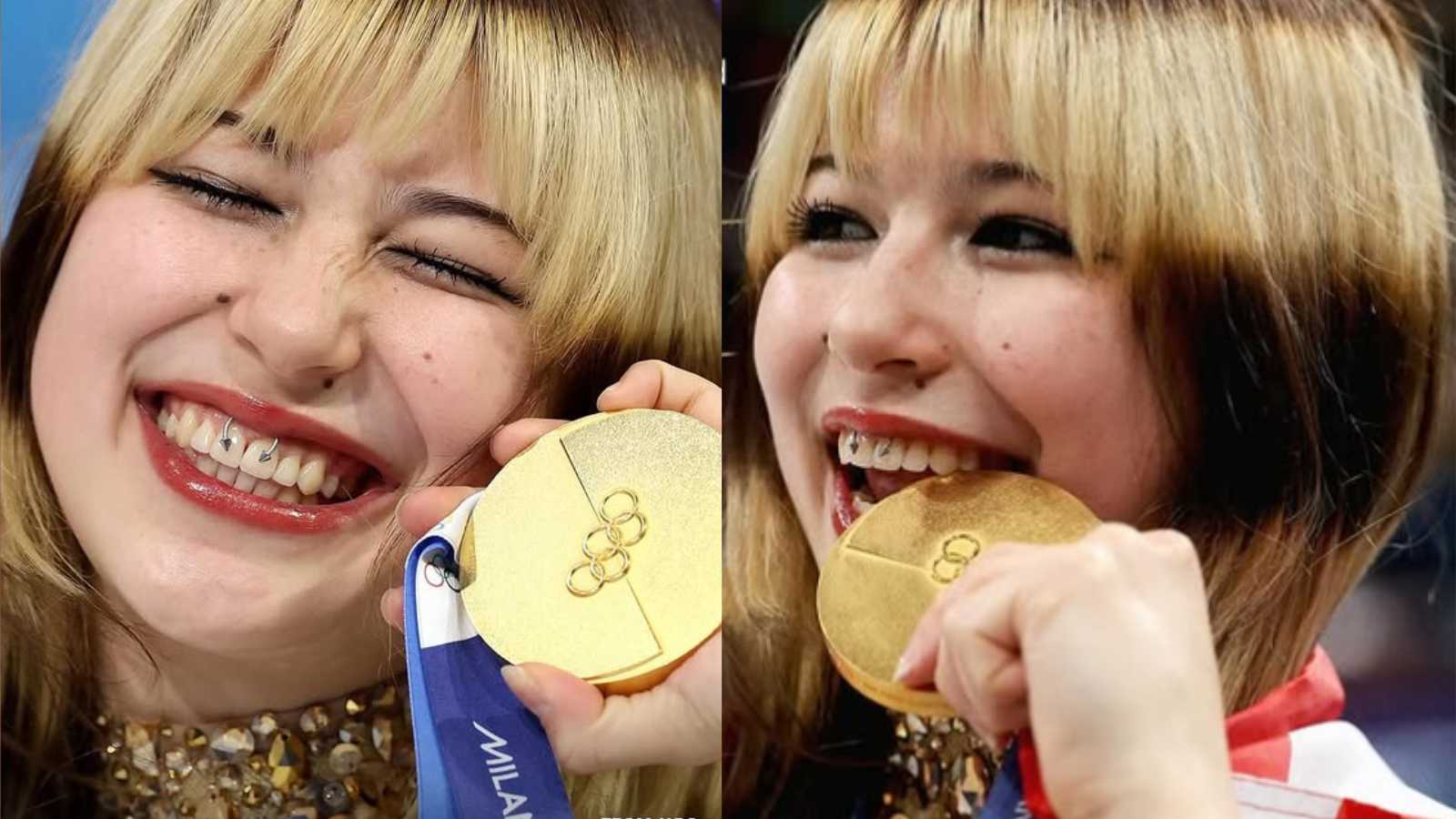
When Alysa Liu stepped onto the ice at the 2025 World Figure Skating Championships, she wasn’t just skating for medals. She was skating into a drought that had lasted more than two decades.
With her gold-medal performance, Liu became the first American woman to win a world title since Sara Hughes in 2002, a 23-year gap that had quietly weighed on U.S. women’s figure skating for years.
For longtime skating fans, the number 2002 carries enormous symbolic weight. That was the year Hughes became the last U.S. champion to win this title in Salt Lake City.
Liu’s win doesn’t just end a statistical drought. It marks a generational reset. But to understand why this moment matters, you have to understand who Alysa Liu really is and how improbable this comeback was.
From Teenage Prodigy to Olympic Finalist

Born in Clovis, California, in 2005, Alysa Liu grew up in a household unlike almost any other in elite sports. She is the eldest of five children raised by her father, Arthur Liu, a former political refugee from China who obtained U.S. citizenship and built his family through surrogacy.
Arthur Liu has been unusually open about his path to parenthood, explaining that he wanted a large family and used egg donors and gestational carriers. Alysa has described her upbringing as loving but unconventional, one in which independence and humor were central.
She began skating at age 5. At 13, she became the youngest U.S. women’s champion in history, winning the 2019 U.S. Championships and landing triple Axels, then rare in American women’s skating. At 14, she repeated as national champion and became the first American woman to land a quadruple Lutz in competition.
But here’s something many people forget: her early technical dominance came at a time when the international women’s field was being reshaped by Russian teenagers landing multiple quads. The scoring system had shifted to the International Judging System (IJS), introduced after the 2002 Olympic judging scandal. Technical base value now ruled.
Liu’s jumps were competitive, but the landscape was brutal.
The 2002 Benchmark
View this post on Instagram
Before Alysa Liu’s historic victory in 2026, the last time an American woman stood atop the Olympic podium in figure skating was at the 2002 Winter Olympics in Salt Lake City, and the name etched in history from that moment was Sarah Hughes. What makes her win especially memorable is that it was widely considered one of the biggest upsets in Olympic figure skating history.
Hughes, then just 16 years old, didn’t enter the competition as the top favorite. Skaters like teammate Michelle Kwan, a legend in American skating, and Russia’s Irina Slutskaya were widely expected to medal based on their technical prowess and consistent results leading up to the Games. But Hughes brought something rare to the ice: flawlessness under pressure.
After finishing fourth following the short program, Hughes delivered a near-perfect free skate on February 21, 2002, that featured seven triple jumps, including two triple-triple combinations. That technical difficulty, combined with artistic flow and solid performance quality, allowed her to tie with Slutskaya on points.
She won the gold on a tiebreaker for having won the free skate segment. Kwan and fellow U.S. contender Sasha Cohen both made costly mistakes in their free skate programs, opening the door for Hughes’s surge.
Her victory was remarkable not just because of the outcome, but because of how it happened: she became the first woman in Olympic history to land two triple jump-triple jump combinations in a four-minute free skate.
Her Olympic gold in Salt Lake City remained a defining moment in U.S. figure skating, one that stood unmatched for over two decades until Alysa Liu’s breakthrough in 2026. That’s the drought Liu just ended.
The Olympic Chapter and a Shock Retirement

At the 2022 Winter Olympics in Beijing, Liu finished sixth overall, solid, but not a podium breakthrough. And then she did something shocking. At just 16, she announced her retirement.
In April 2022, Liu posted on Instagram that she was stepping away from competitive skating, saying she had achieved her goals and was “happy and content” with her career. For a prodigy who had carried U.S. hopes for years, it felt abrupt.
Liu had often said she didn’t want skating to define her entire identity. She spoke about college, curiosity, and normal teenage experiences. In interviews, she projected a calm detachment rare in elite sports. Her retirement wasn’t dramatic; it was self-assured.
The Comeback Nobody Predicted

Then came the twist. After time away, Liu returned to training. The details of her re-entry were measured and low-key. No flashy announcement. No dramatic teaser. Just steady rebuilding.
Her skating style evolved. There was increased maturity in edge work and performance quality. Her jump content recalibrated strategically rather than chasing the most difficult elements.
And at the 2025 World Championships, it all came together.
Under the IJS scoring system, cumulative technical element scores (TES) and program component scores (PCS) determine outcomes. Liu’s programs reportedly combined clean triple Axels with refined choreography and improved transitions, an evolution from her earlier, jump-heavy layout.
The win wasn’t built on reckless difficulty. It was built on balance.
Did Stepping Away Make Her Better?

In American sports culture, retirement, especially early retirement, is often seen as failure or burnout. But what if Liu’s hiatus was strategic?
Many teenage champions peak too early under the intense physical demands of quads and triple Axels. Bodies change. Injuries mount.
By stepping away at 16, Liu avoided the burnout cycle that has ended many careers before age 20. When she returned, she wasn’t chasing validation. She wasn’t the “next big thing.” She was simply skating.
In a sport that often compresses careers into narrow teenage windows, Liu’s arc suggests something radical: longevity may require pause.
Arthur Liu’s parenting philosophy has long been unconventional. He encouraged independence and famously allowed Alysa to maintain perspective about wins and losses. She has described her siblings as grounding forces, reminding her that skating was just one part of life.
Unlike many elite skaters who relocate permanently to training hubs, Liu’s support structure remained anchored in family. That stability may explain her emotional composure during both retirement and return.
The Broader Impact on U.S. Figure Skating
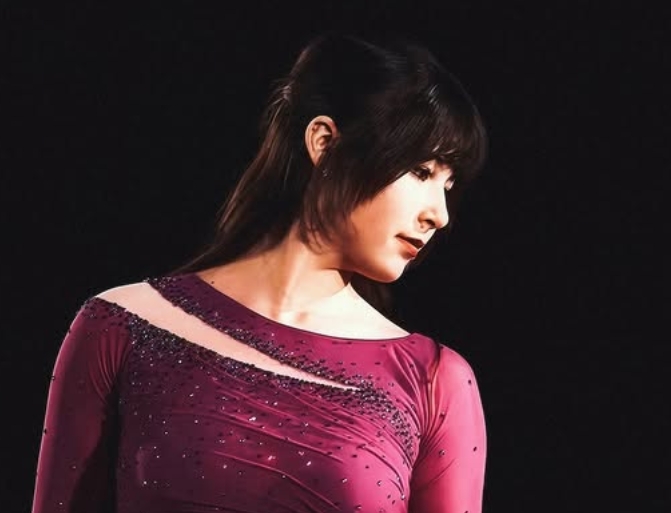
Ending a 23-year drought isn’t just symbolic. It reshapes funding, development pipelines, and belief.
U.S. Figure Skating relies heavily on international success to drive sponsorship and grassroots participation. A world champion creates ripple effects in local rinks nationwide.
Historically, U.S. women’s skating has surged after landmark wins: Peggy Fleming in 1968, Kristi Yamaguchi in 1992, Tara Lipinski in 1998, and Sarah Hughes in the early 2000s.
Liu now enters that lineage. But she does so in a sport transformed by the post-2002 scoring system, global technical arms races, and evolving athlete mental health conversations.
Why This Moment Feels Different
Sarah Hughes’s 2002 victory came at the end of an era. Alysa Liu’s 2025 victory may signal the start of a new one. Her career arc, prodigy, Olympian, retiree, comeback world champion, is almost unheard of in modern women’s figure skating. And perhaps that’s the real history she made.
Not just being the first U.S. champion since 2002. But proving that stepping away doesn’t mean stepping down. Sometimes, it means stepping back so you can return on your own terms.