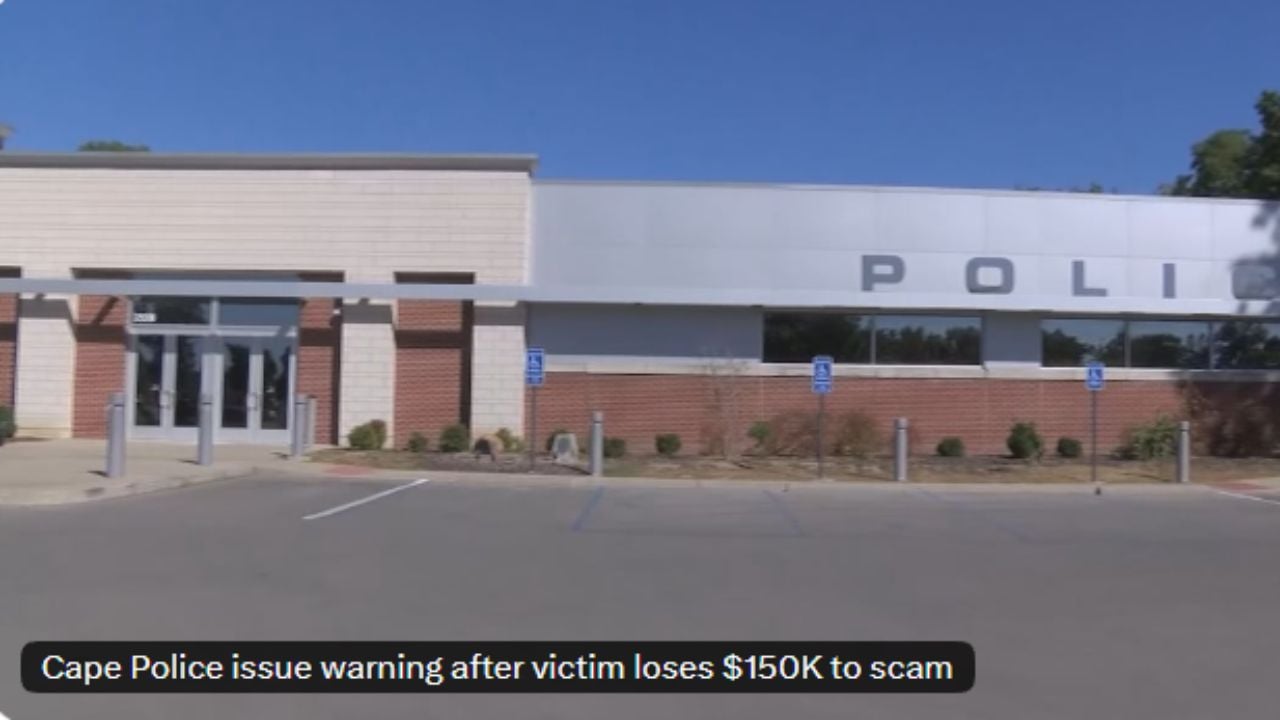
A Cape Girardeau victim lost more than $150,000 after a caller pretending to represent the Federal Trade Commission convinced them to send the money through three wire transfers, police said.
Cape Girardeau police became aware of the case on June 23, when the victim came to police headquarters to report the fraud, according to KFVS.
Police said the victim had been contacted several times by someone claiming to work for the FTC. The caller told the victim the money had to be sent as a security measure and would be returned once it was verified as safe.
Police said the caller claimed the money would come back through a cashier’s check delivered by the local police department. The victim completed three separate wire transfers before reporting the loss.
The Caller Used The FTC Name And A Police Promise
Cape Police issue warning after victim loses $150K to scam >>> https://t.co/duXI0fwOmk
— KFVS News (@kfvsnews) June 24, 2026
The caller’s use of the FTC name made the demand sound official. The claim that Cape Girardeau police would later deliver a cashier’s check made the story sound local and procedural.
The scammer created a fake security process, attached it to a real federal agency, and added a false role for local police in returning the funds.
KBSI reported that the suspect told the victim the money needed to be transferred as a security measure and promised the funds would be returned after being verified. Investigators said the three wire transfers totaled more than $150,000.
No arrest has been reported, and the investigation remains active.
Police Say The Wire Transfer Demand Was The Red Flag
Cape Girardeau Police Patrolman Bobby Newton said scammers are becoming more sophisticated and often pose as family members, government agencies, businesses, or financial institutions to gain trust.
Newton told KFVS that one of the biggest red flags is being asked to wire money or send funds over the phone.
He said people should verify who they are speaking with by contacting the person or business directly through a trusted phone number before sending money. Police also warned residents not to provide banking information, account numbers, or personal information to unsolicited callers.
The real FTC gives the same warning in direct terms. The agency says it will never threaten people, tell them to transfer money to protect it, or instruct them to withdraw cash or buy gold and give it to someone.
The Case Is Still Under Investigation
Authorities are urging residents to slow down before responding to any caller who says money must be moved immediately.
If a caller claims to represent a government agency, bank, business, or police department, residents should end the call and verify the claim through an official number they find themselves.