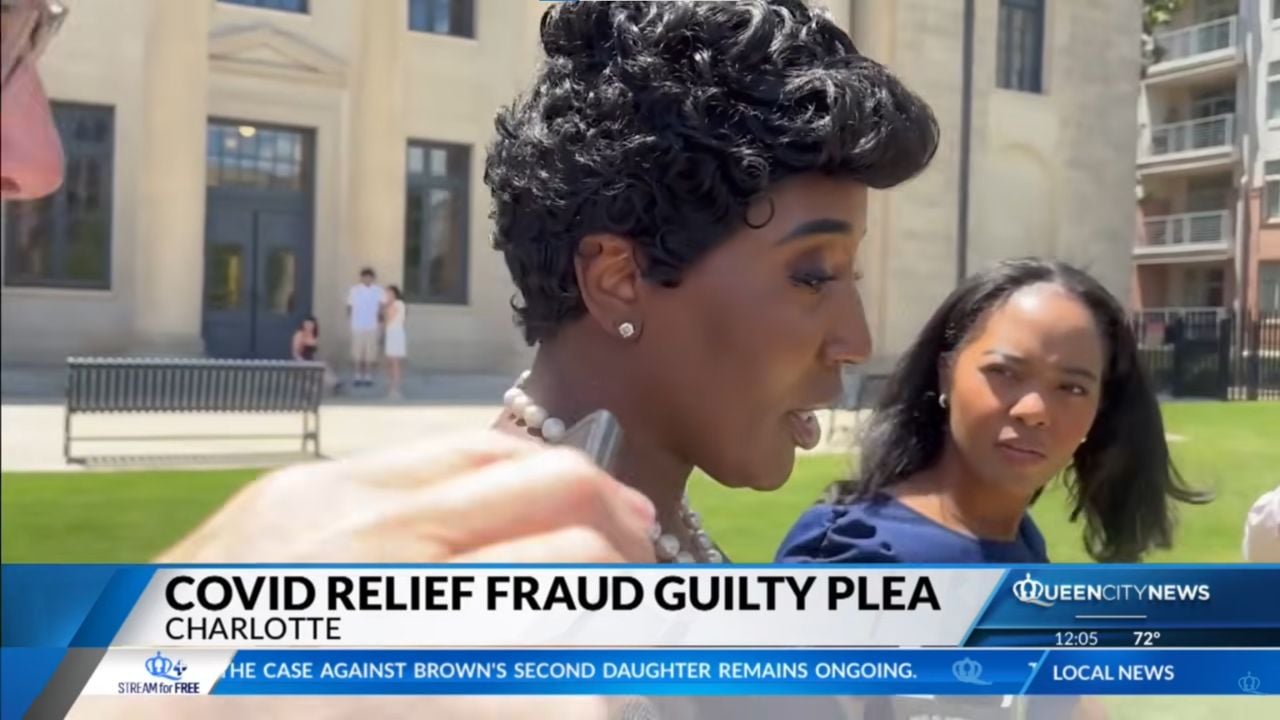
The daughter of former Charlotte City Council member Tiawana Brown has pleaded guilty in a federal COVID-19 relief fraud case, making her the final defendant in the family case to enter a guilty plea.
Antionette Rouse admitted she knowingly conspired with her mother, Tiawana Brown, and her sister, Tijema Brown, to commit wire fraud, according to court documents cited by WCNC Charlotte.
Federal prosecutors previously said the three Charlotte women submitted at least 15 applications for COVID-era relief funds and falsely obtained at least $124,165 through the Small Business Administration’s EIDL and PPP programs.
The relief money was meant to help businesses survive the pandemic. Prosecutors said the applications included false information or false documents, and that some of the money was later used for personal expenses.
Rouse Was The Final Defendant To Plead Guilty
Rouse falsely represented herself to receive more than $51,000 in COVID-19 relief money and used the funds on personal expenses, according to court records cited by WCNC and WSOC. Her guilty plea follows earlier pleas from Tiawana Brown and Tijema Brown, and WSOC reported that no one in the case had been sentenced yet.
What began as a federal indictment against three defendants is now a case in which all three women have pleaded guilty in connection with the COVID relief fraud allegations.
Prosecutors Said The Scheme Used PPP And EIDL Applications
The Justice Department announced the indictment in May 2025, saying the alleged scheme ran from April 2020 to September 2021. Federal prosecutors said the defendants conspired to defraud the SBA’s Economic Injury Disaster Loan program and Paycheck Protection Program by submitting applications for purported businesses.
The applications allegedly included false information, false documentation, fake tax forms, and other misrepresentations. Prosecutors also said the defendants submitted false statements to obtain forgiveness of PPP loans, and the indictment said the women falsely obtained at least $124,165 in pandemic relief funds.
The Indictment Said Money Went To Personal Expenses
According to the DOJ’s indictment announcement, the COVID relief money was deposited into bank accounts controlled by the defendants. Instead of being used for qualifying business expenses, prosecutors alleged that the money went toward personal expenses.
The indictment specifically alleged that about $15,000 was spent on a personal birthday party for Tiawana Brown. That detail became one of the most visible parts of the case because the programs were created to help legitimate businesses cover payroll and other qualifying expenses during the pandemic.
Tiawana Brown Pleaded Guilty Earlier This Year
Tiawana Brown, a former Charlotte City Council member for District 3, pleaded guilty in February to conspiracy to commit wire fraud, according to Spectrum News. At the time, Spectrum reported that Brown and her daughters had been accused of submitting at least 15 applications to receive more than $124,000 in COVID relief money.
Brown previously said the allegations concerned events that happened before she took office. Spectrum reported that she was elected in November 2023 and sworn in the following month, and she later lost her 2025 Democratic primary race for reelection.
Sentencing Still Comes Next
When the indictment was announced, prosecutors said wire fraud conspiracy and wire fraud each carried a maximum penalty of up to 20 years in prison. Sentencing will be decided by a federal judge after reviewing the plea agreements, court filings, federal sentencing guidelines, and other statutory factors.
The U.S. Attorney’s Office for the Western District of North Carolina said in the indictment announcement that COVID fraud cases remained a priority. At that time, the office said it had prosecuted 35 defendants since the CARES Act began and had obtained almost $18 million in judgments or settlements in COVID fraud cases. WSOC reported that sentencing had not yet taken place for the three defendants.