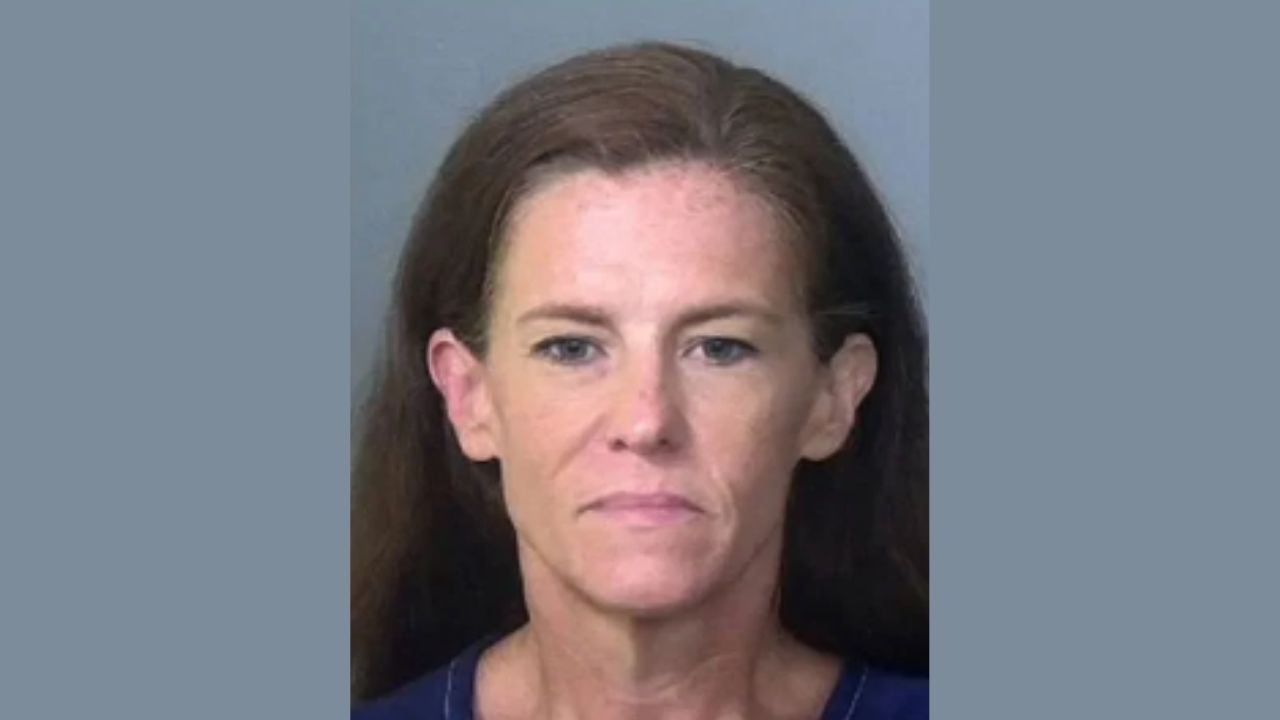
A Florida woman who worked with veterans through a public defender’s office is accused of using a jailed woman’s financial accounts to steal nearly $65,000 over a period of months.
Jessica Elizabeth McVay, 48, of Palmetto, served as a Veterans Affairs Coordinator for the Public Defender’s Office in Florida’s 12th Judicial Circuit, according to the Sarasota Police Department. The woman who reported the theft knew McVay through that work and said she had asked McVay to help manage her affairs after she was jailed in August 2025.
A Sarasota Police probable-cause affidavit estimates the loss at $64,923.85. Detectives said subpoenaed financial records showed payments to credit cards belonging to McVay, transfers to McVay, large cash withdrawals and other transactions involving the woman’s money while she remained incarcerated.
McVay was arrested Sept. 23 in Manatee County. Sarasota court records show case 2026 CF 008125 NC remains open, with a felony arraignment scheduled for Oct. 30. An arrest warrant lists five felony allegations, including grand theft, criminal use of personal identification information, unauthorized use of a credit card, scheme to defraud and communications fraud.
A Power of Attorney Became Part of the Investigation
View this post on Instagram
The financial relationship expanded in July when the woman asked McVay to help retain a private attorney, according to the police affidavit. The attorney was expected to cost $15,000.
Investigators said McVay told her that a power of attorney would be needed to make the arrangements. McVay allegedly went to the Manatee County jail with a notary, where the woman signed the document. The woman later told detectives she never received a copy and believed McVay would use the authority to handle her legal affairs.
The affidavit says investigators subsequently confirmed that the attorney the woman wanted was never retained. Police allege McVay instead “repaid” herself for the supposed attorney retainer through Zelle transfers from the woman’s money.
The woman was released from jail Aug. 13 and met with McVay the next morning to retrieve belongings, including her phone and financial cards. During that meeting, the woman told detectives that McVay claimed she had paid $100,000 to witnesses so they would not appear in court and said that was why the woman had been released.
Detectives later obtained the signed power-of-attorney paperwork from McVay’s attorney. The investigator wrote that the document did not authorize McVay to use the woman’s money for personal expenses such as her own credit-card payments or cash withdrawals.
The Consumer Financial Protection Bureau says an agent who accepts responsibility for managing another person’s money under a power of attorney is a fiduciary. Among the duties the agency identifies are acting in the owner’s best interest, keeping the owner’s money separate and maintaining accurate records.
Subpoenas Traced Payments to Cards in McVay’s Name
On Aug. 15, two days after her release, the woman received bank statements and began reviewing transactions made while she had been incarcerated. According to the affidavit, she initially identified approximately $58,000 in activity she believed was unauthorized.
The disputed transactions included large ATM withdrawals, retail purchases, credit-card payments and Zelle transfers. Police said some credit cards had carried no balance before the woman was jailed but later accumulated thousands of dollars in charges.
Detectives issued subpoenas to banks, lenders, retailers, a telecommunications company, Zelle and other businesses. The affidavit says the resulting records connected multiple payments from the woman’s accounts to financial products held solely in McVay’s name.
Merrick Bank records allegedly showed two payments from the woman’s debit card to McVay’s card totaling $1,094.57. Continental Finance records showed two credit cards that investigators said had been applied for solely by McVay, with the woman’s checking account connected to the payment portal. Payments to those two cards totaled $5,155.68.
Police said records from another lender showed two additional payments totaling $643.95 to an account solely in McVay’s name. A WebBank/Imagine Visa subpoena allegedly identified nine payments from the woman’s debit card between November 2025 and June 2026 totaling another $3,500.43.
A $50,000 CD Transfer Was Followed by Zelle Payments and ATM Withdrawals
The largest concentration of transactions identified in the affidavit occurred in July 2026.
Police said $50,000 was transferred from the woman’s certificate of deposit into her checking account on July 6. After that transfer, investigators allege McVay sent herself a total of $17,000 through 12 Zelle transactions.
The affidavit also says $16,000 was withdrawn through ATMs in the Palmetto area, where McVay lived. Investigators noted that the woman was still incarcerated when those transactions occurred.
The affidavit’s $64,923.85 estimated loss is broader than any single set of transfers. It reflects the investigation into bank activity, credit-card payments, cash withdrawals, purchases and other transactions police attributed to McVay.
The Arrest Warrant Uses Higher Dollar Thresholds Than the Police Announcement
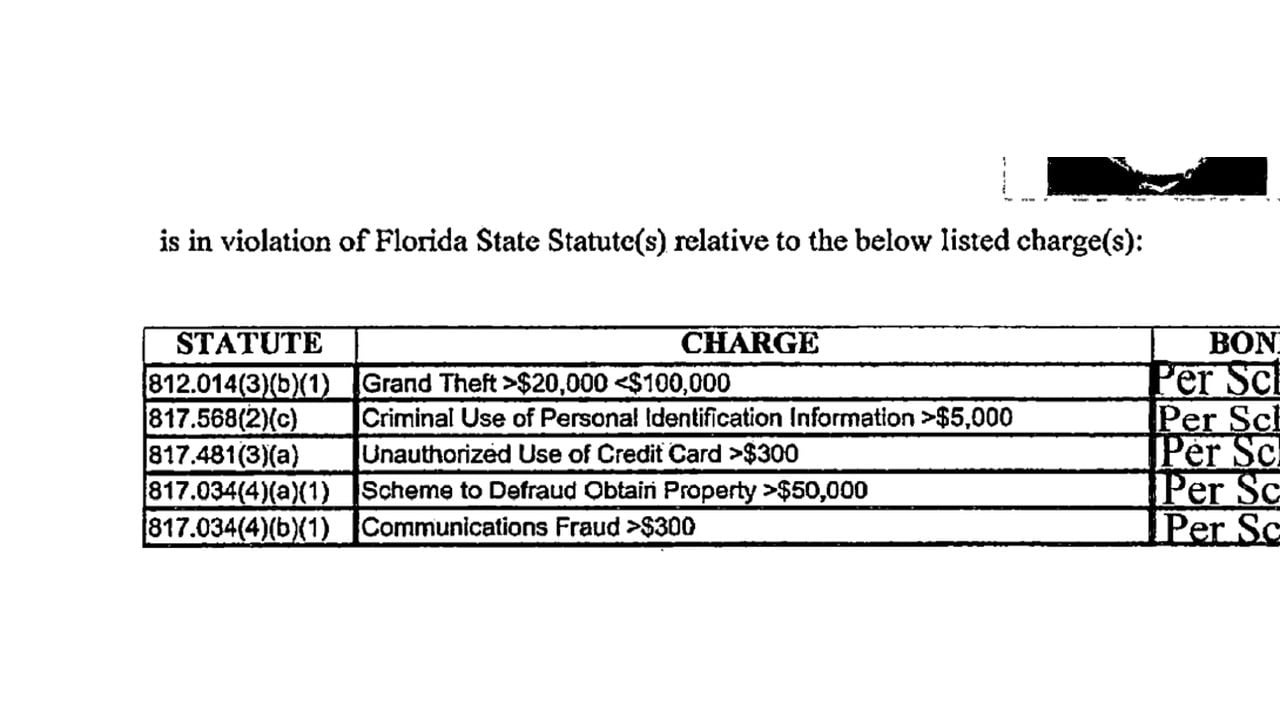
The court-issued arrest warrant uses different dollar thresholds from the Sarasota Police Department’s public announcement.
The warrant lists grand theft involving more than $20,000 but less than $100,000; criminal use of personal identification information involving more than $5,000; unauthorized use of a credit card involving more than $300; scheme to defraud involving more than $50,000; and communications fraud involving more than $300.
The department’s public post described several of those counts using lower dollar thresholds. Because the warrant is the court-issued document authorizing McVay’s arrest, the descriptions above follow the warrant rather than the public post.
Sarasota ClerkNet lists the case as open-active. The docket shows the arrest warrant was issued Sept. 23 and later executed, with a felony arraignment scheduled for Oct. 30.
A Judge Found Probable Cause and Set Bond on All Five Counts
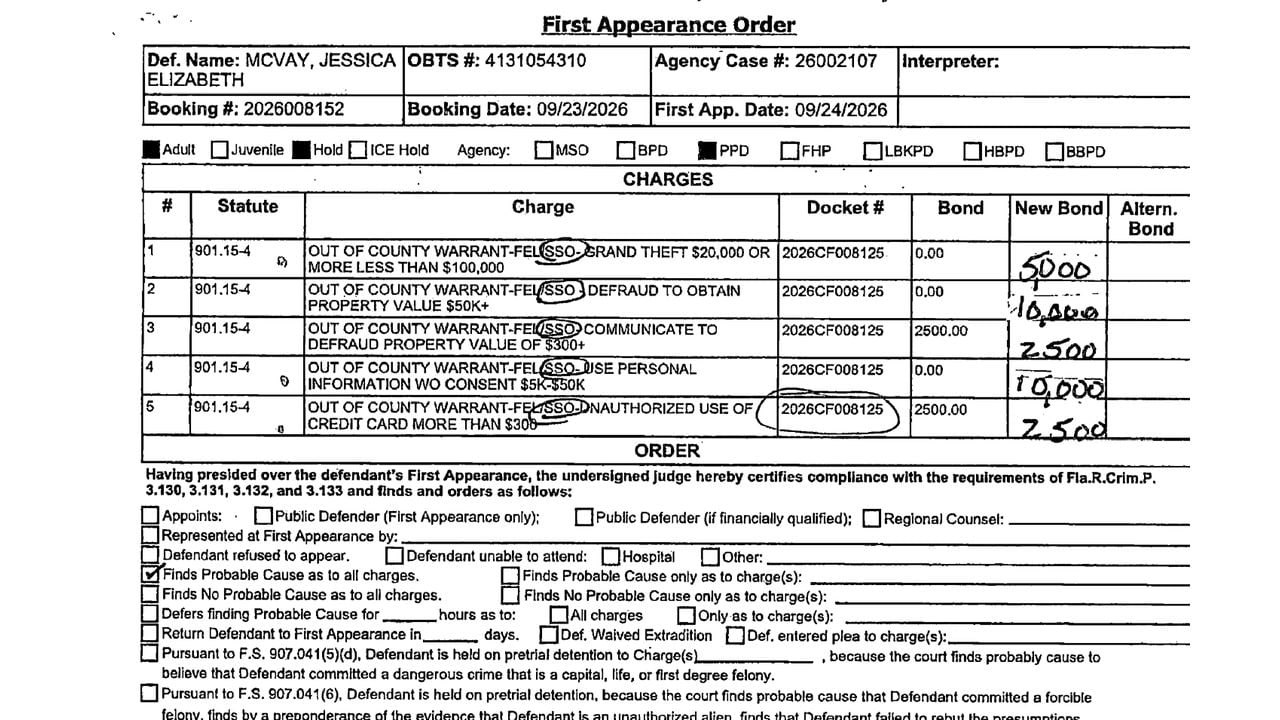
McVay appeared before a Manatee County judge on Sept. 24 because she had been arrested there on the Sarasota warrant.
The first-appearance order says the court found probable cause on all five charges. Handwritten bond amounts on the order set $5,000 on the grand-theft count, $10,000 on the scheme-to-defraud count, $2,500 on communications fraud, $10,000 on the personal-identification charge and $2,500 on the credit-card charge, for a combined $30,000.
An interagency message included in the court packet says McVay had bonded on the Sarasota warrant and that Sarasota authorities would accept the bonds set at first appearance.
Police Are Looking for Other Potential Victims
The 12th Judicial Circuit Public Defender’s Office serves DeSoto, Manatee and Sarasota counties. Sarasota police said McVay’s role there brought her into contact with the woman who later reported the alleged theft.
Police have asked anyone who believes they were victimized by McVay, along with people who worked with her and may have information relevant to the investigation, to contact Detective Ridge Collins at 941-263-6076.
McVay’s Sarasota criminal case remains pending.
CFPB Says an Agent Must Use the Money for the Owner’s Benefit
The CFPB says people considering help with banking can explore options ranging from informal assistance and convenience accounts to a power of attorney. The agency cautions that a person given power of attorney may be able to withdraw money from an account, making the choice of agent significant.
For unauthorized withdrawals or other electronic transfers, the CFPB says consumers should notify their bank or credit union promptly. For credit-card disputes, a separate CFPB guide says consumers should contact the card company right away and send a written billing-error notice within 60 days to protect their rights.