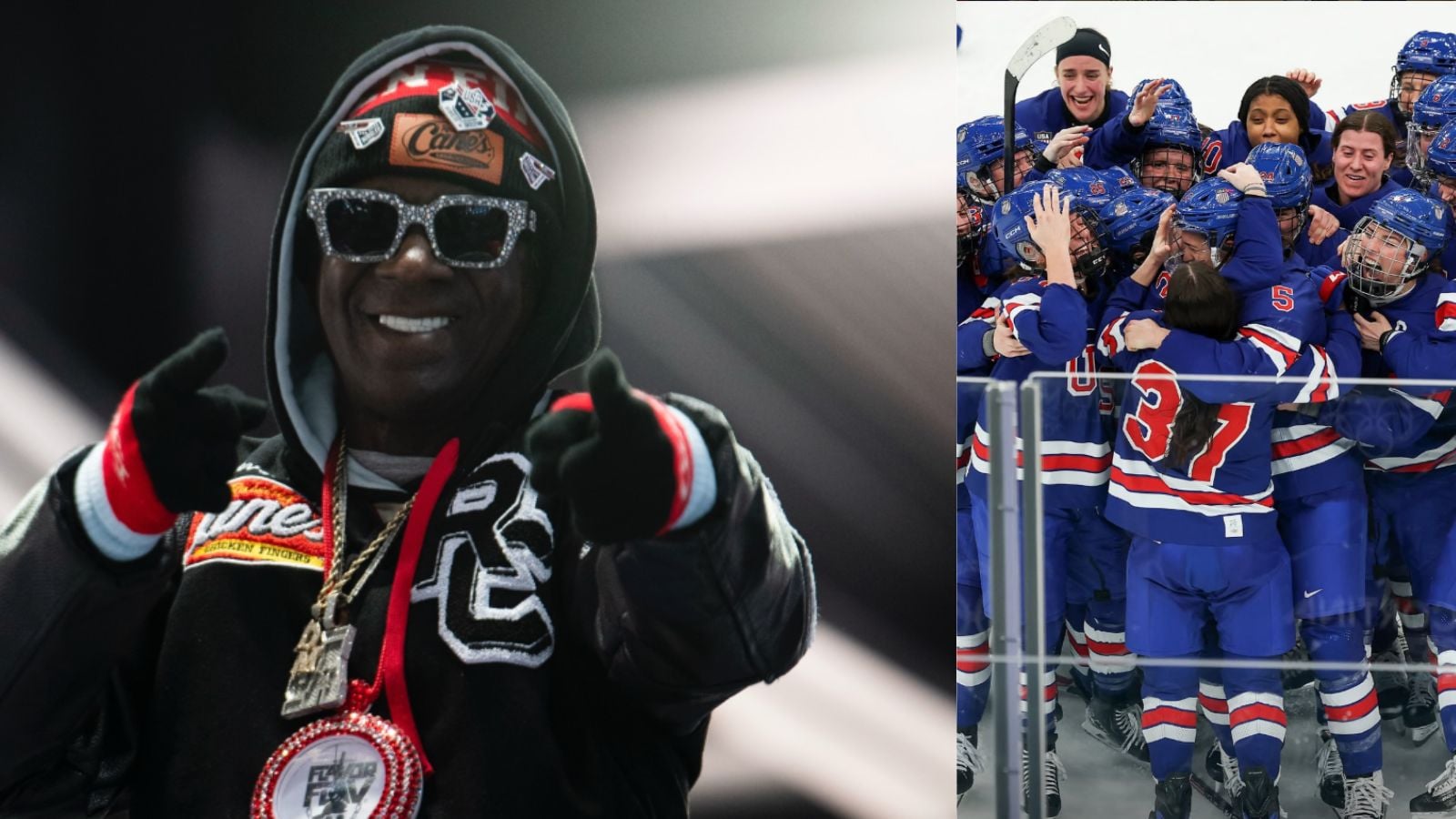
Flavor Flav started with a $50,000 GoFundMe ask. It’s now a $90,000 goal, and the page shows $50,798 raised as of Friday, Feb. 27, at about 7:00 a.m. ET.
Not for himself. Not for medical bills.
For a party.
The rapper launched a GoFundMe tied to a planned Las Vegas “She Got Game” weekend. It’s framed as a celebration and direct aid, and as something “meaningful financially for their future,” and for female athletes who “often” juggle extra jobs while training.
But the original $50,000 number isn’t the story. The story is that celebrity crowdfunding is quietly becoming a default way the internet “supports” public figures and their causes. In 2026. In America.
The sports part matters. The media part is the scandal. Because if the system were working, this wouldn’t need to be a GoFundMe at all.
The Pattern We Pretend Not to See
This isn’t “one quirky fundraiser.” It’s the latest installment in a familiar cycle: women’s sports wins something big, and the money arrives afterward as a reaction. Not as infrastructure.
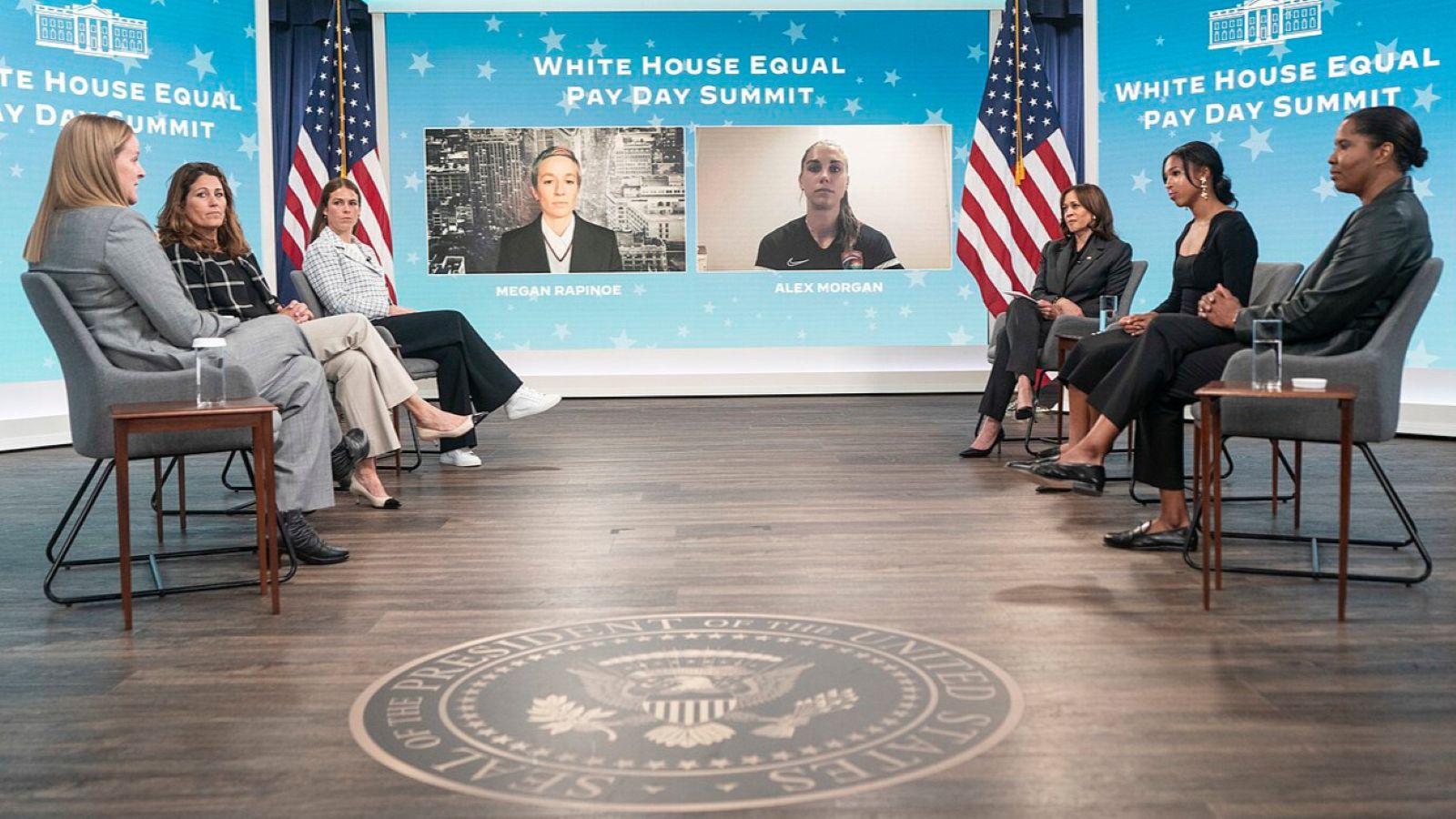
U.S. women’s soccer had to fight its own federation for years before it reached an equal pay agreement. Women’s hockey has had repeated fights over resources and support. The WNBA pay gap conversation resurfaces every offseason because the math keeps mathing.
So yes, Flavor Flav raising money for a victory party is entertaining. It’s also an indictment. When a celebrity GoFundMe becomes the headline mechanism for “supporting athletes,” that’s not a heartwarming story. That’s a broken pipeline dressed up as vibes.
Meet the Gold Medalist Who Suddenly Needed a Car
This is how the modern fame economy works now: a celebrity post, a brand reply, a story becomes “solved” in public.
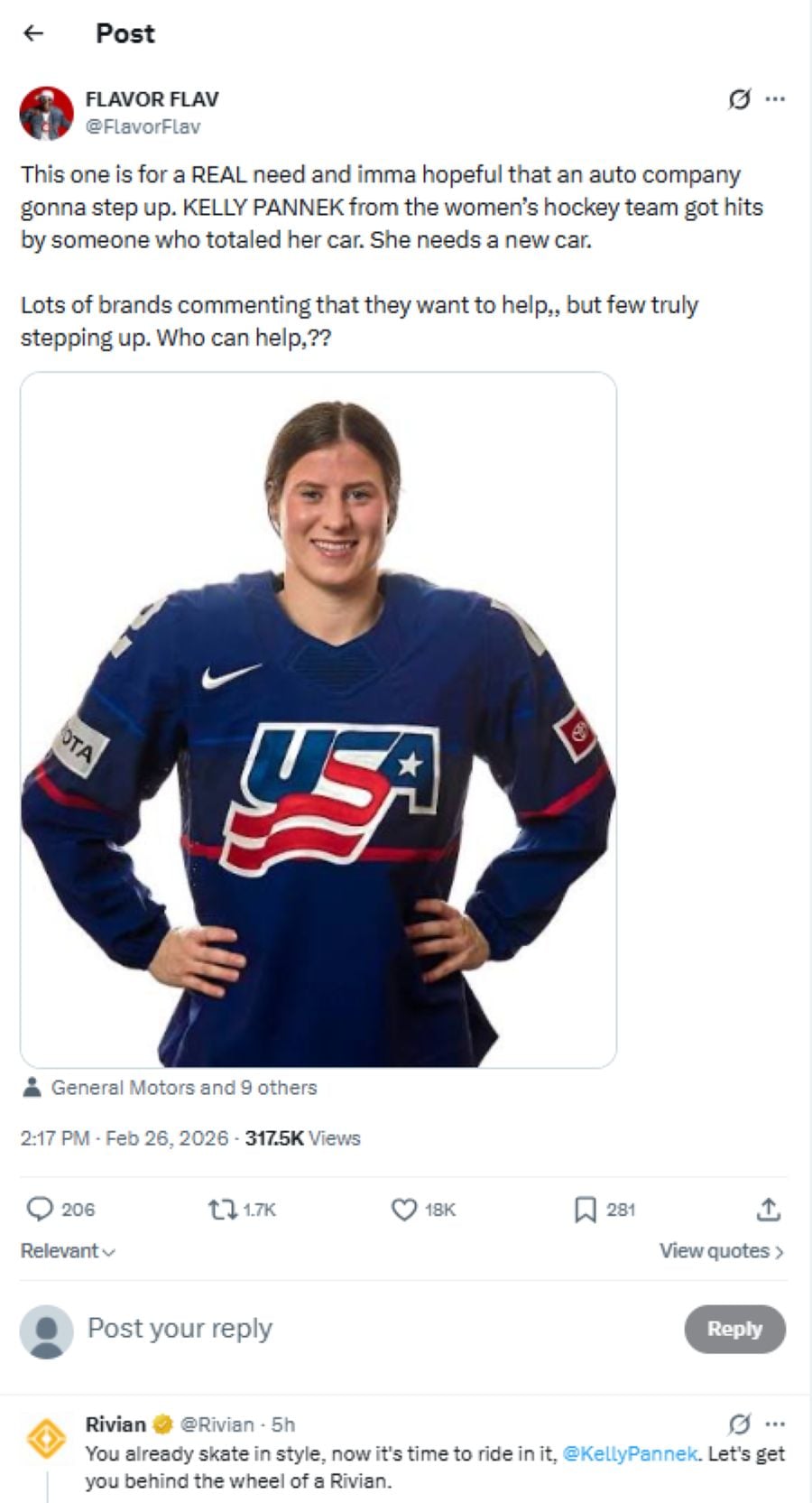
This week, Flavor Flav also used his platform to try to get a new car for Kelly Pannek, a U.S. women’s hockey gold medalist whose representative confirmed her car was totaled in a recent accident. Flavor Flav posted that she needed help. Then brands started showing up in the replies, including Rivian, which publicly offered to get her “behind the wheel” of one of its vehicles.
That moment is being framed online as another example of Flav being Flav. Loud. Viral. Weirdly effective.
But read what it actually implies. A gold medalist’s real-life problem only became “brand-solvable” once it was routed through a celebrity megaphone. Not USA Hockey’s sponsorship machine. Not the Olympic committee’s glossy partner ecosystem. A rapper and a comment section.
Maybe insurance covers it. Maybe it doesn’t. Either way, it shouldn’t take a celebrity post to turn a gold medalist’s everyday problem into a brand’s PR opportunity.
What Olympic Gold Actually Pays
Here’s the part people don’t like to say out loud because it ruins the viral moment. Team USA medal bonuses exist. They’re meaningful. They’re also not a salary.
The U.S. Olympic and Paralympic Committee’s Operation Gold bonus for a gold medal has been widely reported at $37,500. It’s a one-time performance bonus. It does not function like the league paychecks fans subconsciously assume exist when they hear “gold medalist.”
And that’s why Ross Stevens’ new program landed like a thunderclap. Beginning with the 2026 Milan Cortina Olympics, every U.S. Olympic and Paralympic athlete is slated to receive a $200,000 financial security award, structured as long-term support, with part paid out immediately and part deferred to benefit family members after death. That’s not “the government finally paying athletes.” It’s private money solving a public prestige problem.
The most powerful sports ecosystem on earth still needed a billionaire’s personal intervention to offer athletes something resembling baseline security.
When the Brands Finally Show Up

The men’s hockey team beat Canada in overtime for gold and was celebrated at the State of the Union, with several players present in the gallery. Meanwhile, the women’s team declined the State of the Union invite due to previously scheduled academic and professional commitments, according to reporting. Around the same swirl, a video circulated of President Donald Trump joking that he would “probably” be impeached if he didn’t invite the women too.
Then Flavor Flav offered what institutions didn’t. A high-profile weekend. Hotel partnership muscle. A simple hook the internet understands. “We’re celebrating you.”
And that’s the tell. Corporate America didn’t need persuasion to care. It needed a moment it could safely monetize. When Flav made the optics easy, brands could join without having to explain why they weren’t already there.
What the Party Doesn’t Answer
The Vegas celebration will happen. The photos will be posted. Sponsors will get their content. Rivian will get its moment if the car piece goes through.
As of Friday morning, the GoFundMe page showed the campaign had already cleared its original $50,000 target and moved to a $90,000 goal. The money didn’t appear because an institution wrote a check. It appeared because thousands of people clicked “donate.”
And then what?
What happens the next time a women’s team wins gold and the question is not “where’s the party,” but “where’s the money to keep training,” “where’s the childcare,” “where’s the long-term health support,” “where’s the post-sport runway.”
The real scandal isn’t that Flavor Flav asked strangers for $50,000. It’s that the ask can expand to $90,000 and still feel like the default way elite athletes get supported.
So here’s the uncomfortable question. If the only time the system moves is when a celebrity makes it embarrassing not to, what exactly are we celebrating when we celebrate Olympic gold?