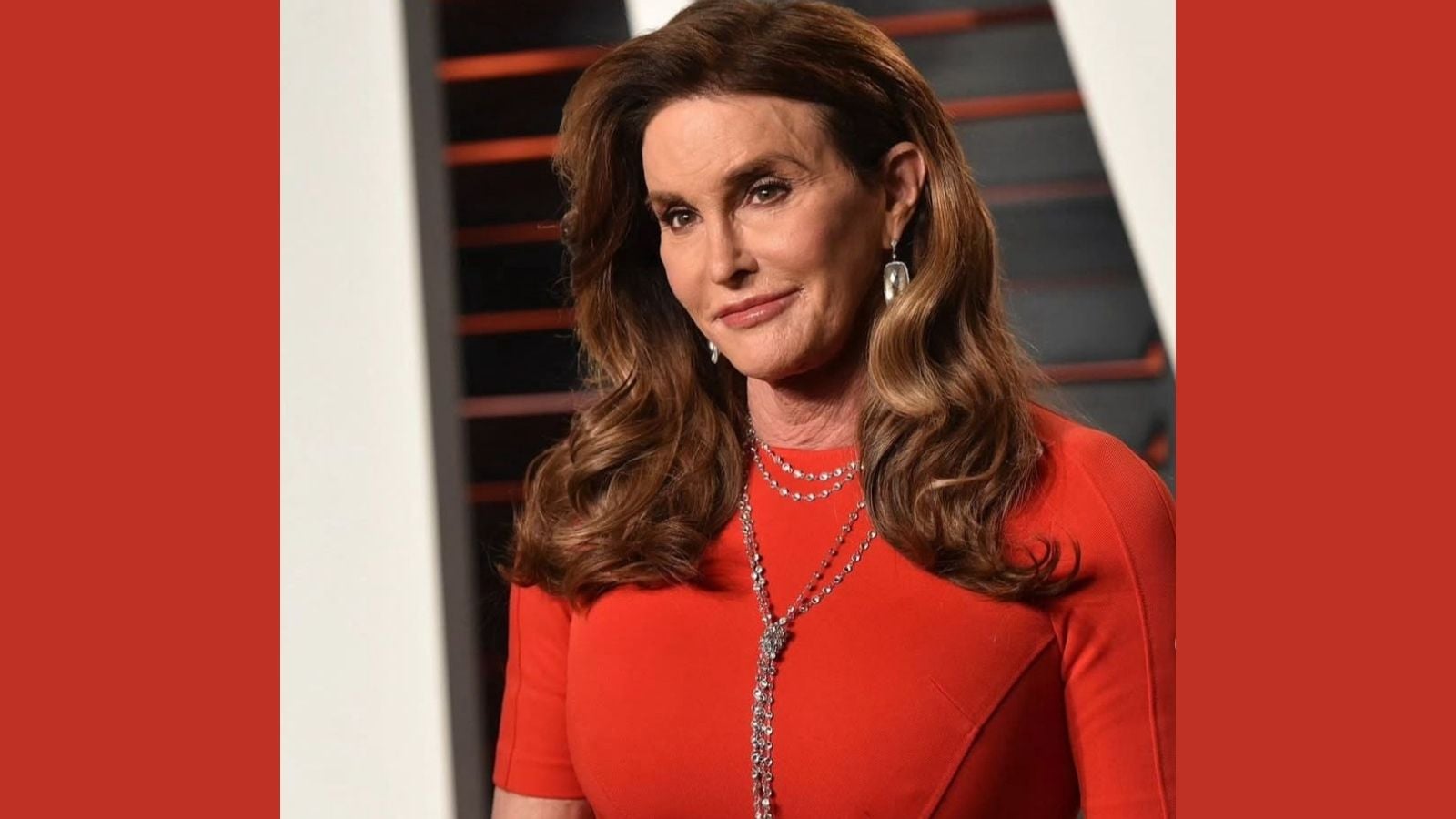
Caitlyn Jenner just opened up about receiving a renewed U.S. passport stamped with an “M,” for male. And yes, it is exactly as messy as it sounds. The same Caitlyn Jenner who has spent years publicly backing Donald Trump is now dealing with a policy he signed on day one of his return to office, one that tells the federal government to recognize only two immutable sexes. You really could not pitch this in a writer’s room without someone calling it too on the nose.
Naturally, The View got involved, and Ana Navarro did not show up with sympathy; she showed up with heat. In all honesty, when Jenner’s story came up, it was clear it was never going to be a quiet one that would roll over or get buried. And Ana Navarro proved me right; she came in sharp, unapologetic, and fully ready to turn what could have been a niche policy discussion into a full cultural moment.
She told viewers there is a “special place in hell” for people who only care about themselves, and suddenly this was no longer just a passport issue. It became a full-blown cultural moment with a live studio audience and zero background music for sympathy.
So What Actually Happened With the Passport?
Jenner explained during an April 7 appearance on Tomi Lahren’s podcast that she followed the rules, submitted her updated documents, including an amended birth certificate, and still got a passport listing her as male. It was not a clerical error, nor was it a delay, it is a final document that directly contradicts how she has lived publicly for years.
For someone who has been one of the most visible trans figures in pop culture, it is not just frustrating; it is a direct collision between identity and policy; one that is inconvenient, and something I call, a headline fuel.
She framed it as a “safety issue”, saying she can no longer travel internationally with a document that puts her in potentially dangerous situations. So now you have a global celebrity, someone used to moving freely across borders, suddenly grounded by policy. That alone would be a story, but it gets sharper the deeper you go.
She Went Straight to Mar-a-Lago and Still Got Left on Read
Here is where the plot thickens in a way that feels almost cinematic. Jenner revealed she went to Mar-a-Lago about two months before that interview, wrote a personal letter to Trump, and had the Secret Service deliver it directly to him. Now, this was not a tweet into the void or a staff email; this was VIP access in action.
And yet, nothing. No reply, no follow-up, no acknowledgment, just silence. Jenner brushed it off by saying he is busy and that her issue is probably not a priority, adding that she still loves him and supports what he is doing. It is a bold stance, especially when the policy in question is the very thing keeping her at home.
The View Hosts Said What a Lot of People Were Already Thinking Out Loud
When this story hit The View, Navarro did not tiptoe around it. She went straight for accountability, even pulling a 2015 quote from trans advocate Janetta Johnson, who described Jenner as a “rich white b—-” who could pay for whatever she needed. Navarro used that quote to underline a bigger argument, that Jenner has benefited from the visibility connected to being trans, while doing little to advocate for the broader trans community.
The point landed hard because it reframed the story. This was no longer just about one passport; it was about privilege, platform, and what happens when those things are not used as others think they should be. Navarro made it clear she agreed, framing Jenner’s situation as less about bad luck and more about choices catching up in real time.
She wrapped up with a pointed reminder that not everyone dealing with this passport nightmare has a celebrity’s bank account, a direct line to the White House, or a standing invitation to Mar-a-Lago, and that the safety concern Jenner described is a daily reality for trans people with far fewer options.
The panel did not exactly rush to comfort her either. Alyssa Farah Griffin a cohost and former Trump White House staffer, joined in, calling the passport policy a “stupid policy” that does nothing to improve people’s lives other than to embarrass them, while also noting that Jenner still has nothing but warm words for the president whose executive order started all of this.
Whoopi, meanwhile, went straight for the gut. Her question was simple: did Jenner really think she was going to be the exception? Because the table had been saying it for a while now. When you vote for something, it tends to show up at your door too.
The overall vibe was less sympathy, more side-eye, with a clear message that you cannot cheer for a system and then act shocked when it works exactly as designed.
A Legal Roadblock at the Highest Level
The executive order Trump signed in 2025 was not vague or symbolic; it explicitly directed federal agencies to define sex as determined at conception. The State Department followed that directive by ending the ‘X’ option and suspending gender‑marker changes that don’t match sex assigned at birth, and in November 2025, the Supreme Court allowed the policy to take effect nationwide after lower courts tried to block it. So what Jenner experienced is not a glitch; it is policy in motion.
That is what makes this hit differently. Jenner is not dealing with a one-off issue; she is facing the same wall as countless others, just with a bigger spotlight. The difference is that she has proximity to power, and even that has not translated into a solution.
The Real Tension Here Is Visibility Versus Responsibility, and It Is Getting Uncomfortable
Jenner’s public identity has long been tied to trans visibility, a role that carried real cultural weight when she first stepped into it. But visibility without advocacy is now under a microscope, especially when her political support aligns with policies that restrict the very community she represents. That contradiction is what people are reacting to, not just the passport itself.
Navarro’s critique landed because it tapped into that tension. It is one thing to be visible; it is another to use that visibility to protect or expand rights. When those two things do not line up, moments like this stop being private problems and start becoming public debates.
To be fair, Jenner did write that letter to Trump explaining how the passport policy was affecting her and, in her own words, “a lot of other people” too, which technically counts as thinking beyond herself. The problem is that, when the community at the center of this conversation has consistently said she has not advocated hard enough, one letter to the president who created the problem in the first place is a tough thing to hang a defense on.
Caitlyn Jenner is in SHOCK, after she can no longer travel internationally because her renewed passport came back with a male gender marker under Trump’s policy…
and even wrote Trump a letter asking for help… which he hasn’t responded.
Oh wow… you mean the policies built on… pic.twitter.com/5ETLnQsqBi
— Jesus Freakin Congress (@TheJFreakinC) April 18, 2026
There Are Still Questions, and They Are Not Small Ones Either
No one knows if Trump has actually seen the letter or if it is sitting somewhere in a stack of unanswered requests. What is worth noting is that Jenner has company in this.
Hunter Schafer, who many know from Euphoria, has also spoken out after her passport was changed to reflect her sex at birth rather than her gender identity. But the celebrity stories are really just the visible tip of something much larger. As far back as 2021, the Williams Institute estimated that roughly 476,000 transgender adults in the U.S. were already navigating life without ID documents that reflected who they actually are.
In light of all this, the bigger question is whether Jenner’s stance will change if her situation does not. Right now, she is holding firm in her support, even as the consequences play out in her own life.
The Cultural Takeaway Is Loud, Messy, and Impossible to Ignore
This is no longer just about one celebrity’s travel plans. It is about what happens when political loyalty collides with personal reality in the most public way possible. Jenner’s story has become a case study in how far influence actually goes when it meets a system that is not designed to bend.
And if there is one thing this entire saga has proven, it is that proximity to power does not always equal protection from it. In 2026, even the most famous faces can find themselves on the outside of the rules they once supported. The only question now is whether that realization changes anything, or if the story just keeps writing itself.