
This isn’t just another tabloid “Gotcha” moment. When the 44th President of the United States, a man known for his calculated, lawyerly precision, looks into a camera and says, “They’re real,” the world doesn’t just listen. It vibrates.
But before you prep your backyard for a silver-disc landing, we need to talk about the massive “conspiracy” Obama actually debunked, the data the Pentagon is terrified of, and the contrarian truth about why we want to believe in little green men more than ever.
What Barack Obama Actually Said In His Own Words
In a widely circulated interview clip, Barack Obama addressed the question of aliens directly and humorously. When asked, “Are aliens real?” he responded:
“They’re real, but I haven’t seen them, and they’re not being kept in Area 51. There’s no underground facility. Unless there’s this enormous conspiracy, and they hid it from the President of the United States.”
He followed that up with a joke about entering the office. When Barack Obama first stepped into the Oval Office in 2009, he didn’t just worry about the Great Recession or healthcare. As any red-blooded American raised on The X-Files, he had one burning question for his Joint Chiefs: “Where are the aliens?” “I was like, ‘Alright, is there a lab somewhere where we’re keeping the alien specimens and spaceship?'” he joked.
@briantylercohen 👀
Obama did not claim extraterrestrials are visiting Earth. He clarified that there is no secret alien warehouse at Area 51 and no underground holding facility hidden from public view. His tone suggested skepticism toward conspiracy narratives, while acknowledging the long-running public fascination with them.
During a 2021 appearance on The Late Late Show with James Corden, Obama acknowledged that when it comes to UFO footage collected by the military, “there is footage and records of objects in the skies that we don’t know exactly what they are.”
He reiterated similar remarks on The Ezra Klein Show podcast, explaining that certain aerial phenomena remain unexplained because the U.S. government lacks sufficient data to determine their origin.
That statement was measured, careful, and consistent with official Pentagon language. It did not confirm extraterrestrial life.
But it did confirm something equally provocative: even the most powerful government in the world does not have all the answers. And for many Americans, that uncertainty is fuel.
America’s Fascination With UFOs, By the Numbers
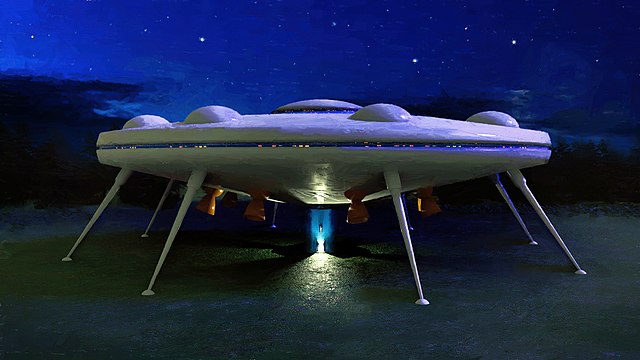
Belief in extraterrestrial life is not fringe in the United States.
According to a 2021 Pew Research Center survey, about 65% of Americans believe intelligent life exists on other planets. Roughly 51% believe UFO sightings are evidence of intelligent life outside the Earth, while 47% say they are not.
A 2023 Gallup poll found that 41% of Americans believe some UFO sightings are alien spacecraft, a record high since Gallup began asking the question in 1973.
That’s not a conspiracy subculture. That’s mainstream curiosity.
Interestingly, belief spans political lines. Democrats and Republicans report similar levels of openness to extraterrestrial possibilities, though younger Americans are significantly more likely to believe aliens exist compared to those over 65.
This isn’t just about science fiction. It’s about trust, transparency, and technology.
The Pentagon’s UAP Reports. What Do We Actually Know?
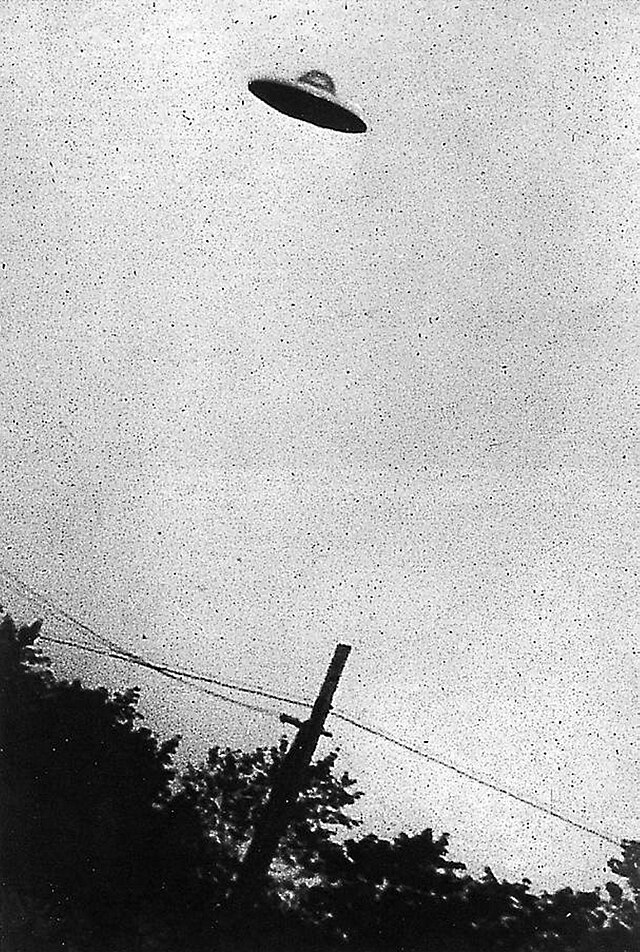
In 2021, the Office of the Director of National Intelligence released a preliminary report analyzing 144 UAP incidents observed by U.S. military personnel between 2004 and 2021. Only one was conclusively explained (a deflating balloon). The rest remained unresolved due to insufficient data.
The report did not attribute the phenomena to extraterrestrials. Instead, it outlined five possible explanations. Airborne clutter (balloons, debris), natural atmospheric phenomena, U.S. government or industry technology, foreign adversary systems, and “other” (a placeholder category for insufficient information)
In 2023 and 2024, NASA and the Pentagon’s All-domain Anomaly Resolution Office (AARO) released additional updates, stating there is no evidence that UAPs are extraterrestrial in origin. NASA’s independent study team emphasized that most sightings likely stem from sensor limitations, optical illusions, or classified foreign technology.
Still, the lack of definitive answers keeps the door open. And that open door is what Obama acknowledged.
Why Obama’s Words Carried Weight
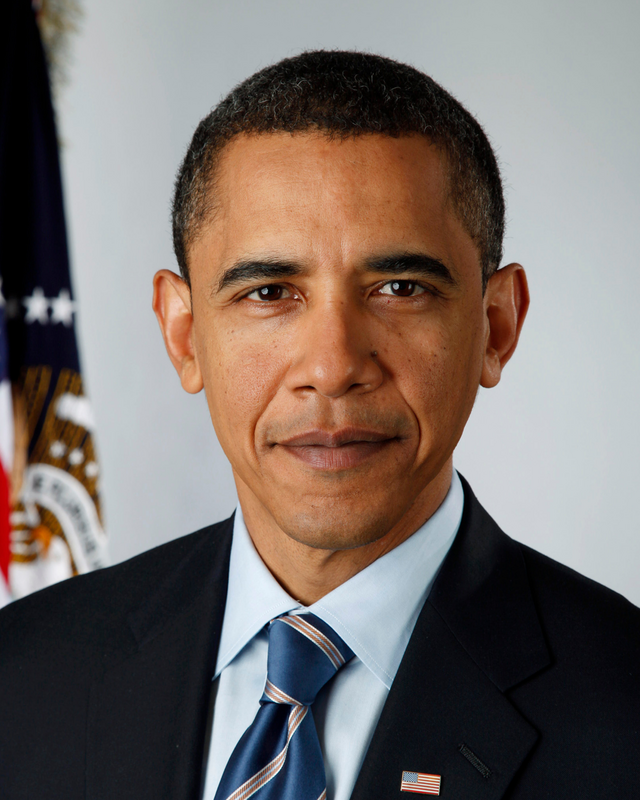
Barack Obama is not just any former president. He remains one of the most globally recognized political figures of the 21st century. A constitutional law scholar and Nobel Peace Prize recipient, his communication style is typically cautious and grounded in evidence.
When he speaks about uncertainty, people listen.
What makes his comments compelling is not sensationalism, but tone. He did not dramatize. He did not speculate wildly. He simply stated that there are objects observed by trained military personnel that remain unidentified.
That subtlety matters. It shifts the conversation from “Are aliens here?” to “Why don’t we fully understand what’s in our airspace?” That’s a national security question, not a sci-fi one.
Is Alien Talk Distracting Us?
Here’s a perspective not often explored:
Some analysts argue that the focus on extraterrestrials distracts from more grounded concerns, such as drone surveillance, foreign military testing, or gaps in U.S. aerospace detection systems.
If unidentified objects are advanced foreign technology, that would be a far more immediate geopolitical issue than aliens. Others suggest that public fascination with extraterrestrials reflects deeper societal themes: distrust of institutions, desire for cosmic meaning, or even anxiety about technological acceleration.
In that sense, alien theories are less about little green men and more about how people process uncertainty. The idea of something “out there” gives us a common mystery to solve together.
What Most Americans Don’t Realize About UFO History
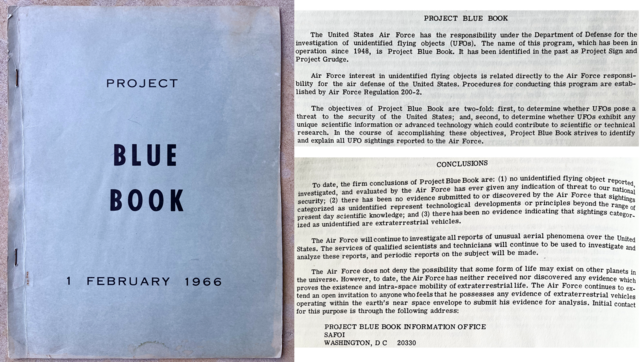
The modern UFO conversation did not start with Obama or even with the 2021 Pentagon report.
In 1947, the U.S. Air Force launched Project Blue Book, investigating more than 12,000 UFO sightings between 1952 and 1969. The program concluded that most sightings were misidentified aircraft, weather phenomena, or hoaxes.
However, roughly 701 cases remained unexplained at the time of closure. That lingering ambiguity has fueled decades of speculation.
But importantly, “unexplained” does not mean “extraterrestrial.” It means insufficient data. And that nuance is often lost in viral headlines.
Curiosity Without Conspiracy

Barack Obama’s acknowledgment did not validate alien invasion theories. It validated curiosity. Perhaps the most radical stance is admitting what we don’t know, without jumping to conclusions.
The skies still hold mysteries. Science is still investigating. And Americans remain fascinated.
Maybe the most honest answer isn’t “Yes, aliens are here.” It’s: “We’re still looking.” And maybe that search, for answers, for meaning, for understanding, is what keeps the conversation alive.
If the government announced tomorrow that we’ve made contact, would you be terrified, or would you finally feel like the universe makes sense? Do you think the “UFO” craze is just a distraction from real-world problems, or are we on the verge of the biggest discovery in history?
Drop your theories in the comments. We want to hear the wildest and most logical takes you’ve got.