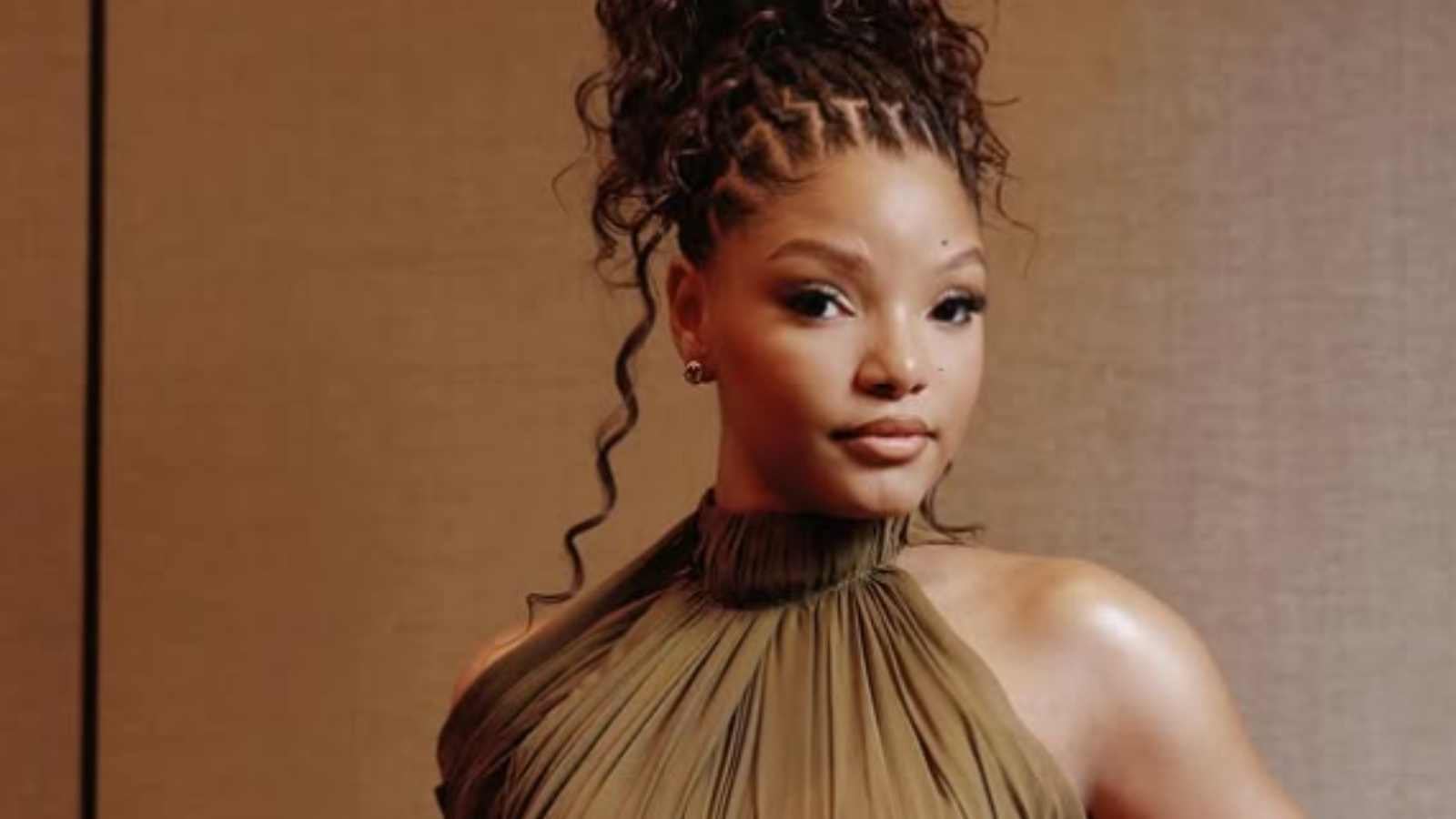
When the first teaser for Disney’s live-action The Little Mermaid dropped in 2022, a specific kind of magic rippled through the internet. It wasn’t just the CGI scales or the hauntingly perfect riff at the end of “Part of Your World.”
It was the viral videos of little Black girls seeing a princess who looked like them for the first time. Their eyes widened, their jaws dropped, and they whispered, “She’s brown like me.” It was the kind of pure, unadulterated joy that reminded us why we go to the movies in the first place.
But beneath that shimmering surface, a much darker current was pulling in the opposite direction. While half the world was celebrating, the other half was weaponizing nostalgia. Halle Bailey, then just 22 years old, found herself at the center of a cultural firestorm that went far beyond “casting choices.”
She wasn’t just playing a mermaid; she was inadvertently becoming a lightning rod for a global conversation about race, ownership, and the sanctity of childhood memories.
The Numbers Behind the Noise
@gma “As a Black person, you just expect it and it’s not really a shock anymore.” "The Little Mermaid" star Halle Bailey opens up about racist backlash after being cast as Ariel. #TheLittleMermaid #Ariel #HalleBailey #Racism ♬ original sound – Good Morning America
To understand the scale of what Halle faced, you have to look at the data, because the “backlash” wasn’t just a few angry tweets… it was a coordinated effort.
When the teaser trailer was released on YouTube, it garnered over 2 million dislikes in just a few days. The vitriol was so concentrated that YouTube eventually hid the dislike counter (a move that sparked its own separate controversy). On TikTok and X (formerly Twitter), the hashtag #NotMyAriel began trending globally.
But here is a statistic most people overlook: according to social listening data from the months leading up to the release, nearly 30% of the negative discourse surrounding the film originated from automated bot accounts and “engagement farms.”
This suggests that the “wave of racism” wasn’t just a grassroots movement of disgruntled fans; it was amplified by bad actors looking to stoke culture war divisions for clicks and political capital.
Halle wasn’t just fighting “fans” who missed the red hair; she was fighting an algorithm designed to reward outrage.
The Mental Toll of a Digital Siege
How does a young artist handle that level of scrutiny? Most of us would crumble if ten people criticized our outfit on Instagram. Halle had millions of people, many of them grown adults, dehumanizing her daily.
“As a Black person, you just expect it; it’s not really a shock anymore,” she told The Face in a 2023 interview. But “expecting” it doesn’t make it hurt less. She leaned heavily on her sister, Chloe Bailey, and her mentors (including Beyoncé herself). The advice from Queen Bey was simple: “Don’t ever read the comments.”
Halle took that to heart. She spent her time in the London studios, submerged in water tanks for 13 hours a day, focusing on the physical demands of the role. While the internet debated her skin tone, she was mastering the “mermaid kick,” a grueling core workout that requires immense physical strength to make a heavy silicone tail look effortless.
The Unseen Financial Stakes
There is a factual side to this story that often gets buried under the emotional headlines: the Global Box Office Paradox.
The film eventually grossed over $569 million worldwide. In the United States, it was a smash hit, over-indexing with Black and Hispanic audiences who showed up in droves. However, in certain international markets, specifically China and South Korea, the film significantly underperformed.
In China, The Little Mermaid earned a meager $3.7 million in its opening weekend. For context, other Disney live-action remakes like The Lion King or The Jungle Book cleared nearly $100 million in that region.
State-run media in China, such as The Global Times, explicitly cited the “forced inclusion” of a Black lead as a reason for the lack of interest. This created a massive financial headache for Disney, proving that the “racism” Halle faced wasn’t just a social media hurdle… it was a documented economic barrier in the global film market.
Is “Colorblind Casting” Actually the Problem?
Now, let’s wade into some deeper, treacherous waters. While it is easy… and correct, to condemn the racist attacks against Halle, there is a nuanced argument that gets lost in the shouting matches: Does Disney’s “race-swapping” strategy actually do a disservice to Black actors?
Here is the thought that often sparks heated debate, hear me out: By casting a Black woman in a role originally written for a white character (based on a Danish fairy tale), Disney might be taking the “easy way out” on diversity.
Instead of investing hundreds of millions of dollars into original Black stories, mythologies, and legends… think The Woman King or Black Panther, they are essentially “retrofitting” Black talent into existing European frameworks.
Some critics argue that Halle Bailey is too good for a remake. They argue that by casting her as Ariel, the industry is saying, “We only believe a Black woman can lead a blockbuster if she’s wearing the skin of a previously established white character.”
Could you imagine if, instead of The Little Mermaid, Halle had starred in a massive, big-budget adaptation of West African or Caribbean mermaid folklore? There, she wouldn’t have to be “the Black Ariel,” she would simply be the icon.
There is a valid worry that by focusing so much on “reclaiming” old stories, we are stalling the creation of new ones that belong entirely to the actors of color who lead them.
Why Halle Won Anyway
Despite the “Not My Ariel” tags and the lukewarm international box office, Halle Bailey didn’t just survive the role… she redefined it.
The most telling piece of research comes from the impact on representation metrics. According to the Geena Davis Institute on Gender in Media, seeing diverse leads in children’s programming is significantly associated with higher self-esteem and career aspirations among children of color. Halle didn’t just play a mermaid; she broke a glass ceiling that had been submerged underwater since 1989.
She brought a vocal prowess to the role that even the harshest critics couldn’t deny. Her version of “Part of Your World” wasn’t just a cover; it was a reimagining. She employed a jazz-influenced “siren” singing style, shifting the character from a naive girl to a soulful, longing woman.
The Aftermath
Today, the dust has largely settled. Halle has moved on to projects like The Color Purple, proving she has the range to handle prestige dramas just as well as Disney tentpoles. She’s a mother now, and she’s said she can’t wait to show her son the film.
The “wave of racism” she faced will always be a part of the movie’s legacy, but it isn’t the whole story. The real story is how a young woman from Atlanta stood her ground in the middle of a digital hurricane, refused to let the world’s bitterness dim her light, and reminded us that the “human world” is a lot more colorful than some people are willing to admit.
Halle Bailey didn’t just swim; she soared. And in doing so, she left a trail of bubbles for every other girl of color who has ever been told that some stories just aren’t for them. As it turns out, the sea is big enough for everyone.