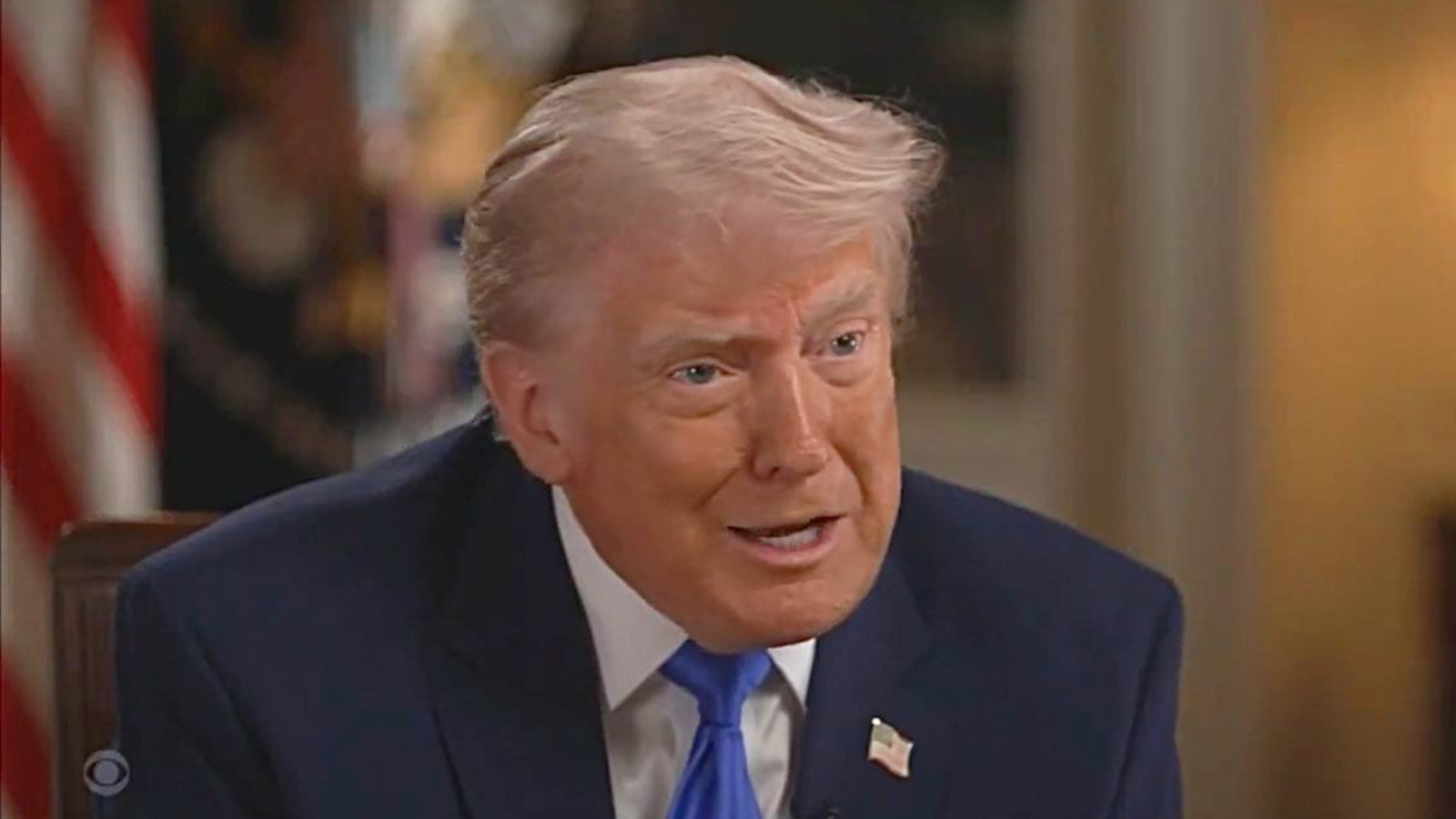
The White House Correspondents’ Dinner is, at its core, about the press and the First Amendment. It’s organized by the White House Correspondents’ Association to celebrate press freedom, honor journalists, and award scholarships.
This year, however, the event abruptly shifted, denoting a pronounced departure from tradition and revealing just how quickly ceremony can tip into chaos. By the time the room settled, the story had already shifted from glitz to survival, and now Donald Trump is promising to bring it all back within thirty days like nothing can interrupt the show for long.
What happened inside the Washington Hilton on April 25, 2026, did not develop like a slow burn. It hit fast and loud, piercing a ballroom filled with politicians, journalists, and the usual mix of power and proximity. One minute, it was speeches and light laughter; the next, emergency evacuation protocols and the President being rushed offstage alongside Melania Trump and JD Vance.
An armed suspect charged a security checkpoint and fired at a Secret Service officer at close range. The officer survived, largely because of a bulletproof vest that absorbed what could have been a fatal shot. That detail is doing a lot of emotional work in the aftermath, because it is the difference between a terrifying story and a devastating one.
President Donald Trump is already positioning the incident as something that will not define the event moving forward. His stance is straightforward; the dinner will return, it will be bigger, and it will be secured to a level that leaves nothing to chance. But the mood has shifted, even if the schedule has not.
When the Night Broke Open
The evening opened like any other version of itself, crowded, political, and slightly self-congratulatory. Donald Trump described it as a record-setting gathering filled with tremendous love, which, in that room, usually translates into polite tension dressed up as unity. Then everything cracked when Cole Tomas Allen, a 31-year-old from Torrance, California, tried to breach the hotel’s perimeter.
He was carrying a shotgun, a handgun, and several knives. According to federal prosecutors, he made it as far as checkpoint before opening fire, forcing Secret Service agents to respond instantly. The speed of that response is credited with preventing something significantly worse from unfolding in a room packed with high-profile targets.
By April 26, Allen was already facing preliminary charges, including using a firearm during a crime of violence and assault on a federal officer. Interim D.C. Police Chief Jeffery Carroll confirmed the sequence of events, while officials quietly began asking how someone staying in the same hotel as the event got that far. The wounded officer, now out of the hospital, even spoke with the President afterward, reportedly in a good mood.
The Anatomy of a Security Gap
What is making investigators pause is not just the attack, but the profile behind it. Allen doesn’t fit neatly into any expected box, which always complicates the story. He graduated from the California Institute of Technology in 2017 with a degree in mechanical engineering and also holds a master’s in computer science.
That detail alone changes how people process what happened. This is someone who had recently been named teacher of the month at a tutoring center, not someone living on the obvious margins. His sister told investigators he had a tendency toward radical statements, but nothing that fully mapped onto what eventually happened.
There is also a $25 donation to the Harris campaign through ActBlue in 2024. It adds one more layer to a case that is already resisting easy political labeling. Acting Attorney General Todd Blanche said investigators are now looking into whether Allen assembled his weapons inside the hotel after arriving in Washington by train.
That possibility has raised a new concern. Hotels are not designed to function like sealed environments, and guests move freely between public and private spaces. The idea that weapon components could be brought in separately and assembled behind closed doors is now at the center of a more extensive security rethink.
A Manifesto With Disturbing Precision
The investigation took an even grimmer turn with the discovery of a manifesto Allen sent to his family ten minutes before the attack. In it, he described himself as a “friendly federal assassin” and laid out a hierarchy of targets within the administration. The language was sharp, ideological, and disturbingly structured.
There was also a detail that immediately stood out. He explicitly excluded FBI Director Kash Patel from his list of intended targets, though no clear reason has been provided. Everyone else, according to the document, was prioritized by rank, from highest to lowest.
The manifesto also suggested that Secret Service agents were not primary targets unless necessary, which adds depth to the plan’s calculation. U.S. Attorney Jeanine Pirro is now building a case that could expand into terrorism related charges. Meanwhile, investigators are trying to understand a two-hour delay between when Allen’s brother received the email and when he contacted police.
That gap is not purely a timeline issue; it is a human one. It sits in that uncomfortable space where reaction time meets disbelief. And in cases like this, those hours tend to weigh more than anyone wants.
From Ballroom to Fortress
In the immediate aftermath, President Donald Trump moved quickly from response to repositioning. He described the Washington Hilton as “not particularly secure” and floated the idea of relocating the dinner entirely. The alternative he suggested is a new ballroom planned for the White House.
According to him, this space would be drone-proof and lined with bulletproof glass. He presented it as something the military and the Secret Service have long wanted. Whether that timeline holds up or not, the intention behind the shift is clear.
Moving the dinner into the White House changes its character completely. It turns a semi-public gathering into something considerably more controlled and insulated. The symbolism is hard to miss, especially for an event that has always been about proximity between the press and power.
He still insists the dinner will return “bigger and better.” But bigger, in this case, seems to mean more fortified, more contained, and less exposed to the unpredictable nature around this year’s interruption.
The Show Must Go On, Apparently
There is something almost defiant about how quickly the conversation has shifted to rescheduling. White House Correspondents Association Chair Weijia Jiang confirmed that the push is coming directly from the President. Reports suggest he even wanted to continue with the program while the situation was ongoing.
That instinct says a lot about how moments like this are processed at the highest level. There is a refusal to let disruption dictate the rhythm, even when it involves gunfire. Todd Blanche later described the night as a mix of the worst and the best, pointing to the attacker on one side and the responding officers on the other.
Allen remains uncooperative, and investigators are now digging through his electronic devices and online activity. More answers will come, but for now, the focus is already shifting toward logistics. How do you secure a room that represents every corner of American political life without turning it into something unrecognizable?
The irony is sitting right there in plain sight. An event meant to celebrate the First Amendment nearly unraveled because of someone who believed he was acting on a higher moral directive. Now the future of that same event may exist behind thicker glass and heavier doors.
And still, the dinner will happen again. Not because it is unchanged, but because showing up has quietly become the point.