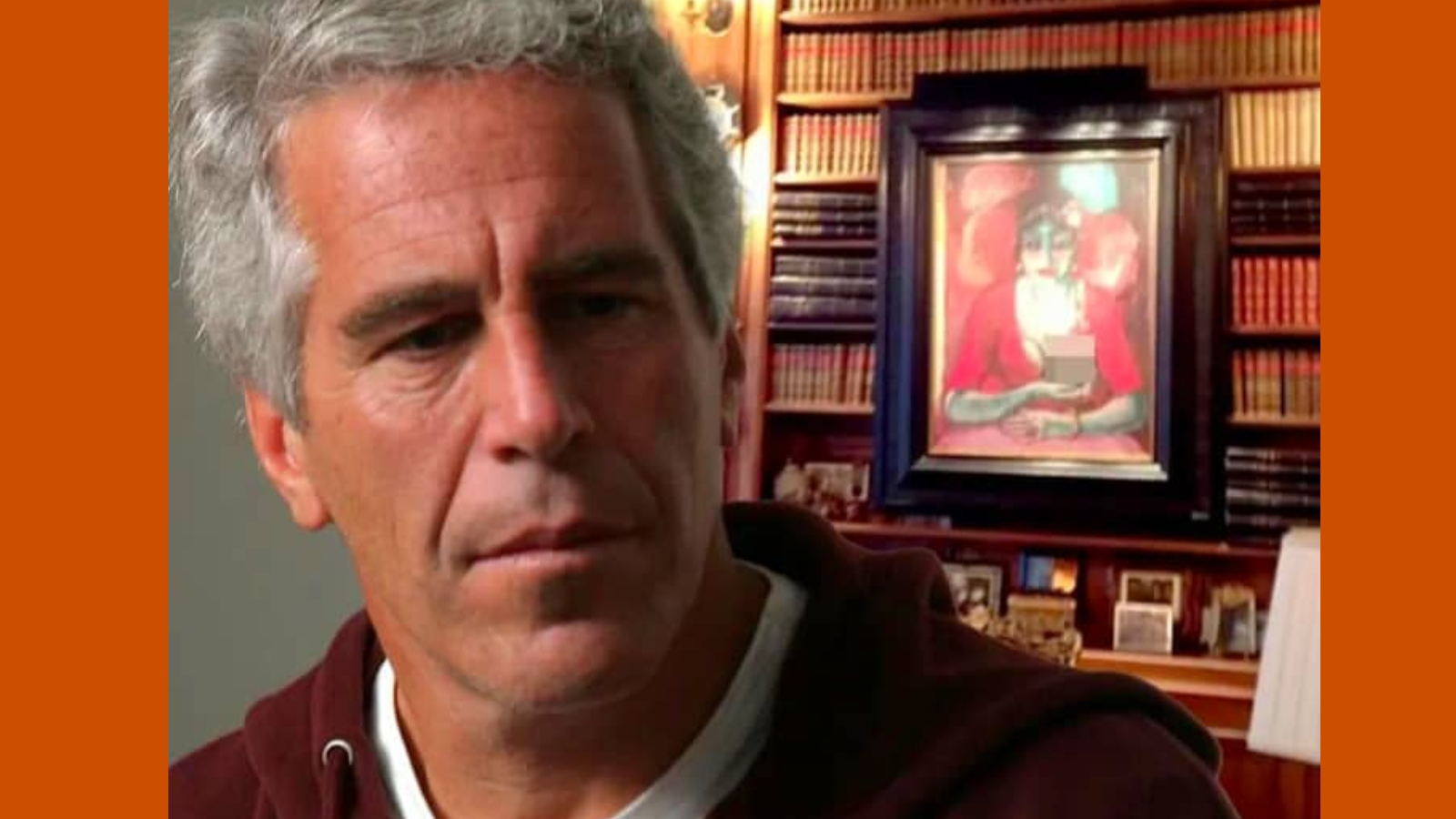
Have you ever been scrolling online and suddenly something grabs your attention? That happened a lot last week when people noticed an eBay listing for what the seller said was a painting from Jeffrey Epstein’s Manhattan townhouse. The asking price was $25,000, and the listing was titled Jeffrey Epstein’s Desk Art. And yes, it was exactly as unhinged as it sounds.
The item in question was a giclée reproduction of Kees van Dongen’s painting Femme Fatale, measuring 4 feet by 4 feet. According to a New York Post report, the seller was very upfront about what they were selling and why anyone would want it. The listing description reportedly opened with “you already know why you are here,” which, honestly, is the most self-aware thing about the whole situation.
The piece was allegedly the same reproduction that federal investigators photographed hanging above Epstein’s desk during the 2019 raids on his Manhattan home, a lewd nude painting. The original van Dongen work sold at auction in 2004 for approximately $5.9 million, but the print hanging in Epstein’s office was a reproduction. The seller addressed this directly in the listing, noting that Epstein “hung a fake and called it a day,” and then described that detail as being “very on brand” for the late financier.
The Claims of the Desk Art
That observation about Epstein choosing a reproduction is actually more interesting than it first appears. His Manhattan townhouse became the subject of enormous public interest after the 2019 raids, largely because of the disturbing photographs and artworks investigators found there. The reported decision to hang a giclée above his home office desk rather than an original suggests the image he was curating. It was the performance of wealth and taste rather than the real thing.
The seller also made a point of highlighting the frame. They claimed it was made by Eli Wilner, a framer known for doing work for the White House, and used that detail as part of the sales pitch. Potential buyers were actively encouraged to “make the bold choice” to hang the piece above their desks. The whole listing read like someone understood exactly what they were selling and leaned into every inch of it.
Lewd painting that hung over Jeffrey Epstein’s desk appears to hit eBay for staggering sum “The Epstein estate sold it quietly through New Jersey auction house Millea Bros with zero mention of where it came from. Someone figured it out anyway. That someo… https://t.co/XCt18KMoHq pic.twitter.com/S7HeDzaJdK
— UnfilteredAmerica (@NahBabyNahNah) May 7, 2026
The Loophole of the Private Auction
Here is where the backstory gets a bit more juicy. The seller claimed to have bought the painting at a New Jersey auction where items from the Epstein estate were being liquidated. After Epstein was arrested in July 2019 on federal sex trafficking and conspiracy charges and died in a New York jail that August, his estate began selling off assets to settle legal claims. That process pushed a range of items tied to his various properties into private hands.
Once something moves from official estate channels into private ownership, the person holding it can technically do whatever they want with it, including listing it on eBay for a five-figure price. That is the gap this seller apparently walked right through. The painting was no longer evidence as it was no longer in the custody of any official body. It was just a piece of art with a very dark claimed history and someone willing to sell it.
This specific listing likely faced a double hurdle because the lewd classification of the artwork often triggers strict adult content filters on mainstream sites like eBay, quite apart from the Epstein association itself.
Back in 2019, several major platforms pulled Epstein-related merchandise and art over concerns about profiting from criminal notoriety. But years have passed, and the line between a prohibited item and a piece of dark history with verified provenance becomes harder to draw. A $25,000 asking price for a giclée print tells you the value was never really about the art.
The Search for Verified Provenance
By May 7, 2026, the listing had disappeared from eBay entirely. It is not confirmed whether eBay removed it or the seller voluntarily pulled it, and no specific policy violation has been publicly cited. There are also no confirmed reports on whether any bids were placed before it came down or whether the item was sold through a private arrangement before the page went dark.
What is clear is that this pattern keeps repeating. Items connected to Epstein’s properties surface online, spark a cycle of attention and reporting, and then get removed from the platform where they appeared. The fascination with the physical objects from his daily life has not faded, even after the legal proceedings ended. If anything, it has intensified as the years add distance from the original investigations.
The seller’s entire marketing strategy was built on that curiosity. They were not selling a reproduction of a van Dongen painting. They were selling a piece of an infamous office, a claimed artifact from a space that the public has spent years trying to understand. That framing, an invitation to own something from that world, is what turned a $25,000 listing into a news story.
The Exterior of Respectability
Eli Wilner, the White House framer’s detail in the listing, is worth sitting with for a second. By connecting the frame to an institution as prestigious as the White House, the seller was doing so deliberately. It was an attempt to lend the object a sense of legitimacy, to place it in the same category as fine decor rather than as a crime-scene curiosity. That mirrors almost exactly how Epstein operated throughout his life: surrounding everything with markers of elite society to make the whole picture look more acceptable than it was.
This pattern of estate items surfacing, attracting attention, and being removed reflects the underlying argument: the market thrives on objects tied to dark histories, sustained by public curiosity and unresolved questions. The fascination with items from Epstein’s life continues to drive both sales and headlines.