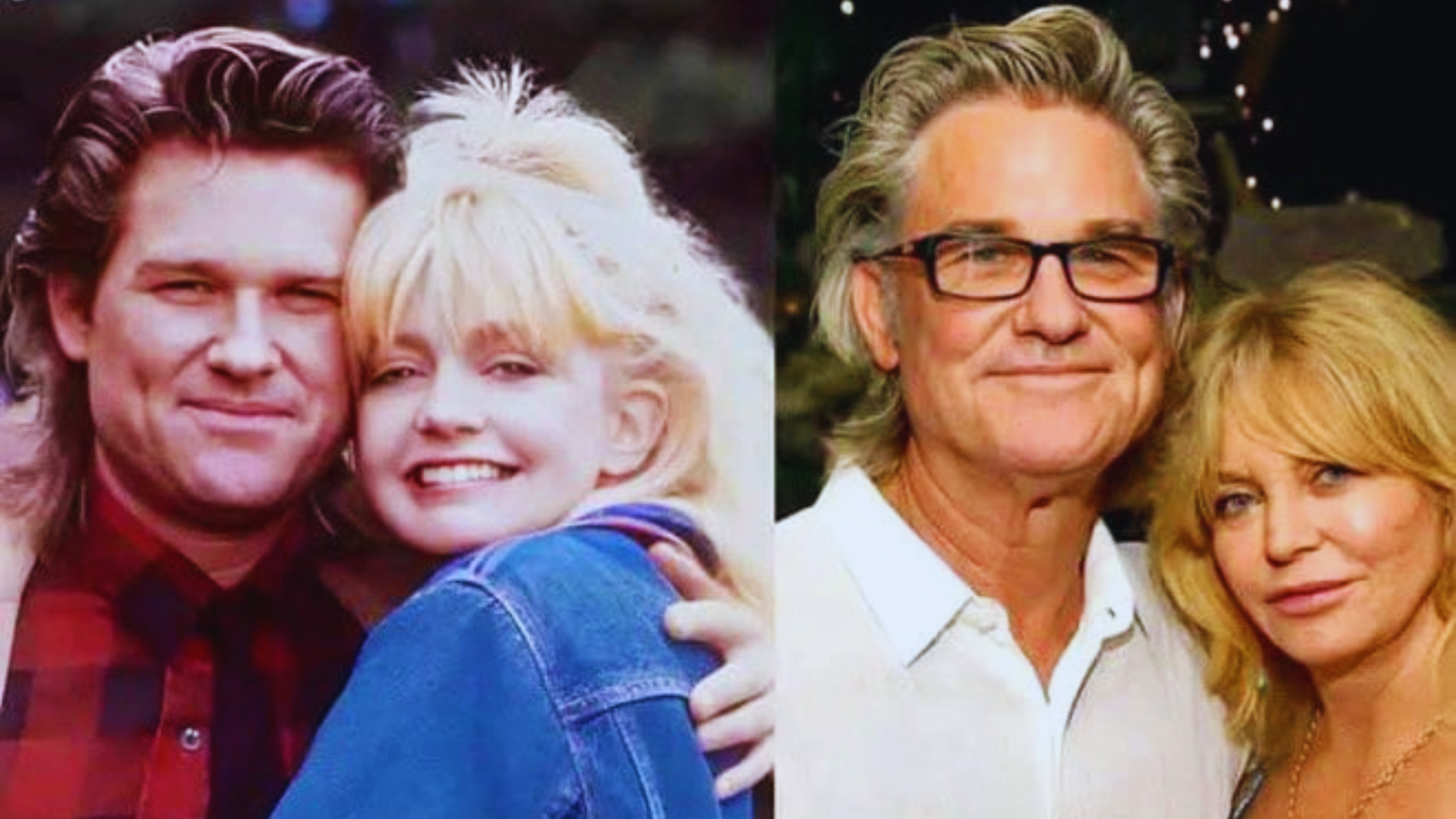
Goldie Hawn and Kurt Russell have been together for over 43 years and have never once signed a marriage certificate. Not even close.
In an industry that practically runs on public breakups, prenups, and messy divorce headlines, these two have quietly built one of the most enduring partnerships Hollywood has ever seen, completely outside the legal institution of marriage. As of mid-2026, their relationship remains one of the most talked-about examples of what commitment looks like when it is entirely by choice.
They first crossed paths in the 1960’s on the set of Disney’s The One and Only, Genuine, Original Family Band. Hawn was in her early 20s, and Russell was still a teenager, so nothing romantic came of it then. It took almost 15 years before fate put them in the same room again, and that second meeting, during Russell’s audition for the 1983 film Swing Shift, changed everything.
Once they started dating on that set, things moved fast and stayed serious. By July 1986, they had welcomed a son together, Wyatt Russell, and folded him into an already full-blown blended family. That family included Hawn’s children, Oliver and Kate Hudson, and Russell’s son, Boston, which meant they were navigating a fairly complex household from very early on.
The Freedom of the Open Door
What makes their story so compelling is not just how long they have lasted, but the very deliberate reason they give for its success. Hawn has been refreshingly clear about her philosophy: she values waking up every morning and actively choosing to stay. Not because a contract says she has to, not because lawyers and paperwork make leaving complicated, but because she genuinely wants to be there.
She has said more than once that staying independent is how she holds on to herself within a relationship. That is not a throwaway line.
For Hawn, who has been married twice before, first to Gus Trikonis and then to Bill Hudson, with that second marriage ending in 1982, just one year before she and Russell got together, the institution of marriage is not something she views through rose-tinted glasses. Both of those marriages ended, and clearly, the endings left an impression. She has been openly skeptical about what the legal act of getting married actually adds to a relationship.
Her position on this is fairly pointed. In a widely covered CNN interview, she went after the divorce industry directly, asking how many divorces are actually fun, cheap, or painless for anyone involved. Her answer, essentially, is none of them. She described divorce as big business and noted that the end of a legal marriage almost always turns ugly, with people walking away hating each other far more than they ever did going in.
A Timeline of Reconnection and Resilience
Hawn has actually gone a step further than just criticizing divorce. She has said outright that she and Russell might have already divorced if they had ever actually gotten married. That statement alone says everything about how she sees the connection between legal obligation and genuine affection. When you remove the difficulty of the exit, the only reason you stay is that you actually want to, and, according to her, that is a much stronger foundation than any vow.
The blended family they built reflects this same ethos. Kate and Oliver Hudson have publicly spoken about how Kurt Russell stepped into a father role by choice, not by legal compulsion. That detail tends to land particularly hard when you hear it, because it is proof that the philosophy Hawn talks about in interviews is not just a media sound bite. It is how they have actually operated behind closed doors for over four decades.
Their son Wyatt is now an adult with his own career, and the couple’s story continues to be covered with something close to genuine fascination by entertainment media. The scrutiny has been constant over the decades, and the answer from both of them has never changed.
The High Cost of Big Business
Hawn’s references to divorce as big business also carry a financial edge that is easy to miss if you are only reading the romantic angle. She has made it clear that preserving independence is part of how she thinks about protecting herself from the financial mess she associates with the legal dissolution of a marriage. Keeping their lives legally separate appears to be a deliberate decision, not just a personal preference, but a practical one.
What they have built instead is a structure that operates on mutual respect and daily, renewed choice. They share a family, a life, a home, and apparently a very stable sense of who they are as individuals within a partnership. The fact that none of that required a ceremony or a certificate is, for Hawn, exactly the point.
In a culture that has long treated a wedding ring as the ultimate proof of seriousness, they have spent 43 years pushing back on that idea without making a fuss. They are not activists or loud about their choices. They just live it, and it keeps working.
The Legacy of the Unmarried Union
As coverage of the couple continues into 2026, the thing that keeps coming up is how much their story challenges the assumption that legal commitment is the only real kind. What they have instead is something that requires more active maintenance, a partnership that survives specifically because both people have to keep choosing it. That is either terrifying or freeing, depending on how you look at it, and Hawn has clearly made her peace with which one it is.
Their story is not about avoiding commitment. It is about redefining what commitment actually looks like. The absence of a marriage certificate is not a gap in their relationship. By their own account, it is the very thing that has kept the relationship breathing for over four decades and counting.