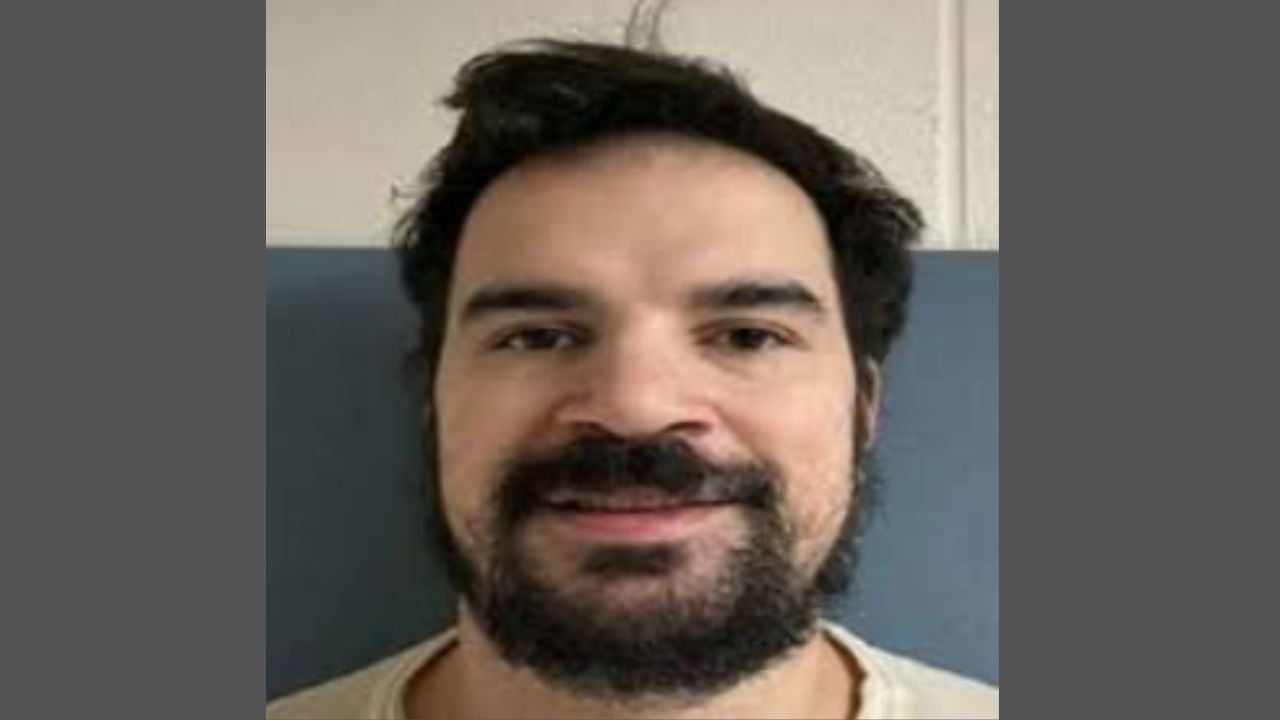
A Connecticut man who prosecutors say recruited financially vulnerable people into a sprawling check-kiting operation that cost banks more than $350,000 has been sentenced to five years behind bars.
Eric Christian, 44, of Mansfield, received a 20-year prison sentence with execution suspended after five years, followed by five years of probation, according to WTNH.
Christian pleaded guilty Aug. 12 in New Haven Superior Court to violating Connecticut’s Corrupt Organizations and Racketeering Act and conspiracy to commit first-degree larceny.
Prosecutors say he led a check-kiting ring from 2020 through 2024, using recruits’ accounts to deposit bad checks and withdraw temporarily available money before financial institutions discovered the checks could not be covered.
He Recruited People to Open Accounts With Small Deposits

Connecticut prosecutors said Christian exploited approximately 30 to 40 people, many of whom were experiencing severe financial hardship, homelessness, mental health challenges or substance abuse issues.
He offered them money to open checking accounts, sometimes supplying the initial deposit himself. Earlier reporting from CT Insider said some accounts were opened with just $50.
After the accounts were established, prosecutors said Christian collected personal identifying information and ATM card numbers from the recruits. Communications recovered during the investigation showed he deliberately sought people who could open accounts and enticed them with promises of easy money.
Bad Checks Created a Short Window to Withdraw the Money
The operation took advantage of the time between a check being deposited and the bank determining whether the account it was drawn on actually contained enough money.
Checks from accounts with insufficient funds were deposited into other accounts. Some of the money became temporarily available, allowing withdrawals to occur before the checks were returned unpaid. An early bank complaint examined by investigators involved at least 259 checks totaling roughly $189,000 and drawn on accounts belonging to five people.
In one March 2023 example described in the arrest warrant, checks for $955, $960 and $965 were deposited into an account. Later that day, withdrawals of $740, $720 and $280 were made from the available balance, and investigators said ATM surveillance showed Christian making the withdrawals.
State police ultimately verified $353,070 in thefts from May 2020 through August 2023. Investigators described that figure as conservative and believed the actual loss was higher.
Investigators Connected Him to 198 Bank Accounts
The physical and financial evidence showed how widely the operation had spread. A May 2023 search of Christian’s residence and Lexus RX 450h produced 59 payment cards, most of them ATM or debit cards. Investigators determined that he had access to 198 separate bank accounts at at least 15 financial institutions.
The investigation continued into 2024. During a February surveillance operation, New Haven police watched Christian pick up two men and drive to a bank in Wallingford. A search produced more debit cards and his cellphone.
Another vehicle search in August 2024 uncovered additional cards and more than a dozen cellphones. When authorities later searched Christian’s home in connection with his arrest, they also found driver’s licenses, banking records and other identifying information belonging to almost 40 people.
Some of the People He Recruited Ended Up Being Prosecuted
The people whose accounts were used did not necessarily receive the profits they had been promised. One participant told investigators he earned less than $1,000 despite being promised substantially more, according to the arrest warrant.
Prosecutors said some recruits were themselves arrested and prosecuted because of their participation. A significant number later gave statements to law enforcement identifying Christian as the organizer and leader.
The Connecticut Division of Criminal Justice described financial institutions as the primary victims of the monetary losses but said Christian also victimized the people whose identities and personal information he exploited.
Twelve Co-Conspirators Still Face Charges
Judge Tracey Lee Dayton imposed Christian’s sentence on Aug. 12, the same day he entered his guilty pleas. The 20-year sentence will be suspended after he serves five years. He will then spend five years on probation. The Connecticut Division of Criminal Justice said 12 co-conspirators still face criminal charges connected to the operation.
The case was investigated by the Connecticut State Police Statewide Organized Crime Investigative Task Force, with assistance from New Haven police, prosecutors in multiple Connecticut judicial districts and the FBI’s New Haven office.
Do Not Open a Bank Account for Someone Else to Move Their Money
The FBI warns about money mule schemes in which people are asked to open new accounts or allow existing accounts to be used to receive and transfer money. Some participants knowingly assist criminals, while others are recruited through promises of easy money and may not initially understand the larger scheme.
An account opened in your name remains connected to your identity. Do not give another person your debit card, PIN, online banking credentials or control of an account in exchange for a promised payment.
A deposited check appearing in an available balance is also not proof that the check is legitimate. The Federal Trade Commission warns that banks can make funds available before discovering that a check is fraudulent or cannot be paid. That discovery can come after money has already been withdrawn.
Anyone who has already allowed another person to use an account for suspicious deposits or withdrawals should stop the transactions, contact the financial institution and preserve messages, account records and information about the person directing the activity.