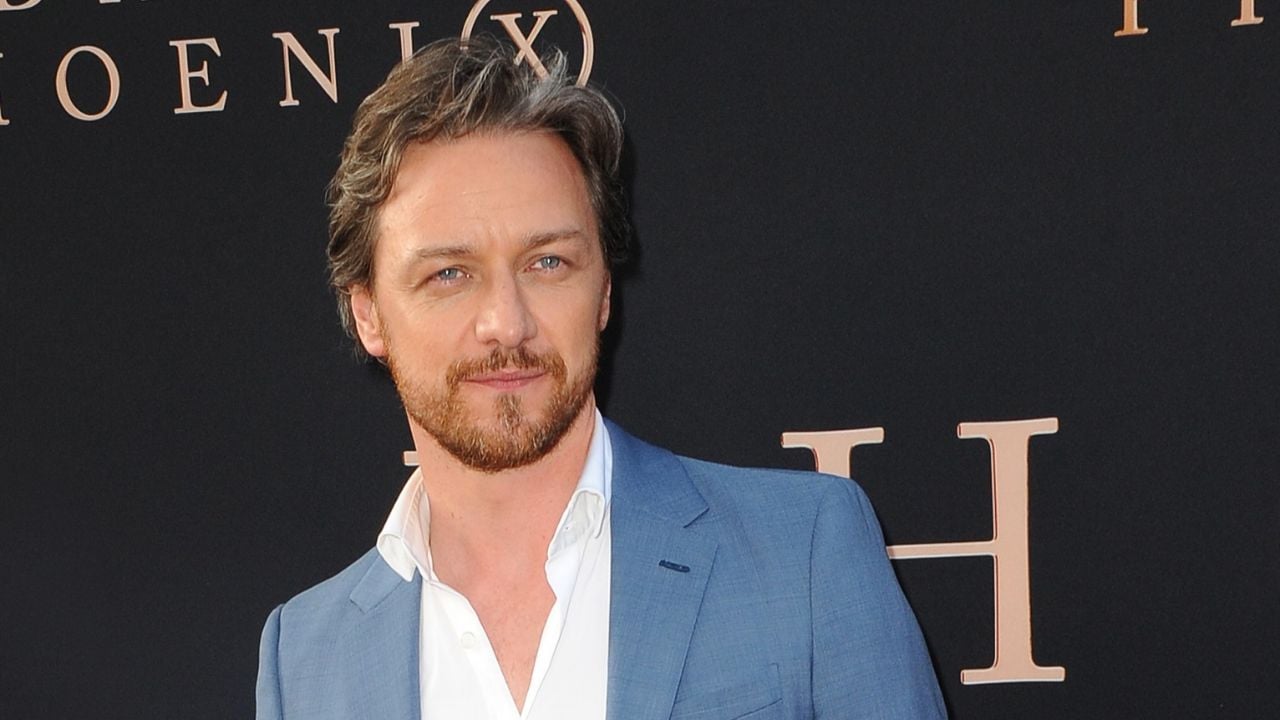
James McAvoy says some checks from his past movies arrive for just 25 cents. Others amount to a few hundred British pounds, and he joked that certain payments cost more to mail than they are worth.
“The only one that really consistently pays me is Split,” he told Josh Horowitz on the Oct. 15 episode of Happy Sad Confused, according to TheWrap.
The conversation began after McAvoy suggested he would probably direct more and act less, while acknowledging that acting pays better. Horowitz brought up his earnings from Wanted, prompting McAvoy to explain that the 2008 action movie provides little ongoing income.
In Split, McAvoy played Kevin Wendell Crumb, whose competing identities include Dennis, Patricia, Hedwig and the Beast. Anya Taylor-Joy and Betty Buckley starred alongside him in M. Night Shyamalan’s thriller.
He Recalls Receiving His First Payment After Opening Weekend
McAvoy recalled a production cost of approximately $6 million and estimated another $30 million for advertising. He said his first payment arrived at the end of the opening weekend, describing the turnaround as “bonkers.”
Box-office tracker The Numbers lists a $9 million production budget and a $40 million domestic opening following the film’s Jan. 20, 2017, release. It remained at No. 1 for three consecutive weekends and eventually grossed more than $278 million worldwide.
Actors can receive additional compensation through different arrangements. Under SAG-AFTRA agreements, residuals for theatrical films are triggered by subsequent distribution on television, home video or streaming, rather than the original cinema run. A separately negotiated share of a film’s earnings is a different arrangement.
Shyamalan financed Split himself, using money from his earlier film The Visit. Earnings from those productions subsequently helped finance Glass, the Philadelphia Inquirer reported in a January 2019 interview with the director. “You’re not going to solve every problem with money,” Shyamalan said, explaining that limited resources had sharpened his attention to writing and directing.
McAvoy Did Not Expect the Role to Become an Awards Favorite
The performance required McAvoy to distinguish the identities through changes in his voice, posture and behavior, sometimes switching between them within a scene. He returned to the character in 2019’s Glass, which brought him together with Bruce Willis and Samuel L. Jackson’s characters from Unbreakable.
When Horowitz raised the awards attention surrounding the performance, McAvoy said he had not expected it to be widely embraced by voters. He believes horror still receives too little recognition despite some performances breaking through, according to Page Six.
He singled out Inde Navarrette’s performance in Obsession, praising her ability to change direction abruptly from one moment to another. McAvoy compared that unsettling unpredictability with the transitions he performed in Split.
Shyamalan’s Preparation Influenced His First Film as Director
McAvoy told Horowitz that Shyamalan’s preparedness was the lesson he most consciously carried into his own directing. He praised the filmmaker’s ability to plan shooting days, identify the shots he needed and communicate those decisions to the crew while working within modest budgets, Entertainment Weekly reported.
His debut, California Schemin’, follows Gavin Bain and Billy Boyd, two aspiring rappers from Dundee who reinvented themselves as Americans to gain acceptance in the music industry. Séamus McLean Ross and Samuel Bottomley play the musicians, with McAvoy also appearing in the film.
In a separate Oct. 9 interview with Moviefone, McAvoy described spending months preparing with cinematographer James Rhodes. They worked out camera positions together and communicated them to the crew, while leaving room to respond to ideas on set. Rhodes’ experience shooting concerts was particularly useful for the music sequences.
The production changed locations almost every day. McAvoy said he later realized he could have consolidated some scenes into the same setting during script development, reducing the logistical demands on a low-budget shoot.
He also discovered that moving quickly was not always the answer in the editing room. His first cut ran 89 minutes, but early viewers wanted more room to absorb the story. Working with editor Joe Sawyer, he concentrated on giving scenes breathing space without losing momentum.
California Schemin’ opened in New York and Los Angeles on Oct. 9, with further theatrical expansion scheduled for Oct. 16 and 23.