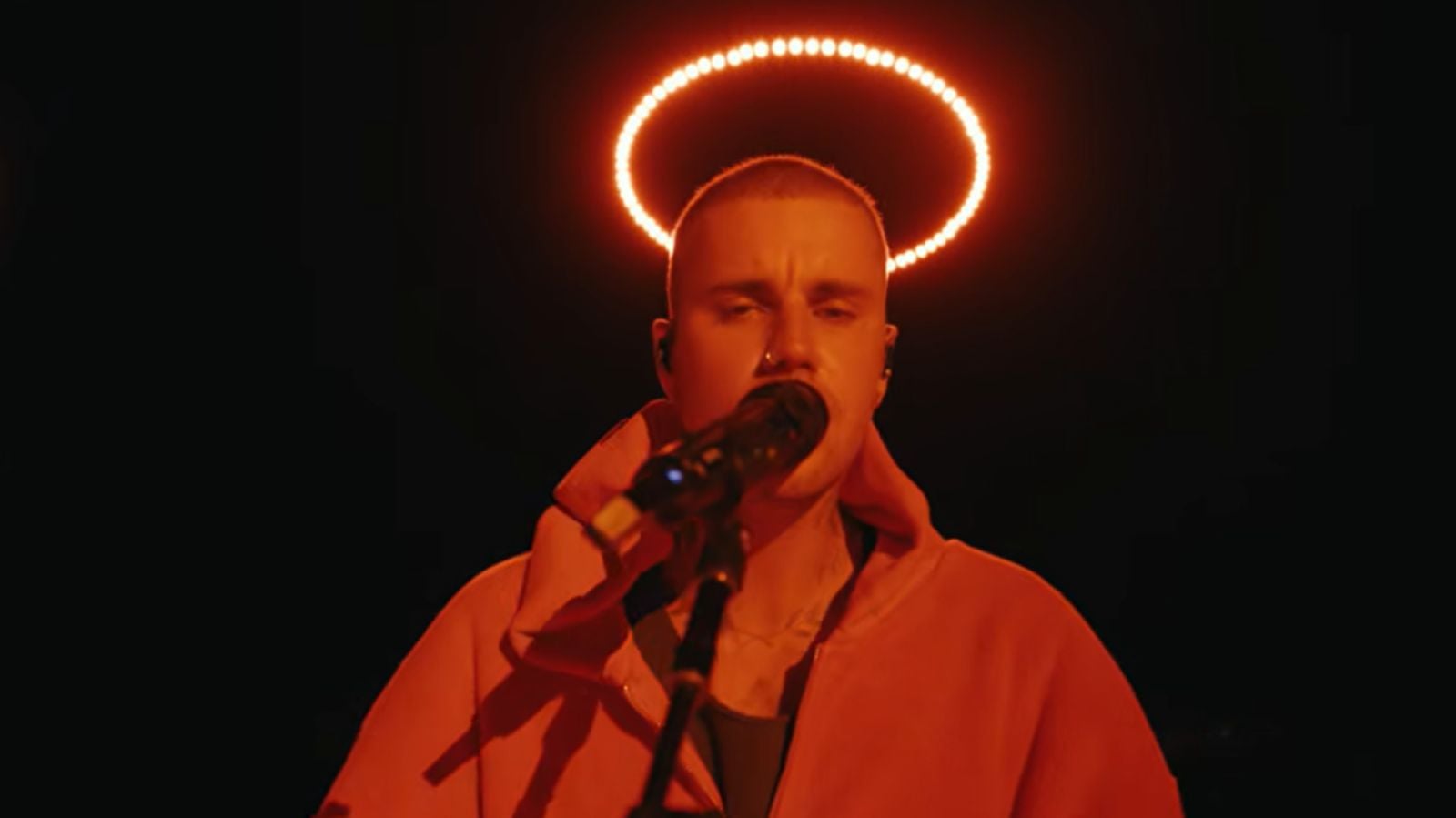
One side of the internet said Justin Bieber delivered something raw, spiritual, and fearless at Coachella. The other side said he reportedly got paid $10 million to sit on a stool and watch YouTube.
Both sides are talking past each other. And neither is saying the thing that made this set so divisive.
Bieber’s first performance in four years was built to confuse people. The set moved between new SWAG-era material, a nostalgia stretch where he watched old clips of himself and sang along, and then — in the middle of it — a stripped-down acoustic section where he sat on a walkway with two musicians and sang “Glory Voice Memo” and “Everything Hallelujah” to a festival crowd. According to Billboard’s recap, tears coated his eyes when he sang, “Hailey, baby, hallelujah. Baby Jack, hallelujah.” The crowd went quiet. It felt less like a festival set and more like a prayer said out loud.
That’s the moment that split the room.
People Were Fine With Bieber Until Faith Stopped Being Aesthetic
The loudest criticism wasn’t “keep religion out of Coachella.” It was “this feels lazy.” BuzzFeed’s reaction roundup included one fan calling it “all church songs, zero festival vibes.” Comparisons to Sabrina Carpenter — who opened the festival with a polished, high-production spectacle — piled up fast. One critic posted that if Carpenter had done what Bieber did, her career would be over.
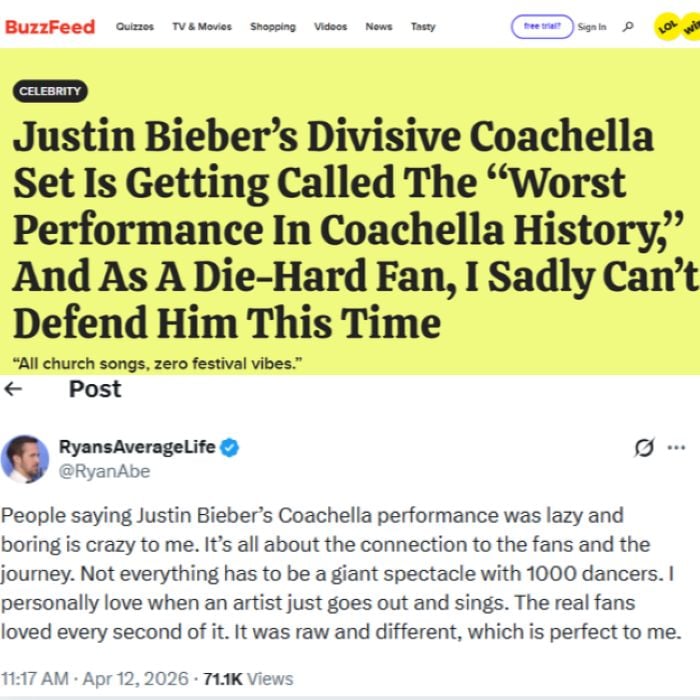
That’s a fair debate about format. But it sidesteps why the faith section made people uncomfortable in a way the YouTube nostalgia bit did not. Nobody seemed bothered that watching old clips was too personal. The friction started when the intimacy turned explicitly religious.
The Internet Can Handle Gospel Samples. It Cannot Handle Belief
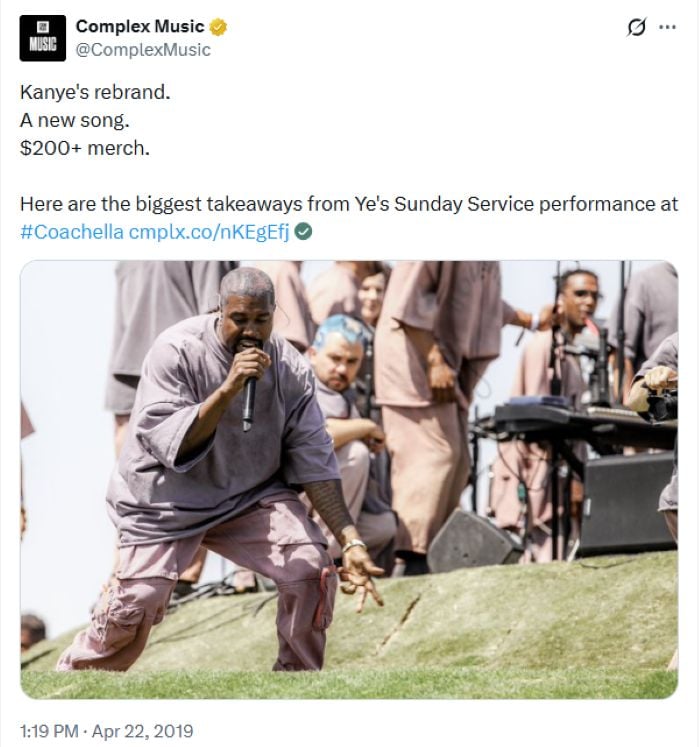
This is the part nobody is saying cleanly enough. The internet has no problem with faith when it looks like a mood board. Cross necklaces on red carpets. Gospel choirs sampled in hip-hop. Kanye’s Sunday Service at Coachella in 2019, featuring a full choir, celebrity guests, merchandise, and enough production value to feel like a show rather than a sermon.
Bieber didn’t give Coachella any of that. No choir. No merch activation during the set. No theatrical framing to let the audience consume the moment as entertainment. He sat down, picked up a guitar, and sang about God, tears in his eyes, to his wife and son. That registered as awkward because it broke the unspoken contract: you can be spiritual at a festival, but you have to make it cool first.
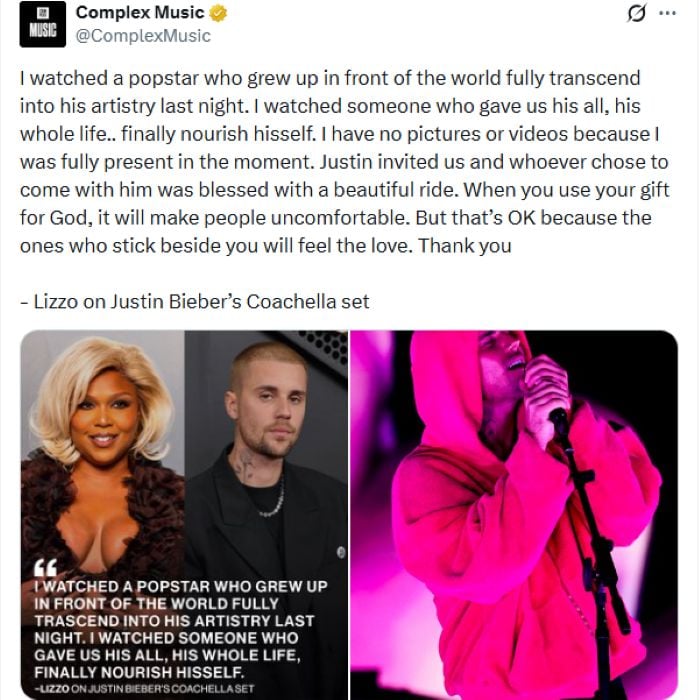
Lizzo — who watched the set — captured something real when she wrote on Instagram that Bieber “gave us his all, his whole life” and that “when you use your gift for God, it will make people uncomfortable.” That line deserved attention. She wasn’t defending every production choice. She was naming the friction.
Kanye Gave Coachella a Spectacle. Bieber Gave It Sincerity
When Kanye brought Sunday Service to Coachella, it was controversial — people argued about the merch prices, the spectacle, and the self-aggrandizement. But the conversation was not mainly about laziness. The scale of the production gave the audience permission to treat it as a performance first and a faith expression second. The religious content was wrapped in enough spectacle that it still fit Coachella’s visual language.
Bieber stripped that away. No buffer between the audience and the belief. No ironic distance. No wink. And that’s what made people squirm — not that he believes in God, but that he wasn’t performing belief. He was just believing. On a stage where performance is the whole point, sincerity without costume reads as either courage or self-indulgence, depending on what the viewer is willing to sit with.
The Crowd Did Not Reject Religion. It Rejected the Absence of Irony
Bieber’s set has already driven 21 of his songs into Spotify’s Global Top 200, according to Variety. The performance became the most discussed set of the festival. Fan accounts dubbed it “Bieberchella.” Whatever people thought of the format, nobody looked away.
And that’s the uncomfortable truth underneath all the hot takes. The internet didn’t reject Bieber’s faith. It just didn’t know what to do with faith that wasn’t trying to sell them something. The YouTube segment was nostalgia as content — easy to consume, easy to meme, easy to share. The acoustic worship section was something else entirely. It asked the audience to be present for something that wasn’t designed for a reaction.
Whether that was brave or self-indulgent depends on who you ask. But the discomfort it created says more about the audience than it does about the man on the stool. Pop culture has spent years turning spirituality into an aesthetic. Bieber reminded a festival crowd — and everyone else watching from home — that the real thing doesn’t come with a filter.