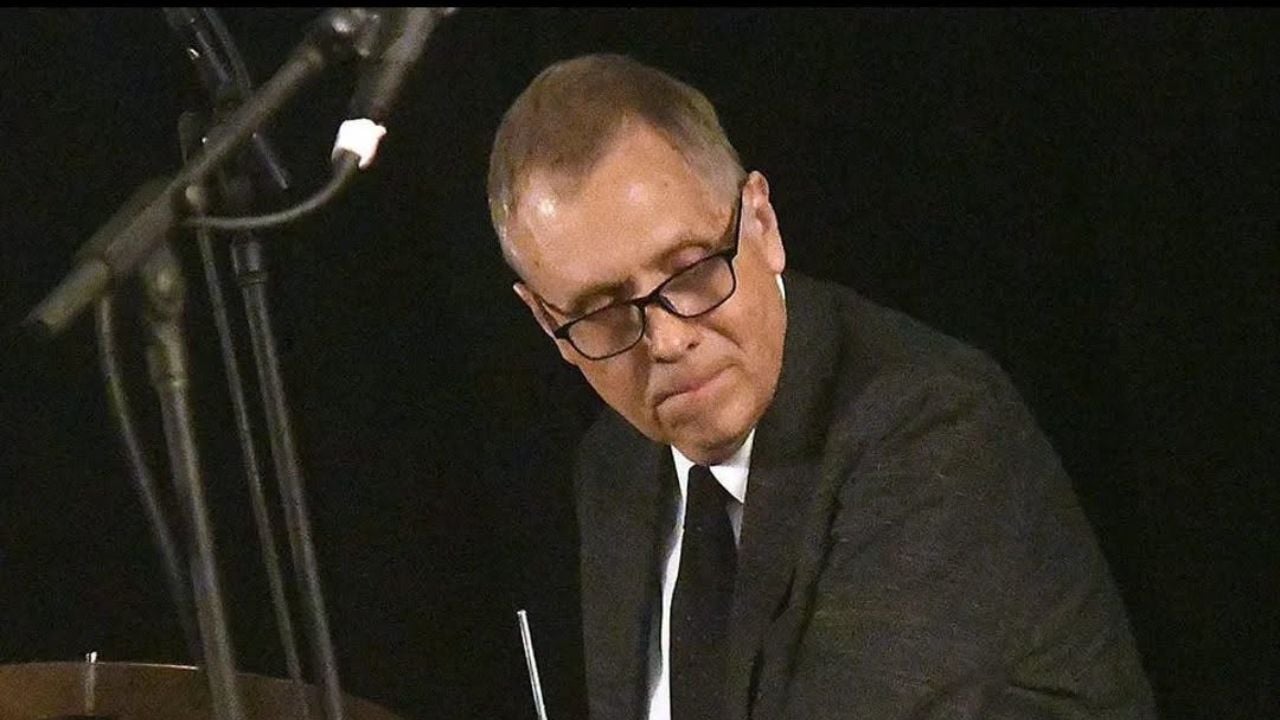
The Kennedy Center has been ordered to pay $252,479.70 in attorneys’ fees and costs to jazz musician Chuck Redd after its breach-of-contract lawsuit against him was dismissed.
D.C. Superior Court Judge Tanya M. Jones Bosier gave the performing arts institution 45 days to make the payment in an order issued Aug. 10. Redd had requested at least $258,325.72 for the cost of defending the case.
The dispute began after Redd withdrew from the Kennedy Center’s free Christmas Eve Jazz Jam in December 2025. He said he canceled after President Donald Trump’s name was added to the building and the institution’s branding.
Redd’s attorney Lisa Banks said the payment was appropriate because “no citizen should have to spend time and money” defending against what she characterized as baseless and politically motivated litigation. A Kennedy Center spokesperson told The Guardian that the institution intends to appeal.
The Judge Approved Nearly All of Redd’s Legal-Fee Request
Bosier granted Redd’s motion in part, awarding $252,399.70 in attorneys’ fees plus $80 in court costs. Redd’s lawyers had sought at least $258,325.72. The judge found the requested attorney hours and most of the rates reasonable but reduced the litigation expenses by $2,604.42, excluding computerized legal-research costs, and lowered the hourly rate applied to one member of Redd’s legal team.
The Kennedy Center had urged the court to reject the fee request, calling it “out of all proportion to the issue at stake,” according to Reuters. Its opposition also arrived late.
Bosier’s order says the Kennedy Center filed a 21-page response in the early morning hours of July 28 after missing both the original deadline and a later deadline set by the court. The filing also exceeded the court’s 15-page limit without first receiving permission.
The Kennedy Center Could Not Establish an Enforceable Contract
The Kennedy Center filed its lawsuit in March, alleging that Redd had agreed to perform a one-hour concert for $6,500 and later breached that agreement. Its complaint also relied heavily on a morals clause in the proposed 2025 artist agreement, alleging that Redd improperly used the engagement to publicize his political views.
Redd never signed the 2025 agreement. In her June 5 dismissal order, Bosier found that the Kennedy Center could not rely on the parties’ years of prior dealings to establish an enforceable agreement for 2025.
The record showed that Redd had signed written agreements before performing in previous years. The court also noted that, to the knowledge of a former Kennedy Center employee who submitted a declaration, performers did not perform at the institution without first having signed written contracts.
Also, the proposed agreement contained a new morals clause that had not appeared in the prior contracts examined by the court. Bosier found that the new clause was a material term, meaning the proposed 2025 agreement operated as a counteroffer that Redd would have had to accept for it to become binding. The judge wrote that Redd had neither read nor signed the agreement and that the Kennedy Center had not alleged conduct showing that he otherwise intended to be bound by its new terms.
The Court Also Found the Kennedy Center Had Not Adequately Alleged Damages
The contract problem was not the Kennedy Center’s only hurdle. Bosier also found that its amended complaint failed to adequately allege damages resulting from Redd’s withdrawal. The Kennedy Center claimed it suffered lost public goodwill, wasted marketing expenses and sunk costs preparing for a concert that did not take place.
The judge found those allegations insufficient. The Jazz Jam was free, so the Kennedy Center did not lose ticket revenue from Redd’s withdrawal. Multiple performers canceled, resulting in the entire event being called off, and the center did not incur costs for staff or other performers at a concert that never happened.
Redd’s attorneys had additionally argued that he was not identified in the Kennedy Center’s online marketing for the event, but the court’s dismissal ultimately rested on the broader conclusion that the complaint did not adequately connect compensable losses to his alleged breach. Bosier therefore dismissed the amended complaint both under ordinary civil procedure for failure to state a valid breach-of-contract claim and under Washington, D.C.’s anti-SLAPP law.
Under the anti-SLAPP analysis, the judge found that Redd had made the required initial showing that the Kennedy Center’s claim arose from an act in furtherance of advocacy on an issue of public interest. She concluded that his public statement about the name change and his decision not to perform were “inextricably intertwined” with the breach-of-contract allegations.
That shifted the burden to the Kennedy Center to demonstrate that its claim was likely to succeed on the merits. The court found that it could not do so.
Redd Faced a $1 Million Threat After Explaining Why He Canceled
View this post on Instagram
Redd, a drummer and vibraphonist who had presided over the Kennedy Center’s holiday Jazz Jams since 2006, notified the institution on Dec. 19 that he was withdrawing from the Christmas Eve performance. “When I saw the name change on the Kennedy Center website and then hours later on the building, I chose to cancel our concert,” he later told The Associated Press.
Richard Grenell, who was president of the Kennedy Center at the time, responded by accusing Redd of a “political stunt” and threatening to seek $1 million in damages. The legal fight over Redd’s canceled concert is separate from litigation challenging the addition of Trump’s name to the Kennedy Center itself.
In that case, U.S. District Judge Christopher Cooper ruled May 29 that federal law gives the institution the legal name John F. Kennedy Center for the Performing Arts and that only Congress can change it. Trump references were subsequently removed from the building’s facade and official materials.
The administration appealed, but in July a three-judge panel of the U.S. Court of Appeals for the D.C. Circuit declined to pause the lower court’s order while that appeal proceeds. The appeals court stressed that its decision on the stay did not decide the ultimate merits of the continuing appeal.