The hum of an AH-64 Apache rotor in the air is supposed to signal something very significant to those on the ground: the presence of a machine built for the grim business of defense, not the frivolous theater of celebrity.
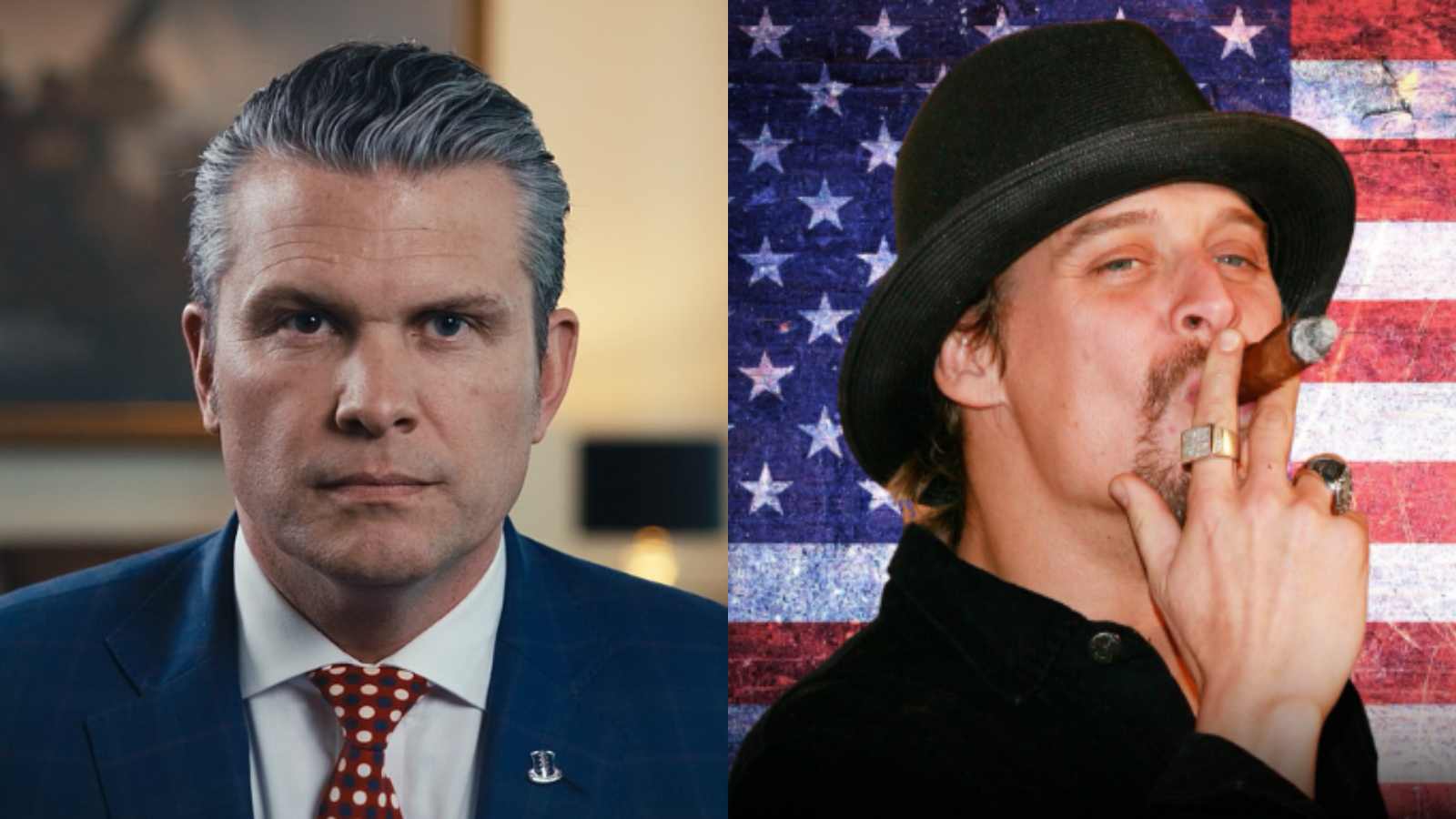
Yet, as the dust settles on the latest allegations involving musician Kid Rock and Secretary of War Pete Hegseth, we find ourselves grappling with a narrative that feels less like a breach of protocol and more like a fundamental shift in the culture of our institutions.
It wasn’t long ago that the very idea of a chart-topping rock star taking a “joyride” in one of the most advanced, taxpayer-funded combat platforms on the planet would have been dismissed as the fever dream of a satirist, yet here we are.
Reports show that a private jet flight to Fort Belvoir in Virginia, followed by a choreographed spin in the air reportedly saw the military’s own top brass configuring attack helicopters for, well, a backseat tour.
Whether this was an act of camaraderie or an egregious misuse of assets meant for the nation’s defense is currently the subject of a very heated national conversation.
But beyond the headlines and the predictable social media outrage, a quieter, more uncomfortable set of questions simmers beneath the surface: have we simply arrived at a point where the distinction between public service and private entertainment has completely dissolved? Also, who funded the trip?
Joined my friend @KidRock — and some of our great @USArmy Apache pilots — for a ride this morning. (More to come on that!)
Kid Rock is a patriot and huge supporter of our troops. The War Department is wasting no time celebrating America’s 250th — home of the free because of the… pic.twitter.com/7EyhlaCeUj
— Secretary of War Pete Hegseth (@SecWar) April 28, 2026
The Mechanics of a Military “Joyride”
If the allegations hold water, the flight logistics at Fort Belvoir paint a picture that is both technologically fascinating and deeply troubling to those who hold military efficiency in high regard.
The report notes that these Apaches, which are typically crewed by two pilots to ensure both tactical operations and safety, were allegedly configured with a single pilot to accommodate passengers.
That isn’t just a minor operational adjustment; it is a departure from the strict, rigid, and necessary standards that govern how these multi-million dollar pieces of hardware are intended to be deployed.
We aren’t talking about a scenic tour in a civilian helicopter rental; we are talking about military assets that are explicitly maintained for training and operational readiness.
When you start pulling pilots from their stations or shifting an attack helicopter’s configuration to accommodate a VIP guest, you aren’t just blurring the lines of protocol; you are actively degrading the training environment that is supposed to keep those pilots sharp for real-world conflict.
Scoop: Kid Rock flew to Fort Belvoir this morning on his private jet and took a little joy ride on 2 Apache helicopters with War Secretary Pete Hegseth, according to multiple Army sources, and backed up by flight data.
Apaches typically have 2 pilots, but they went up with one…
— Ryan Grim (@ryangrim) April 27, 2026
Critics have been quick to point out that these aircraft aren’t even stationed at Fort Belvoir, raising questions about where they were sourced and who authorized such an unconventional, and potentially hazardous, use of limited resources.
It forces us to ask: at what point does the “cool factor” of a celebrity encounter outweigh the unit’s mission readiness? The silence from the Department of Defense is deafening, leaving the public to wonder if the traditional barriers protecting military resources from political grandstanding have finally been breached for good.
Sean Parnell, the Pentagon’s chief spokesperson, reportedly said the flights were part of a “community relations event” tied to Freedom 250, a White House-led initiative organizing commemorations for America’s 250th anniversary.
A Pattern of Behavior or a Change in Guard?
To understand why this latest claim is generating such a firestorm, we cannot look at it in a vacuum; we have to trace the line back to the earlier, public-facing incident in Nashville.
A few weeks prior, videos surfaced showing Kid Rock, a man whose brand has become synonymous with a specific strain of American populism, saluting as Apaches hovered near his swimming pool.
That event, which saw the crews involved briefly suspended before a dramatic, public reversal by Secretary Hegseth, served as the opening act for this broader debate.
Hegseth’s declaration at the time, “No punishment. Zero investigation. Carry on, patriots,” wasn’t just an administrative decision; it was a rhetorical shot across the bow of the military bureaucracy.
Thank you @KidRock.@USArmy pilots suspension LIFTED.
No punishment. No investigation.
Carry on, patriots. 🇺🇸 https://t.co/Zqhv1Zx1iG
— Pete Hegseth (@PeteHegseth) March 31, 2026
It signaled that the current leadership prioritizes a certain brand of loyalty over the procedural adherence that the Army prides itself on.
When the Secretary of War steps in to bypass the chain of command, he isn’t just protecting a few pilots; he is fundamentally changing how the military views its own relationship with the public. Critics might argue that this is merely a populist leader shaking up a stuffy institution, but the reality is much more complex.
By explicitly condoning the “joyride” culture, the leadership is effectively turning the military into a backdrop for the political theater of its favorite cultural figures, and in doing so, they are inviting a level of scrutiny that the rank-and-file, who are just trying to execute their training, likely never asked for and definitely don’t want.
View this post on Instagram
The situation took an even sharper political turn when California Governor Gavin Newsom weighed in, casting the incident as a “disgraceful” use of taxpayer-funded equipment. Newsom’s critique didn’t just target the alleged breach of protocol; it served as a direct challenge to the culture Hegseth is cultivating within the Pentagon.
By highlighting the roughly $100 million price tag of these advanced attack helicopters, Newsom framed the “joyride” as the ultimate symbol of a leadership more concerned with celebrity optics than with the fiscal and operational sobriety required of the Department of Defense.
This public reprimand from one of the country’s most visible Democratic leaders ensures that the controversy won’t remain confined to military circles, effectively turning a question about Army flight logs into a primary battleground in the ongoing national debate over government accountability and the perceived “Hollywood-ification” of the United States military.
The Uncomfortable Truth About Our Military Spectacle
Here is the perspective that gets overlooked in the rush to condemn: perhaps we are looking at this all wrong. The traditionalist critique, that military assets must only be used for official business… is technically correct, but it ignores the reality of modern civil-military relations.
For decades, the U.S. military has leaned into its role as a cultural icon, utilizing flyovers at NFL games, celebrity visits to bases, and aggressive recruiting campaigns that blur the line between a fighting force and an entertainment product.
We have sold the military as a brand, a symbol of American pride that exists to be cheered for, saluted, and incorporated into our civic rituals. If we have spent the last thirty years turning the military into the nation’s favorite extracurricular activity, why are we surprised when that culture bleeds into the actual operations of the aircraft?
We have created a dynamic where the public expects to see the military perform, whether it’s at a Super Bowl or, apparently, at a musician’s private residence.
The take here isn’t to defend the specific flights, those are clear protocol violations… but to acknowledge that this current controversy is a direct, albeit messy, result of our own demand for a military that feels like a celebrity-adjacent amenity.
If we want the military to return to being an austere, strictly professional institution that stays in the shadows, we have to stop demanding it appear at our parties, our stadiums, and our private events.
We cannot have a military that operates as a cool, accessible, and celebrity-endorsed brand while simultaneously expecting it to maintain the rigid, untouchable protocols of a wartime defense force.
The “joyride” isn’t a glitch; it is the logical, albeit extreme, conclusion of a decades-long PR strategy that has positioned the military as a public plaything rather than a somber tool of national security.
The Questions That Remain Unanswered
Because the Department of Defense has remained tight-lipped, we are left in a vacuum of information, allowing speculation to thrive. As journalists, we are duty-bound to point out what we don’t know, rather than guessing at the motivations of those involved.
To truly understand the scope of what occurred at Fort Belvoir and how it impacts the integrity of our military aviation standards, there are several glaring questions that the Pentagon needs to answer, and they need to answer them with more than just a social media post:
Who specifically authorized the use of two Apache helicopters for this outing, and what was the official designation for the mission?
If the helicopters were not stationed at Fort Belvoir, what was the specific flight plan and logistical path taken to get them to the location, and what was the cost associated with this relocation?
What is the official policy regarding the presence of non-crew, non-military civilians in the cockpit or passenger area of an AH-64 Apache during flight?
Was there any coordination between the Secretary’s office and the specific unit commanders regarding the configuration of these helicopters to allow for “ride-along” passengers?
How does the military reconcile this reported event with the administrative review that was initiated following the earlier Nashville flyover incident?
Are there any existing safety protocols that were waived, bypassed, or modified to facilitate this specific flight with Kid Rock and Secretary Hegseth?
Will the Department of Defense conduct a formal audit of flight logs and fuel usage to ensure that taxpayer resources were accounted for, or is this being classified as an official government function?
Until these questions are addressed, the image of those two Apaches remains a powerful symbol of a shifting divide in our country, one in which the lines between the powerful, the famous, and the military are increasingly difficult to distinguish.
We are watching the evolution of a new reality, one in which the prestige of the uniform is being tested and the answers, when they finally come, may not be the ones the public is hoping for.