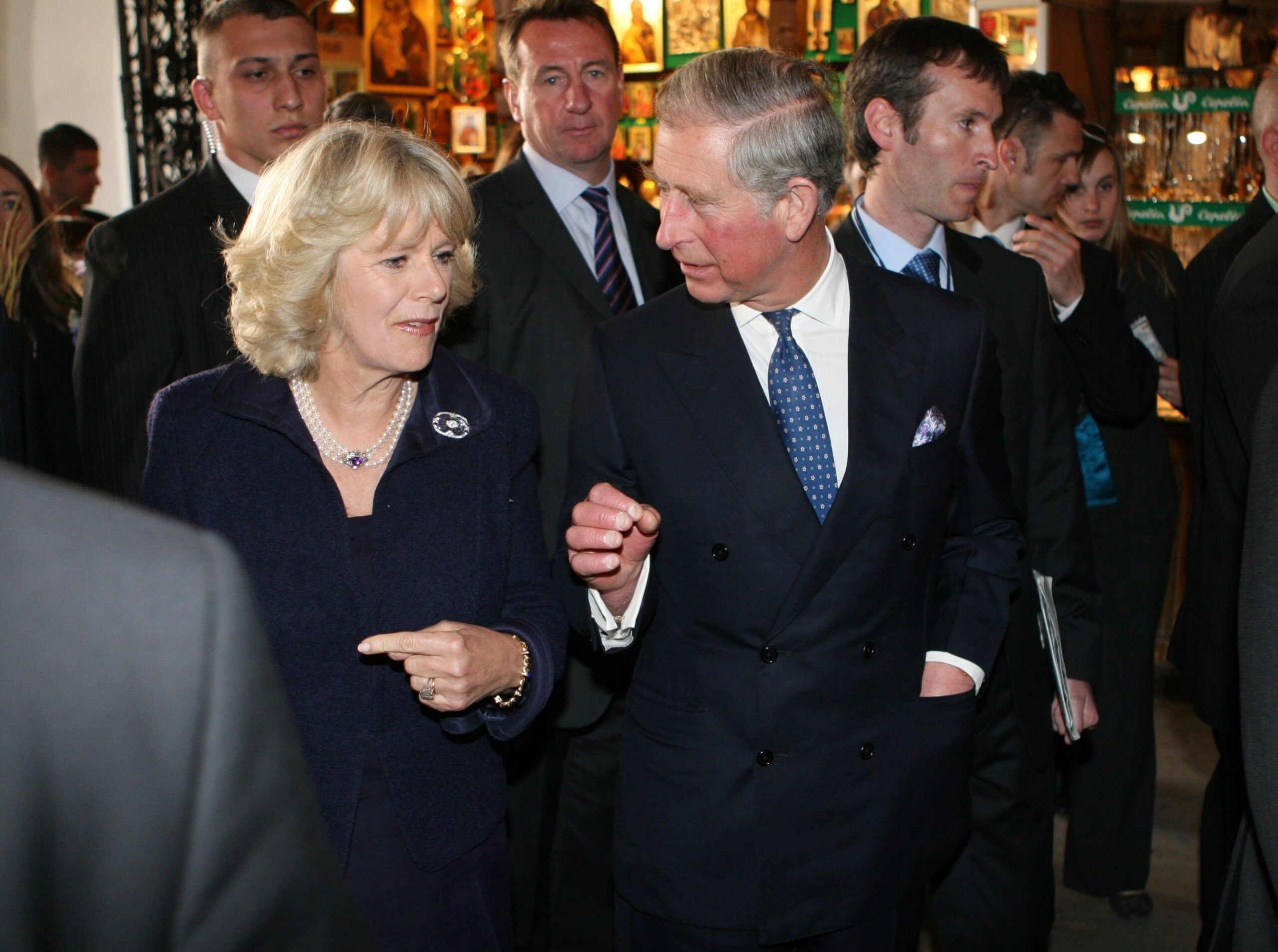
King Charles and Queen Camilla may now sit at the center of the British monarchy, but the ceremony that legally made them husband and wife was considerably smaller than the spectacle normally associated with a future king.
Then-Prince Charles and Camilla Parker Bowles married at Windsor Guildhall on April 9, 2005, in a civil ceremony attended by just 28 guests, according to PEOPLE. Their children were among the select group, including Prince William, Prince Harry, Tom Parker Bowles and Laura Lopes.
Two particularly notable people were missing, Queen Elizabeth II and Prince Philip. The late Queen did not attend her eldest son’s civil wedding, although she and Philip joined the newlyweds later that day for the Service of Prayer and Dedication at St. George’s Chapel.
The Guildhall ceremony was the legal marriage, while the religious service that followed drew around 800 guests and was followed by a reception hosted by Queen Elizabeth at Windsor Castle.
Queen Elizabeth Skipped the Civil Ceremony but Joined the Blessing
Queen Elizabeth’s absence from the legal ceremony attracted considerable attention at the time, but it did not mean she stayed away from the entire wedding day. Modern accounts, including PEOPLE, have connected her decision to her position as Supreme Governor of the Church of England and the fact that both Charles and Camilla had been divorced.
Buckingham Palace’s public explanation in February 2005 was more restrained. The palace said the Queen would not attend because Charles and Camilla wanted to keep the civil ceremony “low-key.”
The Royal Family’s official history of Windsor royal weddings records the same two-stage arrangement. The civil marriage at Windsor Guildhall followed by the religious service attended by the Queen and Duke of Edinburgh.
Prince William and Tom Parker Bowles Witnessed the Marriage
Prince William and Camilla’s son, Tom Parker Bowles, served as the official witnesses to the marriage. Prince Harry and Camilla’s daughter Laura were also among the guests. Charles’ siblings Anne, Andrew and Edward attended as well, along with other close relatives from both families.
That made the Guildhall ceremony markedly different from Charles’ first wedding to Diana, Princess of Wales, at St. Paul’s Cathedral in 1981. Charles and Camilla’s legal marriage was designed as an intimate family event.
The religious element was deliberately separated from the civil marriage. After leaving the Guildhall as husband and wife, Charles and Camilla traveled to nearby Windsor Castle for the much larger service at St. George’s Chapel.
The Wedding Was Originally Supposed to Take Place at Windsor Castle
Even the Guildhall was not the venue originally announced for the civil ceremony. When Charles and Camilla’s engagement was announced in February 2005, plans called for them to marry in a civil ceremony at Windsor Castle.
That arrangement soon ran into a legal complication. Windsor Castle was not already licensed as a civil-wedding venue, and obtaining the necessary license would have meant making the approved location available for other civil marriages as well.
The plans were therefore changed to Windsor Guildhall, which was already licensed to conduct civil ceremonies and sits just outside Windsor Castle.
The Wedding Was Then Delayed by 24 Hours
Charles and Camilla had been scheduled to marry on April 8, 2005, but Pope John Paul II’s funeral was set for the same day following his death on April 2.
Charles postponed his wedding by 24 hours so he could travel to Rome for the funeral as Queen Elizabeth’s representative. The change also allowed other dignitaries involved in both events to attend the Vatican funeral before returning to Britain.
Camilla wore two different outfits for the two parts of the celebration and no traditional bridal tiara. For the Guildhall ceremony, she wore a pale ivory ensemble with a wide-brimmed Philip Treacy hat. For the blessing, she changed into a blue-and-gold embroidered coat over a chiffon gown with a dramatic feathered headpiece.
Queen Elizabeth Later Made Her Support for Camilla Explicit
Whatever questions surrounded Queen Elizabeth’s absence from the civil ceremony, her participation in the rest of the wedding day made clear that she was not boycotting her son’s marriage altogether. Her support for Camilla became even more explicit 17 years later.
In her Accession Day message marking the beginning of her Platinum Jubilee year in February 2022, Elizabeth looked ahead to the eventual accession of Charles. She said it was her “sincere wish” that when Charles became king, Camilla would be known as Queen Consort as she continued her royal service.
Seven months later, Charles became King Charles III following his mother’s death, and Camilla became Queen Consort. She was crowned alongside him at Westminster Abbey in May 2023.