By Sunday morning, Donald Trump’s loudest defenders had a unified response to the shooting at Saturday night’s White House Correspondents’ Dinner.
They wanted you to know about a ballroom.
A gunman had reportedly entered the Washington Hilton while Trump and senior members of his administration were inside. Officials were rushed out. Attendees took cover. But by the time the story reached the online right, the conversation had already shifted from the shooting itself to the White House ballroom Trump wants built.
Trump went first
Trump set the frame himself.
On Truth Social, he wrote that the incident “would never have happened” with the “Militarily Top Secret Ballroom” his administration is building at the White House. In nearby comments, he described the Hilton as an insecure venue. He also told reporters his security worked exactly as designed and that the gunman never got close to the doors where he and his cabinet were dining.
President Trump says tonight’s shooting at the WHCD is a clear example of why we need a need a new ballroom for The White House pic.twitter.com/a6dzeH9nyB
— Acyn (@Acyn) April 26, 2026
The hotel was unsafe. The security response was perfect. The solution was the ballroom.
All three arguments arrived from the same president on the same Sunday.
Then came the chorus
Within hours, some of Trump’s most prominent supporters landed in the same place.
Jack Posobiec, with more than 3 million followers, thanked God Trump was building the ballroom. Chaya Raichik’s Libs of TikTok, also followed by millions, said the shooting showed why the country needed it. Louisiana Governor Jeff Landry made the same connection. Rudy Giuliani suggested critics of the project should now support it. Meghan McCain, Mike Cernovich, Andrew Kolvet, End Wokeness, Wall Street Mav, and others joined in.
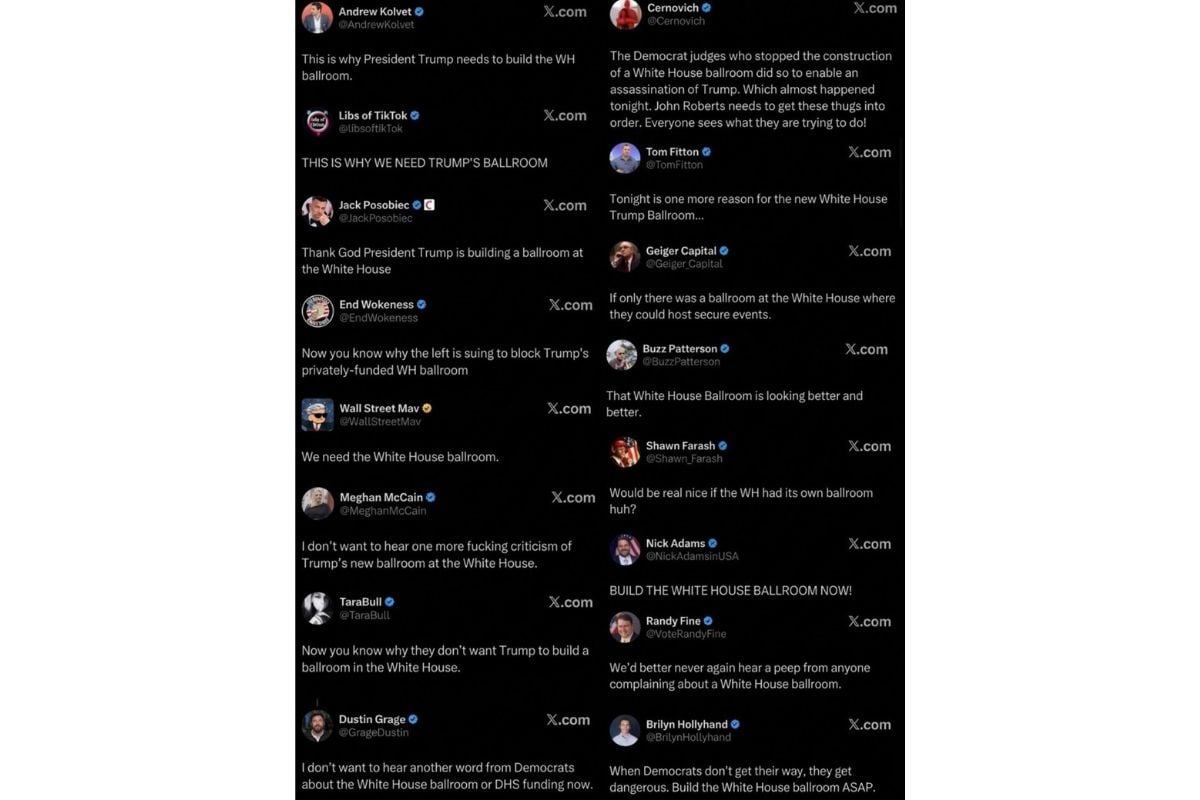
The point is not that Trump supporters defended Trump. That happens every day. The point is how quickly the same argument moved across accounts with different audiences and different roles inside the pro-Trump media ecosystem.
Elected officials. Influencers. Podcast figures. Anonymous viral pages. Same incident. Same window. Same takeaway.
A shooting had become a construction argument before the public had even settled on what happened.
She had described the machine
Ashley St. Clair had been part of that world for years.
Since breaking with parts of the right-wing influencer ecosystem, she has described the architecture behind pro-Trump online messaging as less spontaneous than it looks from the outside. Her claim is that talking points are drafted elsewhere, distributed through private group chats, and posted by large accounts at coordinated times.
@ashstcright on time boys!!♬ original sound – ashley st. clair
To a casual reader scrolling through X, the result looks like consensus. A group of high-profile voices appear to be reaching the same conclusion independently. St. Clair says that appearance is often the point.
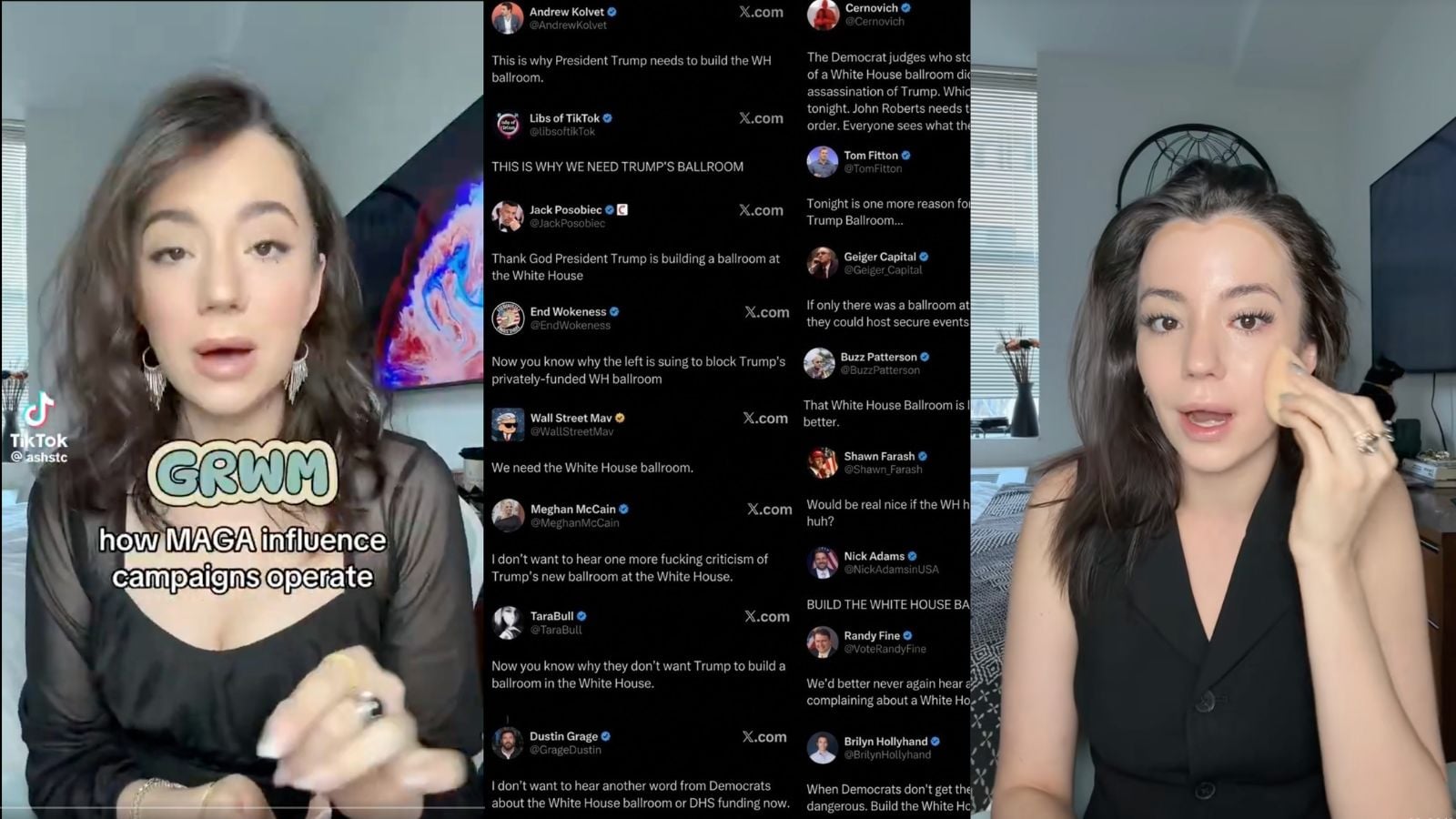
After the ballroom posts began spreading, she posted a TikTok with screenshots stacked behind her. Her caption called the response “fake and staged.” She argued that the odds of so many large accounts arriving at the same talking point in the same window were not convincing.
She also named the alleged chat: Fight Fight Fight, a reference to Trump raising his fist after the assassination attempt in Butler, Pennsylvania, in July 2024. She claimed its members include Trump’s official war room, administration figures including James Blair, and some of the largest pro-Trump accounts on the platform.
Her claims should be handled carefully. She is not a neutral observer, and her own conflicts with powerful people in that world are part of the story. But she also knows the ecosystem from the inside. And on Sunday morning, the pattern she had described appeared to play out in public.
Posts became pressure
By Sunday afternoon, Acting Attorney General Todd Blanche had moved the demand from the timeline into a federal letter, formally requesting the National Trust for Historic Preservation drop its lawsuit against the ballroom’s construction. He cited the shooting directly. He also called the same incident a “massive security success story” while describing it as a near miss in the same news cycle.
It’s time to build the ballroom. pic.twitter.com/cUMkVpehGY
— Acting AG Todd Blanche (@DAGToddBlanche) April 26, 2026
The lawsuit Blanche wants dropped is what’s left to slow the project. The East Wing came down in October. The ballroom is rising where it stood. The plaintiff is a preservation group arguing the project skipped reviews and approvals required by federal law.
The lockstep posts had arrived first. The legal pressure followed within hours. The audience sees reaction. The machine sees distribution. The press dinner was just the latest occasion.
The accounts that posted the same line on Sunday will not be required to disclose whether they were paid to do it. Federal Election Commission rules don’t reach influencers once money moves through a consulting firm. The disclosure ends at the firm. The audience never finds out. The next event will arrive on schedule. So will the chorus.