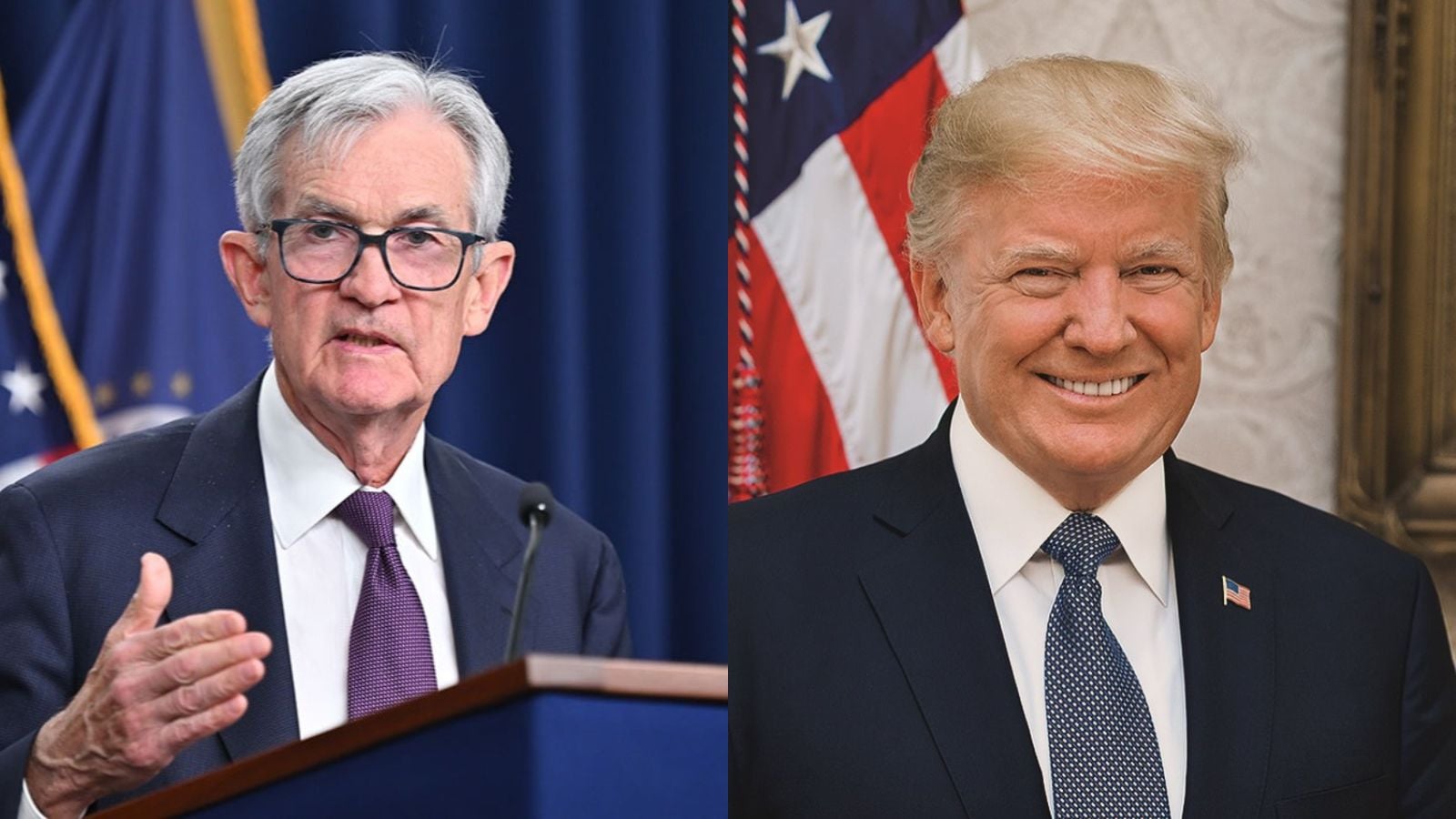
A new clash has erupted between Donald Trump and Federal Reserve Chair Jerome Powell after Powell revealed he plans to remain on the Federal Reserve Board even after his term as chair ends next month.
The comments immediately reignited tensions between the White House and the nation’s central bank, with Powell warning that political attacks against the Fed are becoming dangerous, while Trump responded with a personal and blistering attack on Truth Social.
Powell Warns Fed Independence Is Under Threat
Speaking at a press conference after the Federal Reserve announced it would keep interest rates unchanged, Powell made unusually direct remarks about the political pressure surrounding the institution.
“I worry these attacks are battering this institution and putting at risk the things that really matter to the public,” Powell said, referring to what he described as “unprecedented” legal and political attacks from the Trump administration.
He also revealed that he plans to remain on the Federal Reserve Board after his term as chair expires, though he said it would be “for an undetermined period of time.”
The statement was significant because Fed chairs do not always remain on the board once their leadership term ends. Powell’s decision signals that he believes stability inside the institution matters at a moment when the Fed’s independence is under heavy scrutiny.
Trump Fires Back on Truth Social
Trump responded quickly and harshly on Truth Social, mocking Powell and dismissing his decision to stay on the board.
“Jerome ‘Too Late’ Powell wants to stay at the Fed because he can’t get a job anywhere else — Nobody wants him,” Trump posted.
The president has long used the nickname “Too Late Powell” to criticize the Fed chair over interest rate decisions, accusing him for years of moving too slowly on cuts while also blaming him for economic slowdowns and inflation concerns.
Trump has repeatedly argued that the Federal Reserve under Powell damaged growth by keeping rates too high for too long. Powell, meanwhile, has insisted the Fed’s decisions are based on economic data rather than political pressure.
The Fed Holds Interest Rates Steady
The confrontation comes as the Federal Reserve chose once again to leave its benchmark interest rate unchanged, signaling continued caution about inflation and the broader economy.
Fed officials have been trying to balance slowing inflation with concerns about economic growth, labor markets, and rising debt pressures across the economy. Markets have been closely watching for signs of future rate cuts, but Powell indicated the central bank is still taking a careful approach.
That decision is politically sensitive because Trump has increasingly pushed for lower rates, arguing they would help stimulate the economy and financial markets.
A Bigger Fight Over Central Bank Independence
What makes this clash bigger than a normal political disagreement is Powell’s direct warning about institutional independence.
The Federal Reserve has traditionally operated separately from direct White House control, with its credibility tied to the idea that monetary policy decisions are insulated from partisan politics.
Powell’s comments suggest he believes that principle is now under pressure.
Critics of Trump argue that repeated public attacks on the Fed risk undermining confidence in the institution and could politicize monetary policy in dangerous ways.
Trump supporters counter that the Fed is not above criticism, especially after years of inflation, aggressive rate hikes, and economic uncertainty.
Trump and Powell Have Been Fighting for Years
The feud between Trump and Powell is not new.
During Trump’s first presidency, he frequently blasted Powell publicly for raising interest rates, at times reportedly exploring whether he could legally remove him from office.
At various moments, Trump accused the Fed of hurting the economy, sabotaging growth, and failing to support American competitiveness.
Powell largely avoided responding directly during those years, often emphasizing the Fed’s independence and commitment to economic stability. This latest exchange shows that the relationship remains deeply hostile.
Reactions Split Along Political and Economic Lines
The comments online quickly split into familiar camps. Some people sided with Powell, arguing that central banks must remain independent if they are going to function properly.
Others agreed with Trump, blaming the Fed for inflation, rising borrowing costs, and economic pressure on ordinary Americans.
Supporters of Powell praised him for speaking openly about threats to institutional independence.
Trump supporters argued Powell is trying to protect his own influence and avoid accountability for economic decisions many Americans still resent.
A Battle That Could Shape Economic Policy Ahead
The timing of this fight matters.
With economic uncertainty, debt concerns, inflation pressures, and political polarization all rising at once, the relationship between the White House and the Federal Reserve could become one of the defining issues heading into the next phase of Trump’s presidency.
Powell appears determined to defend the Fed’s independence while Trump appears equally determined to keep attacking it.
And now, with Powell planning to remain inside the Federal Reserve system even after his term as chair ends, the conflict may not be ending anytime soon.
Do you think Jerome Powell is protecting the independence of the Federal Reserve, or is Trump right that the Fed leadership has failed the American economy?