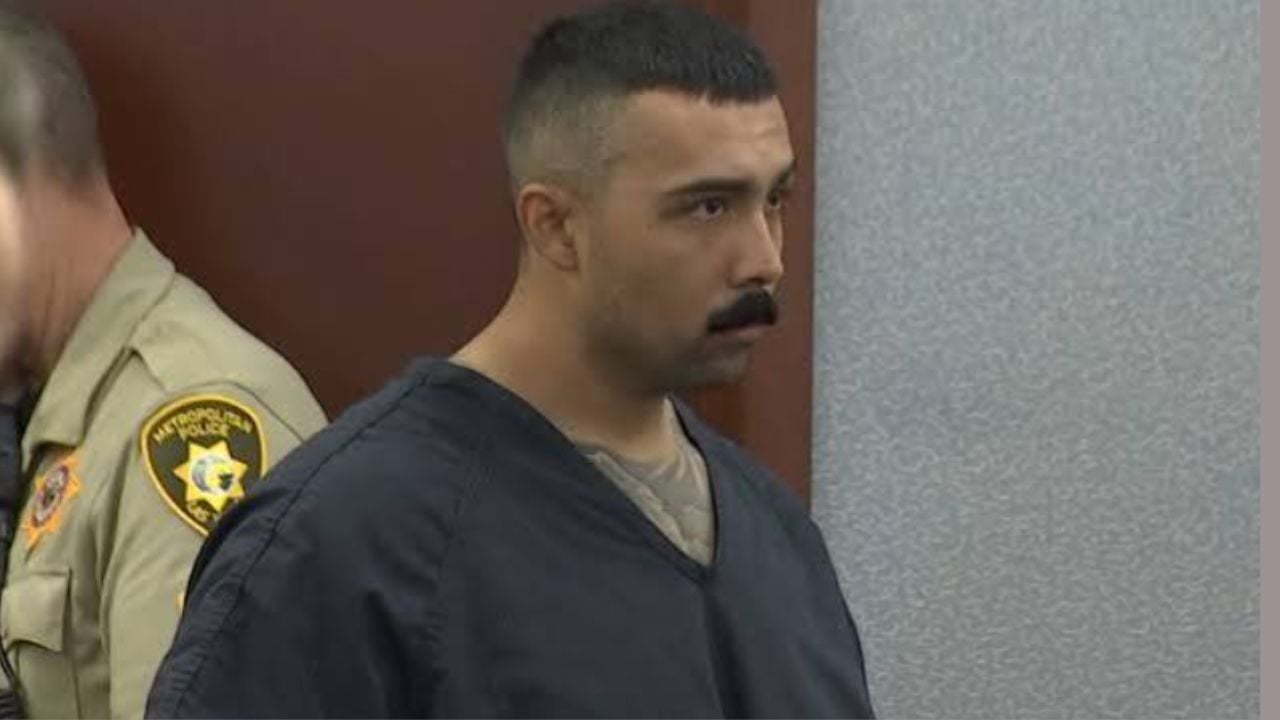
A Las Vegas police officer and his wife are accused of buying gift cards and luxury goods on their own credit cards, then falsely reporting the cards stolen to get their money back while keeping the purchases.
Antonio Chavez, 28, and Claudia Guzman-Marquez appeared in court on September 10. Judge Rebecca Saxe ordered their release under monitoring, declining prosecutors’ request for Chavez to post $100,000 cash bail.
The purchases included Louis Vuitton handbags, Apple electronics and designer clothing, according to an arrest report described by FOX5. Investigators say the alleged scheme ran from May 25 through August 3.
Prosecutors also accused the couple of conspiring with another person in California to defraud stores and credit card companies for their own financial benefit, KTNV reported.
A Gift Card Purchase Prompted the Investigation
The investigation began in June after the security director at Town Square Las Vegas reported a large gift card purchase, according to an arrest warrant described by KSNV. Investigators obtained Chavez’s credit card records and found large purchases and attempted transactions, some of which had been declined as unusual activity.
The warrant says Chavez claimed his card had been stolen before a gift card purchase, but images and witnesses placed him at the transaction. He also reported a bag containing his cards stolen to Henderson police. FOX5 reported that investigators accused both spouses of signing sworn dispute affidavits through remote notarizations to support their refund claims.
The Judge Rejected a $100,000 Cash Bail Request
Prosecutors argued that Chavez knew the law and had admitted knowingly violating it. They requested a hearing to establish the legitimate source of any bail money, along with house arrest. Defense attorney Robert Draskovich sought release without cash bail, citing Chavez’s cooperation, lack of a criminal record and no previous failures to appear.
Saxe cited the nonviolent charges in deciding that monetary bail was unnecessary. Chavez was ordered onto electronic monitoring and restricted to Clark County. Guzman-Marquez, who told the court she was six months pregnant, was assigned a GPS-tracking phone and ordered to remain in the Las Vegas area. Both are scheduled to return to court on October 8.
LVMPD Suspended Chavez Without Pay
Click below for information on the arrest of an LVMPD Officer on September 9, 2026: pic.twitter.com/Z78l0bnKfQ
— LVMPD (@LVMPD) September 9, 2026
Chavez was booked into the Clark County Detention Center on September 9. The department’s arrest announcement listed one theft charge involving $25,000 to $100,000, four counts of burglary of a business and one count of perjury.
LVMPD said Chavez has worked for the department since 2020 and was assigned to the Community Safety Division at Northwest Area Command. His police powers were suspended without pay pending investigation. The allegations against both defendants remain unproven, and both are presumed innocent.
How Businesses and Cardholders Can Handle Disputes
For businesses receiving a disputed-payment notice, Visa recommends responding promptly to the merchant bank or payment processor and contacting it for the applicable rules. It also advises clearly stating refund and cancellation policies at checkout and recording transactions accurately to help prevent disputes.
Cardholders who find an incorrect or unauthorized charge should contact their issuer immediately, according to the CFPB. To protect federal billing-error rights, send a written notice within 60 calendar days after the charge first appears on the statement. Keep copies of the dispute and a record of follow-up calls. A charge can still be disputed even if it has already been paid.