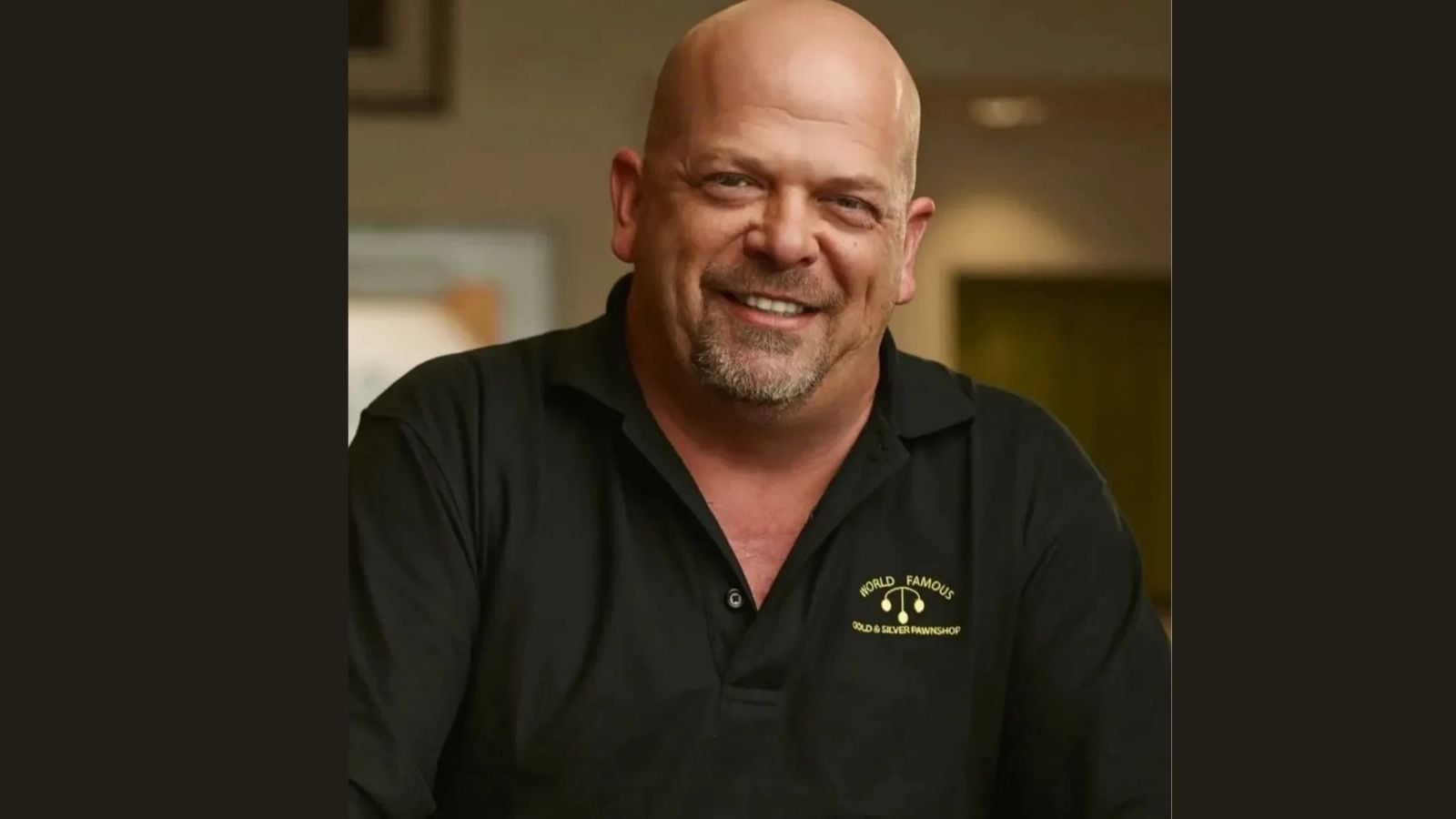
When a reality TV pawn shop owner walks up to a White House podium and casually tells the President of the United States that he loves him, you can go ahead and file that under moments where culture and politics fully stop pretending they are separate worlds. Because that was exactly the energy in the room this week when Rick Harrison, best known as the straight-faced negotiator, delivered what might be the most meme-ready line of National Small Business Week.
It did not happen at a chaotic rally or on a late-night TV show. This was the East Room. Formal setting. Suits, policy talk, carefully planned remarks. And then, suddenly, it turned into something that felt much closer to a viral clip waiting to happen.
Social media picked it up almost instantly, and since then, the moment has been dissected from every possible angle, from political loyalty to celebrity optics to what even counts as a “small business” anymore.
The Room Was Serious Until It Was Not
The event itself was positioned as a White House Small Business Summit, the sort of program designed to spotlight economic policy while putting real business owners front and center. More than 130 attendees from industries such as food production, defense, energy, manufacturing, and retail filled the East Room on Monday, May 4, creating a backdrop that leaned more toward policy conference than pop culture crossover.
President Donald Trump opened with a familiar theme, calling small businesses the backbone of the American economy before transitioning into the main program. SBA Administrator Kelly Loeffler followed with hard numbers, noting that the agency had delivered around $45 billion in capital to over 85,000 small businesses in the previous cycle.
So far, everything has tracked like a standard government event. Then came the shift. Rick Harrison stepped up to the microphone, and within seconds, the tone of the room changed from policy briefing to headline moment. He praised what has been nicknamed the “Big Beautiful Bill,” the administration’s major tax and spending package, then dropped the line that would dominate timelines.
NEW: Pawn Stars’ Rick Harrison joins President Trump at the White House:
“Literally he’s going to go down as maybe the best president ever. I love this guy.”
“The backbone of this country is small business. Plain and simple.”
“The last guy in office, all we heard was that we… pic.twitter.com/kq9lbTemYs
— Fox News (@FoxNews) May 4, 2026
“I just want to say he’s amazing. He’s done so much, I mean so much for all of us”, Harrison said. Moments later, he doubled down, saying how Trump is “going to go down as maybe the best president ever.”
In a room built for economic messaging, that was the line that landed the loudest.
The Internet Did Not Let That Slide
If the goal was to create a moment people would talk about, that part worked instantly. Within hours, the clip was everywhere, and the reactions came in fast, messy, and very unfiltered.
Now this this ” Guy ” Rick Harrison fell into the real cold. Support idiot Dumb Trump no thanks.
— Tomas Rosvall (@TomasTom43359) May 5, 2026
Some longtime viewers of “Pawn Stars” were not exactly here for it. One commenter wrote, “Now this this ‘Guy’ Rick Harrison fell into the real cold. Support idiot Dumb Trump no thanks,” capturing a kind of frustration from fans who did not expect to see him take such a strong public stance.
Others zeroed in on something else entirely, questioning whether Harrison even fits the “small business” label anymore. “Since when was Rick harrison a small business owner? Dudes a fucking multi millionaire now. He hasn’t been a ‘small’ business owner in 20 years,” another user posted, turning the conversation toward credibility rather than politics.
since when was Rick harrison a small business owner? Dudes a fucking multi millionaire now. He hasn’t been a “small” business owner in 20 years
— ZdsPro (@Zodyrus) May 5, 2026
There were also reactions that poked at the broader messaging coming out of the event. “Didn’t Trump just say small businesses don’t mean anything to him,” one comment read, highlighting the kind of contradictions people were quick to point out.
And then there was the crowd leaning fully into the irony of it all. “Yeah, Pawn Stars with network contracts for millions is totally what people think of when talking about small American businesses!” another viewer wrote.
Yeah, Pawn Stars with network contracts for millions is totally what people think of when talking about small American businesses! 😂
— Fake and Gay Finder (@intorabbitholes) May 4, 2026
The Backstory That Explains The Loyalty
As over-the-top as the moment sounded, it did not come completely out of nowhere. Harrison has actually spoken before about why he views Trump positively, and it ties back to a specific incident.
According to past reports, Harrison was once blocked by Secret Service personnel from attending a congressional rally. The situation could have ended there as a routine security mishap, but it did not. Trump personally apologized to him afterward, taking responsibility for what happened and acknowledging the error.
Harrison has referenced that interaction in interviews, describing Trump as a “good guy” who cares about the people he deals with. He has also pointed to that moment as not matching the way the President is typically portrayed in the media. That experience has clearly shaped how he talks publicly about Trump, including what happened in the East Room.
Why He Was Even On That Stage
Harrison’s appearance was not random. It fits into a broader pattern in which recognizable public figures are used to translate complex policy into something more digestible. A familiar face can carry a message further than a technical explanation ever will, especially in a social media environment that rewards personality over detail.
Placing him alongside business owners from industries such as manufacturing and defense suggests a deliberate effort to broaden the definition of who represents small-business voices. Recognition matters. Reach matters. And in moments like this, relatability is often less about scale and more about visibility.
Rick Harrison, known from the TV show “Pawn Stars,” expressed his admiration for President Trump as the “best president” at a small business event on Monday afternoon at the White House, highlighting Trump’s achievements for small businesses pic.twitter.com/MzIqbMp1Ny pic.twitter.com/JC1dRZxo8b
— Sandy (@SD73660) May 4, 2026
What This Actually Says About The Bigger Picture
The real takeaway here is not just that a reality TV star praised a sitting president in unusually glowing terms. It is how natural that moment felt in a setting that used to be reserved for strictly formal messaging.
The boundary between entertainment and politics is no longer just blurred; it is actively being used. Familiar faces bring attention. Attention drives engagement. And engagement is what keeps moments like this circulating long after the event itself ends.
As more figures step into spaces like the White House podium, the idea of what an “ordinary” American voice looks like keeps evolving. In this case, it came from someone who built a brand behind a pawn shop counter, then carried that same energy into one of the most formal rooms in American politics.