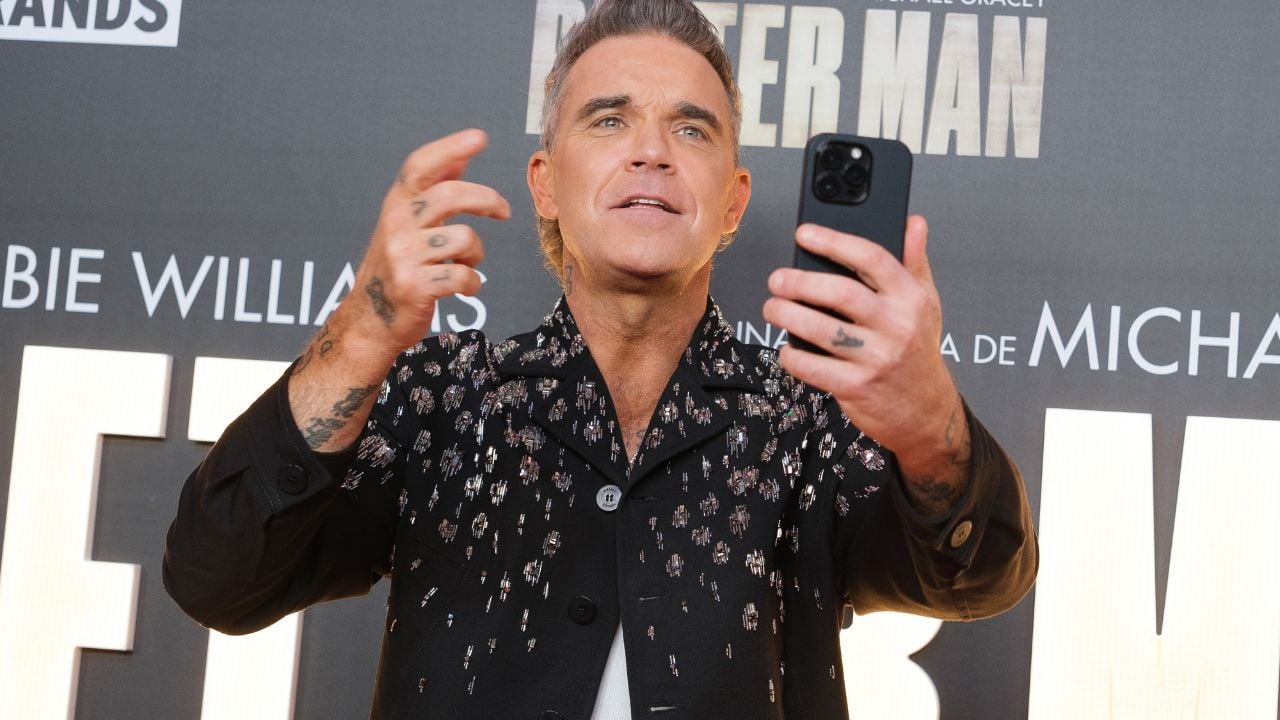
Robbie Williams has revealed that he was recently diagnosed with autism, saying the discovery has helped explain parts of himself that had puzzled him for years.
The 52-year-old singer shared the news during an Aug. 13 Q&A at the Autumn/Winter launch of his Hopeium clothing line at Flannels in London. Williams said he already knew he had ADHD and had now learned he had “a bit of autism” as well, adding that the diagnosis “explains so much.”
Williams joked that the diagnosis had become his “get-out-of-jail-free card” whenever he does something unusual. He also spoke more seriously about ADHD, intense periods of creative focus and the intrusive thoughts that can occupy his mind when it is not directed toward something else.
During a podcast appearance in 2025, he said an online autism test had not classified him as autistic but had identified traits involving social situations and interaction. At the time, he said finding an explanation could help him understand why he had spent so much of his life feeling “uncomfortable in my skin.”
Williams Says the Diagnosis ‘Explains So Much’
View this post on Instagram
Williams discussed the new diagnosis while explaining how his mind works and how creativity has become one of the ways he directs his attention. “I have ADHD and I just found out I have a bit of autism as well, which I actually f****** love because it explains so much,” Williams said, according to People.
He then joked about how he has started using the diagnosis. “It is my get-out-of-jail-free card now, and all the weird s*** that I do I just say, ‘Sorry, I’m autistic,'” he said.
He has previously spoken about ADHD, anxiety, depression, addiction and his difficulty absorbing positive attention even while performing for enormous crowds.
Williams Uses Creative Work to Redirect Intrusive Thoughts
Williams said his ADHD can allow him to focus intensely on one subject while making it difficult to concentrate on almost everything else. “With the ADHD you can completely and utterly concentrate on something 1000% but with absolutely everything else, you just cannot do it. Ask my kids,” he said.
His preferred focus is creative work, particularly developing images and ideas he finds funny. Williams said giving his mind that specific task prevents his creativity from turning instead toward fears and anxious possibilities. “What I’m completely and utterly obsessed with is creating images and making funny things,” he explained. “If I’m creating images and funny things, I’m not thinking about me.”
He offered a recent plane journey as an example of how far his intrusive thoughts can go. Williams said he found himself wondering whether he could somehow possess telekinetic abilities and whether his thoughts could make the aircraft crash. “So that’s the kind of level of insanity that I’m dealing with,” he said. “It’s best to train my brain to do something better than worrying about having supernatural powers and crashing a plane.”
His comments about creativity and attention came as he presented Hopeium’s new collection, the fashion project he has increasingly used as another creative outlet.
Last Year an Online Test Identified ‘Autistic Traits’
Williams had already been publicly questioning whether he might be autistic before revealing the new diagnosis. During an October 2025 appearance on I’m ADHD! No You’re Not, he said an online test had told him he was not autistic. “It turns out I’m not, but I’ve got autistic traits,” Williams said at the time. “And it’s around, social stuff, it’s about interaction.”
He nevertheless said he was still searching for an explanation for why he had felt so persistently uncomfortable throughout much of his life. Williams described his bed as his “comfort zone” and almost everywhere outside it as his “discomfort zone.”
“It’s getting better,” he said. “It was awful, horrendous through my 20s, bad through my 30s, my 40s started to get better, and I’m on an upward curve, but I’m still uncomfortable in my skin.” He said he was “constantly still looking for the reason and the whys,” making his newly disclosed diagnosis a notable development from what he understood about himself less than a year earlier.
He Previously Described Himself as an ‘Olympian at Masking’
That same 2025 conversation offered another window into the gap Williams says exists between his public persona and his private experience. “I’m an Olympian at masking,” he said, explaining that he had learned to project an image that could appear full of confidence, bravado and even smugness.
Those qualities, he acknowledged, have been commercially useful throughout his career because they helped create the larger-than-life Robbie Williams audiences recognize onstage. “But actually, what’s happening is, I feel like the opposite of that all the time,” he said.
Williams also described what he personally called “inside Tourette’s.” He said he had realized that some of his persistent intrusive thoughts felt to him like tics that remained internal rather than emerging as visible movements or vocalizations. “I’ve just realized that I have Tourette’s, but they don’t come out,” he said. “They are intrusive thoughts that happen.”
He said even performing before a stadium full of people expressing their affection could fail to break through the negative thoughts. “You would think that a stadium full of people professing their love to you would work,” he said, “but whatever it is, inside me, cannot hear it. I cannot take it in.”