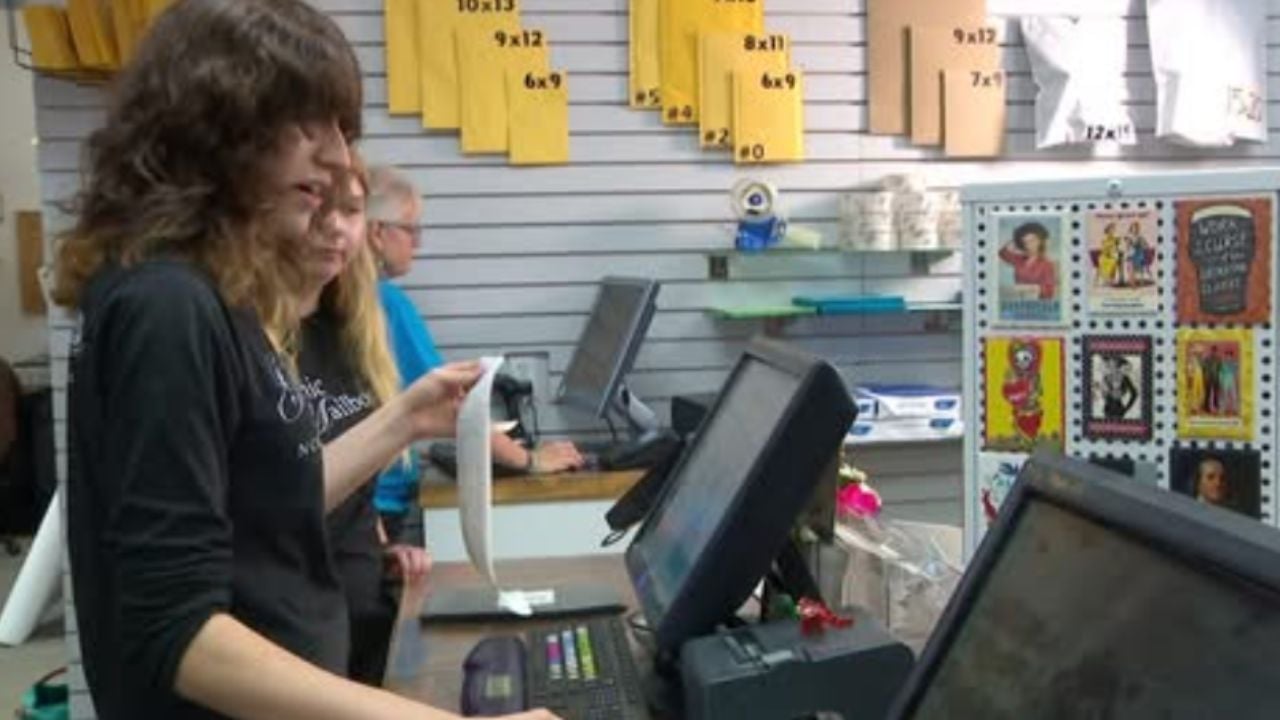
A Minnesota woman was moments away from sending $30,000 in cash to scammers when a shipping store employee became suspicious of a package she wanted rushed to Texas.
The woman arrived at Graphic Mailbox in Northfield and said the box contained cookbooks. She was willing to spend about $500 to have it delivered overnight, but employee Alice Castro noticed that something about the interaction did not seem right.
Castro said the customer appeared frantic and seemed to have unusually specific answers ready when questioned about the shipment. After Castro involved her manager and police were called, the supposed box of cookbooks was found to contain $30,000 in cash.
The woman explained that scammers had convinced her that her financial accounts had been hacked and that she needed to send the money to strangers, according to CBS Minnesota. Because the shipment was stopped before leaving the store, she recovered both the cash and the approximately $500 shipping fee.
The Customer’s Answers Made an Employee Suspicious
Castro said the woman’s behavior raised concerns almost immediately. The customer appeared anxious, and Castro said her answers sounded unusually prepared, as though she had been coached on what to say if anyone questioned the shipment.
The request itself added another warning sign. The woman was prepared to spend roughly $500 to overnight what she described as a box of cookbooks to Texas. Castro brought her concerns to Graphic Mailbox manager Terri Sim. Police were then called to the store.
The ‘Cookbooks’ Were Actually $30,000 in Cash
The package contained no ordinary shipment of books. Staff and police discovered $30,000 in cash that the woman intended to send to people she did not know.
Sim said the customer explained that someone had convinced her that her accounts had been hacked. The story had been persuasive enough that she withdrew a large amount of money, packaged it and prepared to have it delivered overnight.
The woman told Sim that she normally would not have expected herself to fall for this type of scheme but that the people contacting her had been extremely convincing. The woman recovered the full $30,000 and the approximately $500 she had paid for overnight delivery was also returned.
A Claim That Your Money Is in Danger Is Often the Beginning of the Scam
The Federal Trade Commission warns about schemes that begin with claims of fraud or criminal activity involving a victim’s bank, retirement or investment accounts. The scammer then offers a supposed solution: move, withdraw or transfer the money to protect it.
The FTC says that instruction is itself a major indicator of fraud. Legitimate banks, investment companies and government agencies do not protect someone’s savings by directing that person to withdraw cash and send it to a stranger.
Similar schemes may involve wire transfers, cryptocurrency, gold bars, cash couriers or physical shipments. The payment method changes, but the underlying message remains the same, the victim is pressured to move money quickly because leaving it where it is supposedly puts it at risk.
Being Told to Lie About a Withdrawal or Shipment Is Another Warning Sign
The FTC specifically advises people not to follow instructions from someone who tells them to conceal the reason for a large withdrawal or transaction. Scammers may tell victims that bank employees cannot be trusted, that an investigation must remain secret or that telling the truth about the transaction will interfere with efforts to protect their money.
That secrecy helps prevent employees, relatives or friends from recognizing the scam. If someone unexpectedly claims that an account has been hacked, end the conversation and contact the bank directly using the number on a statement, payment card or official website. Do not use a number provided by the person who made the warning.
Before withdrawing or shipping a large amount of cash, tell a trusted person what is happening. The FTC specifically encourages consumers to be honest with bank employees who ask why they are moving money because those questions may be intended to identify fraud.
Anyone who has already sent money should contact the bank, shipping company or other business involved immediately to see whether the transaction or delivery can still be stopped. Preserve phone numbers, messages, receipts, shipping information and instructions from the scammers and report the incident through ReportFraud.ftc.gov and local law enforcement.