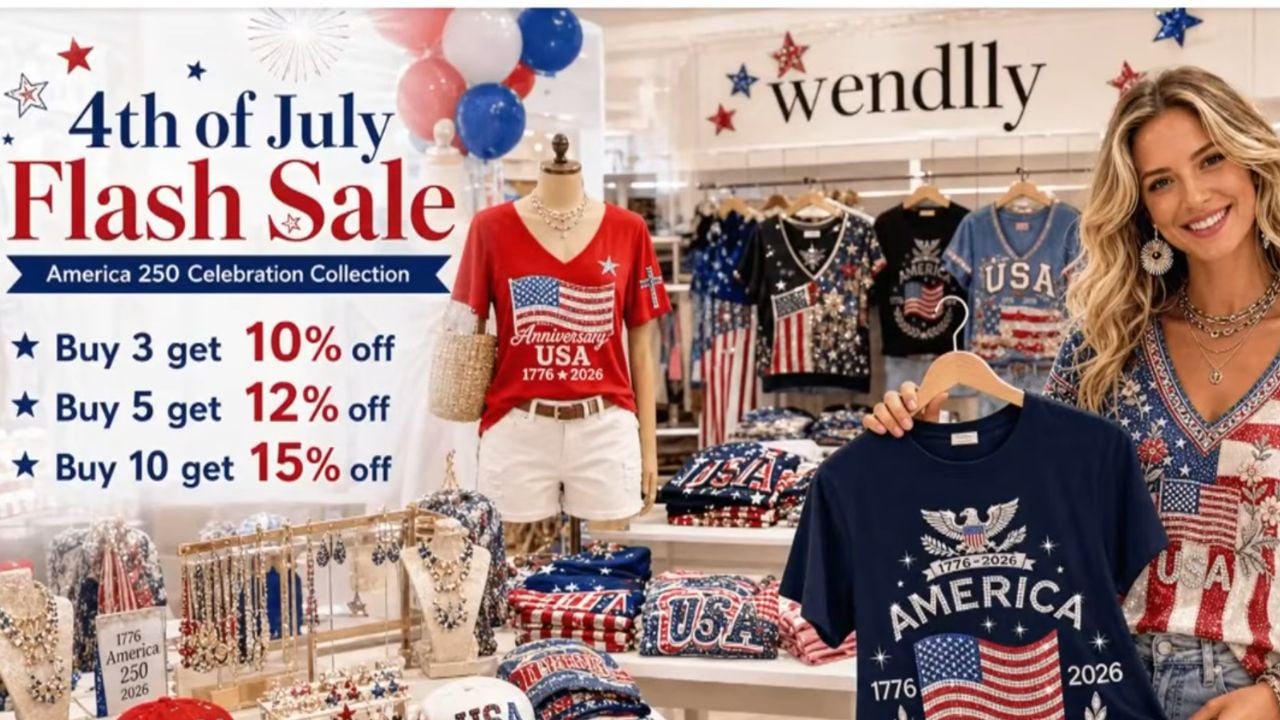
Patriotic shopping around the Fourth of July and America’s 250th anniversary is giving deceptive online sellers a new opening.
ClickOrlando reported that imposter “Made in the USA” websites are using social media ads to sell patriotic clothing and other themed products.
One Florida shopper, Debbie Sayfoot, said she bought what looked like a sequined patriotic shirt after seeing an ad while playing a game on her phone.
What arrived, she told the station, looked nothing like what she thought she ordered.
A Patriotic Shirt Arrived Looking Nothing Like The Ad
Sayfoot said the shirt shown in the ad appeared to have sequins across the design. The product she received did not match that image, according to ClickOrlando. She also pointed out missing or incomplete design details on the shirt, including stars that did not appear fully printed.
When she looked closer, the shirt had no care tags showing how to wash it, what it was made from, or where it came from.
The Website Claimed A Long American History
ClickOrlando identified one site under scrutiny as Wendlly.com. The site’s “About” page claimed a long American history, saying it had hand-knit Merino wool sweaters in a remote U.S. town since 1986.
Domain records reviewed by the station showed the site was created in October 2025. ClickOrlando also reported that the site traced back to a province in China.
Sayfoot said the company told her returns had to be sent to China. She had paid with credit card points and told the station she had not been able to recover the money.
Patriotic Branding Can Create A Made-In-America Impression
The Federal Trade Commission says an unqualified “Made in USA” claim generally means a product must be “all or virtually all” made in the United States.
The FTC says U.S.-origin claims can be express or implied. Flags, U.S. maps, patriotic imagery, American place references, and claims about American factories or heritage can create an overall impression that a product is made in the United States.
The agency’s Made in USA guidance also applies to digital marketing, including internet, email, and social media advertising.
The FTC announced a “Made in USA” enforcement sweep in April that included allegations against companies accused of falsely advertising patriotic flag display and related products as American-made.
Shoppers Should Check The Store Before Paying
Before buying from an unfamiliar patriotic store, shoppers should search the company name and website address with words like “review,” “complaint,” and “scam.” They should also read the return policy before paying, especially if returns must be mailed overseas.
The FTC says shoppers should check seller reviews from multiple sources, keep records of purchases, and pay by credit card when possible because credit cards offer stronger dispute rights when an item never arrives, arrives defective, or is not what the buyer ordered.
Warning signs include a very new domain, vague company history, no clear physical address, missing product-origin details, copied product photos, unclear refund terms, overseas return addresses, and social media ads that push a limited-time patriotic deal.
Anyone who receives the wrong item should save screenshots of the ad, product page, order confirmation, return policy, emails, packaging, tags, and the item that arrived. If the seller will not resolve the problem, shoppers can dispute the charge with their credit card company and report the store to the FTC at ReportFraud.ftc.gov.