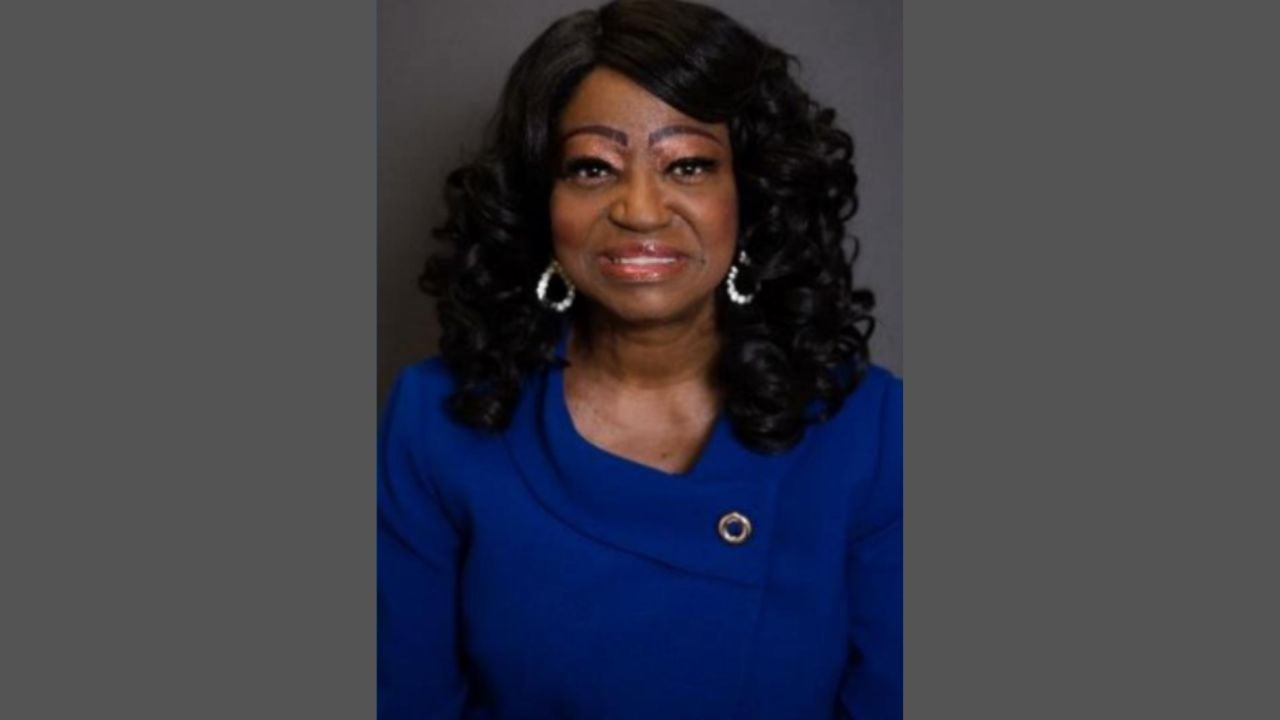
A suspended Georgia lawmaker has pleaded guilty to making false statements that allowed her to collect $17,811 in pandemic unemployment benefits.
Sharon Henderson, 67, claimed that Henry County Schools was her current employer when she applied for emergency federal assistance in June 2020.
In reality, she had not worked for the school district in almost two years.
Her entire employment history with the district consisted of five days as a substitute teacher in 2018, according to the U.S. Attorney’s Office for the Northern District of Georgia.
A Five-Day Substitute Job Became the Basis for Her Claim
A suspended Democratic state lawmaker just pleaded guilty to lying about her employment to collect federal unemployment benefits during the pandemic. She’s the third former or current Georgia Democratic lawmaker to plead guilty to such charges. #gapol https://t.co/lc066xzKzb
— Greg Bluestein (@bluestein) July 30, 2026
When Henderson applied for pandemic unemployment assistance, she identified Henry County Schools as her current employer. Federal prosecutors said she falsely stated that she had worked for the district throughout 2019 and as recently as March 10, 2020.
She also claimed that she possessed paystubs documenting the employment and that the COVID-19 emergency had closed her workplace. Henderson’s last work for the school system had occurred in 2018, when she completed five days as a substitute teacher.
The substitute-teacher agreement she signed included an acknowledgment stating that substitute teachers were not eligible to draw unemployment wages, prosecutors said.
She Continued Filing Certifications After Taking Office
Pandemic unemployment applicants were required to provide their recent work history and confirm that COVID-19 was the reason they were unemployed.
Continued payments also required weekly certifications stating that the applicant remained eligible and explaining why the person was not working. Henderson claimed that a COVID-19 quarantine prevented her from reaching her place of employment.
She submitted eight fraudulent certifications in June 2021, after she had been sworn in as the Georgia House representative for District 113, which covers western Newton County and part of Covington.
The false statements in Henderson’s original application and subsequent certifications caused her to receive $17,811 in benefits to which she was not entitled, prosecutors said.
Henderson Is the Third Georgia Lawmaker to Plead Guilty in Similar Cases
Two other current or former Georgia state representatives pleaded guilty in 2026 to making false statements to collect pandemic unemployment assistance. Former District 94 representative Karen Bennett pleaded guilty in January to charges involving $13,940 in benefits. Former District 177 representative Dexter Sharper pleaded guilty in March in a case involving $13,825.
Henderson’s case was investigated by the Georgia Office of the State Inspector General, the U.S. Department of Labor’s Office of Inspector General and the FBI. Suspected COVID-19 relief fraud can be reported to the Justice Department’s National Center for Disaster Fraud at 866-720-5721 or through its online complaint form.
Her Suspension Remains in Place Ahead of Sentencing
Gov. Brian Kemp suspended Henderson from the Georgia House on Jan. 22 after a review commission determined that the federal case adversely affected her ability to perform her duties.
The state’s official executive-order records continue to identify her as suspended from the District 113 seat. The Justice Department also described Henderson as a suspended representative when announcing her guilty plea. Henderson pleaded guilty on July 30 to making false statements to obtain funds administered by the U.S. Department of Labor.
Her sentencing is scheduled for Nov. 3, 2026, at 10 a.m. before U.S. District Judge Michael L. Brown. The Justice Department did not announce whether any of the $17,811 had already been repaid.
An Unexpected 1099-G Can Reveal Benefits Claimed in Someone Else’s Name
The U.S. Department of Labor identifies knowingly submitting false information and continuing to collect benefits while aware of ineligibility as forms of claimant fraud. A person completing a weekly certification should accurately report employment, earnings, availability for work and the reason the person remains unemployed.
Unemployment fraud can also involve stolen identities rather than false claims submitted by the person whose name appears on the account. The Internal Revenue Service says warning signs include receiving an unexpected unemployment debit card, a government notice about a claim the person never filed or a Form 1099-G showing benefits the person did not receive.
An identity-theft victim should report the claim to the state unemployment agency that issued the benefits and request a corrected Form 1099-G. The IRS says taxpayers should report only unemployment compensation they actually received, even when a corrected form has not arrived before the tax-filing deadline.