There was a time when the most scandalous thing happening in American politics was a dispute over a giant pit in a residential neighborhood or a local mural that was slightly too offensive for modern sensibilities.
For seven seasons, we retreated into the well-lit hallways of the Pawnee Parks Department, finding solace in the relentless, waffles-over-everything optimism of Leslie Knope.
It was a world where a hardcore libertarian and a radical progressive could share a scotch and a genuine friendship, rooted in a mutual respect for the mundane machinery of local government.
But as we stand in 2026, looking back at that golden era of mockumentary hope, even the man behind the legendary Ben Wyatt is starting to wonder if that brand of innocence has been permanently shelved.
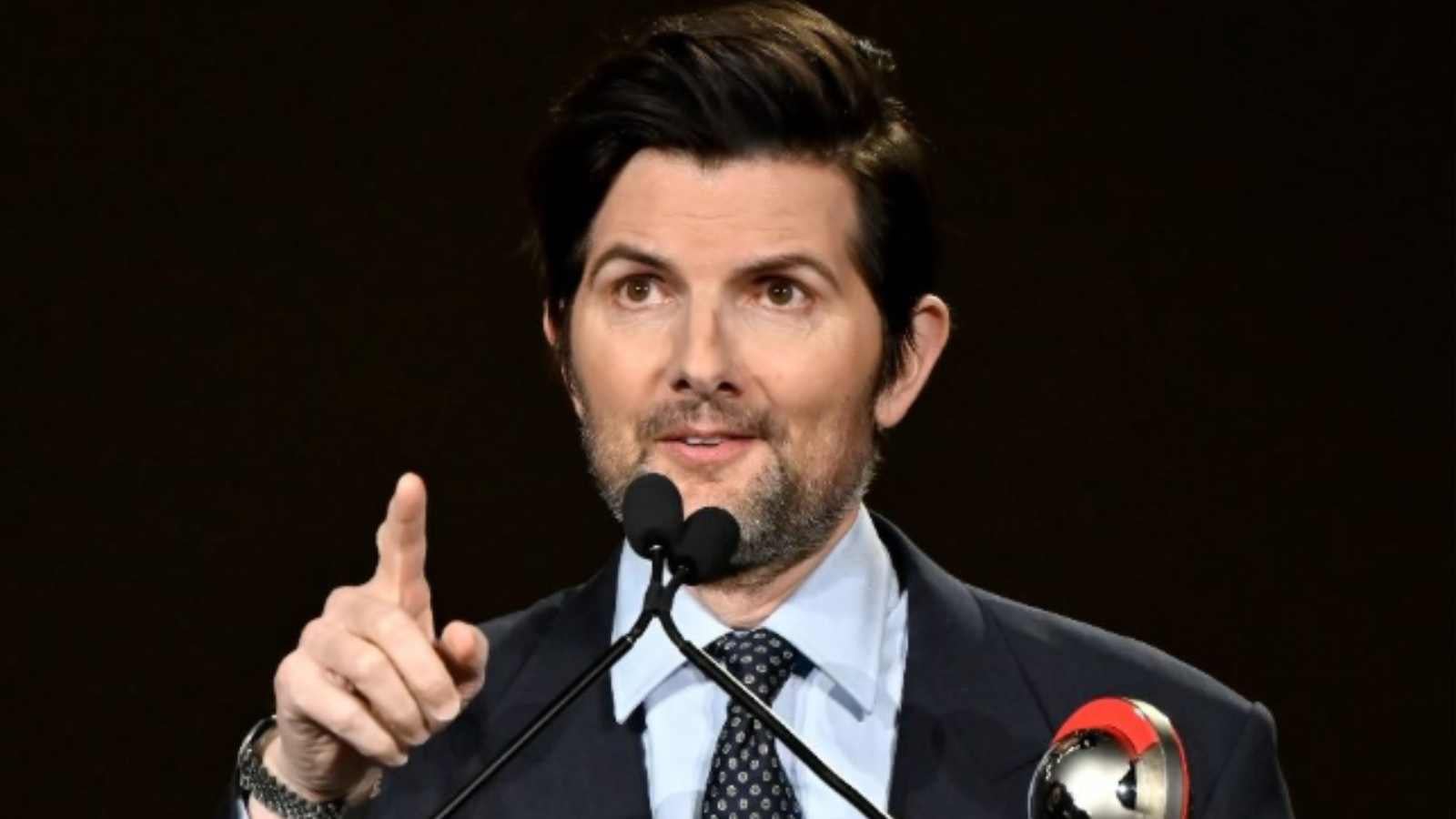
Adam Scott, currently pivoting from dry wit to big-screen chills in his new horror flick Hokum, sat down recently to dissect the legacy of the show that made him a household name. His conclusion carries more than just a trip down memory lane; it has a sobering reflection on how the very core of the American psyche has shifted since the doors of the Pawnee City Hall officially closed in 2015.
The shift in our collective national “vibe” is a lot more than something we feel during a heated dinner table debate… it is a tangible, historical pivot point that Scott pinpoints with unmistakable precision.
Speaking with Variety, Scott noted that the show’s run, which stretched from 2009 to 2015, existed in a bubble of “wholesome innocence” that feels almost alien in the current political climate. There is a certain irony in Scott promoting a horror film while discussing the “dark times” we inhabit, but the parallel is hard to ignore.
He suggested that the country may have surrendered the last of its innocence right around the time Donald Trump transitioned from reality TV fixture to a dominant political force.
For Scott and many fans who still keep the show on a 24/7 loop for comfort, Parks and Recreation represents a pre-cynical era. It was a time when what we stood to lose felt manageable and the idea of “public service” wasn’t a punchline or a battleground for existential dread.
The actor acknowledged that it is incredibly easy to lose sight of just how drastically the social and political landscape has warped over the last decade, turning the lighthearted bickering of Pawnee into a relic of a bygone world.
The Architect of Pawnee vs. The Reality of the Present
Adam Scott on leaning into darker characters at this point in his career: “It’s just the stuff that’s been appealing to me lately” #HOKUM pic.twitter.com/OJVdrmdKgV
— Deadline (@DEADLINE) April 29, 2026
When we look at the mechanics of why Parks and Rec worked so well, it always came back to the ensemble’s chemistry and the belief that the system, however flawed, was fundamentally good.
But Adam Scott’s recent reflections force us to ask a difficult question: Could a character like Leslie Knope even exist in today’s hyper-polarized environment? Today, every local council meeting is a potential viral clip of vitriol, and the “hope and joy” Scott mentions feels like a scarce commodity.
Scott expressed a deep appreciation for the fact that the show served as a lifeline for many during the pandemic’s isolation and continues to be a “weighted blanket” for those navigating personal and national trials.
However, he doesn’t shy away from the reality that the “darkness” of the current era would fundamentally change the show’s DNA. If Ben Wyatt were calculating the budget for a harvest festival today, he wouldn’t just be dealing with eccentric locals; he’d be navigating a world where the very concept of objective truth is frequently up for debate.
The show’s conclusion is particularly poignant. Ending just before the 2016 election cycle kicked into high gear, the series avoided having to grapple with the “alt-right,” the deep-seated distrust of institutions, and the digital echo chambers that define 2026.
Scott’s observation about the loss of innocence in 2015 holds true for anyone who remembers the tone of political discourse before that shift. Back then, the show could parody the absurdity of government bureaucracy without it feeling like a tragedy. Now, the absurdity often feels far too real to be funny.
Scott’s take suggests that while the show’s heart remains intact for viewers, the “energy of the country” has shifted to a frequency that might make the original premise feel like a fantasy novel rather than a workplace comedy. It’s a bittersweet realization for a cast that clearly still carries the torch for the characters they inhabited for nearly a decade.
View this post on Instagram
A Disconnect in the Narrative of Progress
While the prevailing sentiment is one of mourning for a lost era of kindness, there is a more provocative way to view the evolution of our television appetite. One could argue that the “darkness” Scott describes isn’t a loss of innocence, but rather a long-overdue awakening to realities that Parks and Recreation often glossed over.
For all its charm, the show portrayed a version of Middle America that was exceptionally tidy and arguably sanitized. The “innocence” of 2009 to 2015 might be seen by modern audiences as willful ignorance or privilege.
Today, a show that ignores the deep-seated systemic tensions and instead focuses on “wholesome” bureaucracy might actually come across as tone-deaf rather than comforting. We’ve traded the comfort of Pawnee for the raw, often uncomfortable honesty of shows that lean into the darkness.
Adam Scott says filming “Parks and Recreation” was as warm and supportive as it looked on screen. The cast and crew became a family, he recalls, and fans still tell him the show helped them through the pandemic — a legacy he calls “amazing.” https://t.co/haev9MSHtd pic.twitter.com/uRKJIpOPPP
— CBS Sunday Morning 🌞 (@CBSSunday) August 21, 2025
Perhaps we haven’t lost our way; perhaps we’ve just outgrown the need for a “lovable” version of government that doesn’t reflect the complicated, often painful reality of modern citizenship.
This shift in perspective suggests that if Parks and Rec were to debut in 2026, its “darker” tone wouldn’t be a symptom of a broken country, but a reflection of a more sophisticated, albeit more cynical, audience.
We are no longer satisfied with the “everything will be okay” mantra of the early 2010s because we have seen too much to believe it. Adam Scott is right that the country has changed, but the change might be less about a descent into shadow and more about a rise in demand for authenticity over escapism.
While Scott’s Ben Wyatt remains a symbol of a kinder time, the actor’s current foray into horror might be the most accurate reflection of the current zeitgeist, a realization that the monsters are real, and no amount of waffles or scrapbooking can make them go away.
As Scott gears up for the Friday opening of Hokum, he carries the legacy of a man who believed in the power of a well-organized spreadsheet, even as he now recognizes that the world outside the theater is a much scarier place than Pawnee ever was.