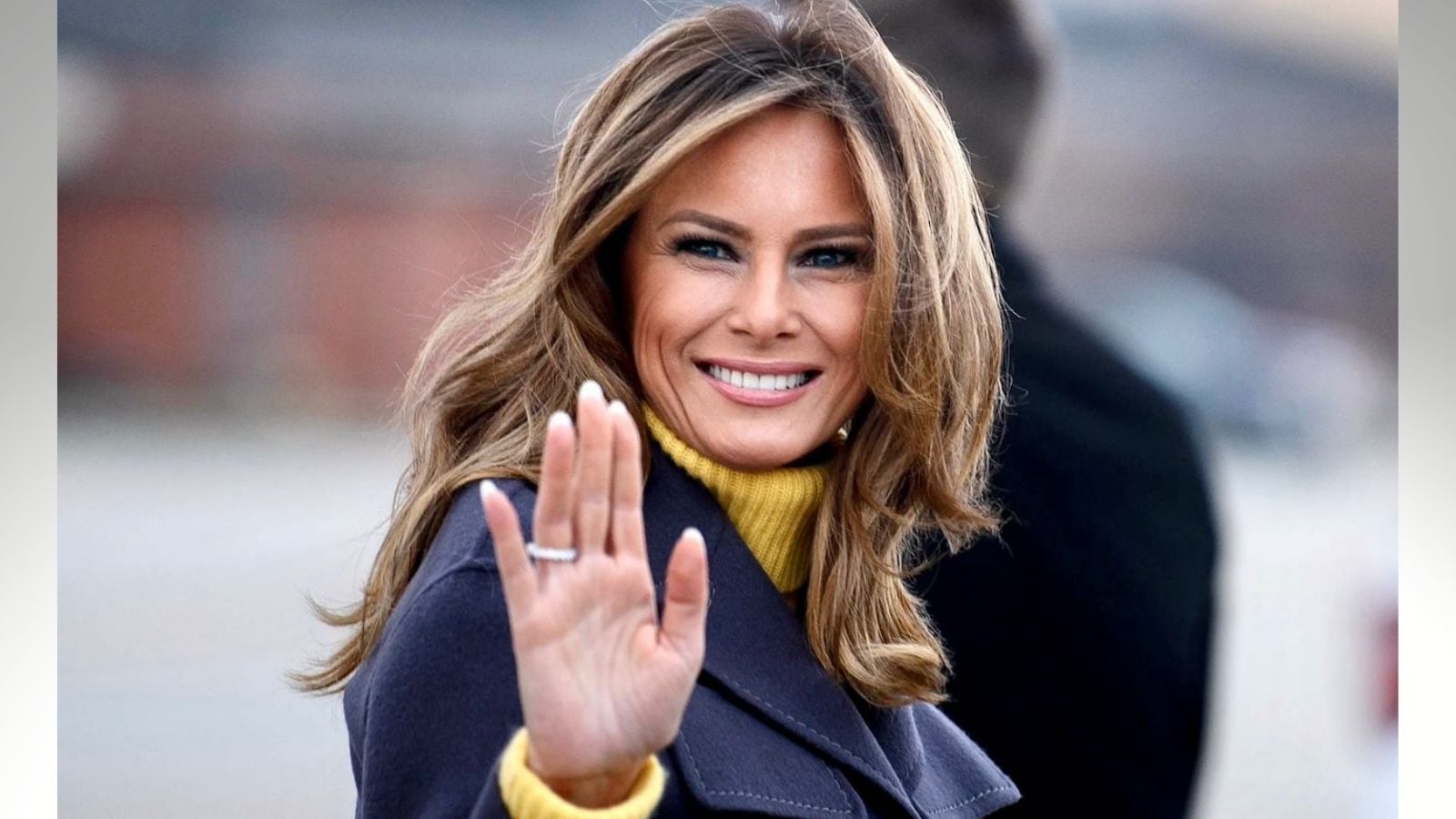
Melania Trump stepped into an unfamiliar role on April 9, 2026, choosing direct confrontation over her usual distance from public controversy. In a rare, scripted statement delivered from the White House, she addressed unverified rumors linking her to Jeffrey Epstein. The move immediately drew attention, not just because of the subject matter, but because of how unusual it is for her to engage at all.
Here is the thing. This was not just a denial. It was a calculated public moment, delivered at a time when her favorability ratings, according to Harry Enten, sit at a net -12 points in polling. Enten described those numbers as “historically awful” and the lowest compared to those of modern First Ladies. That context matters because it frames the statement less as a spontaneous reaction and more as a deliberate attempt to reset a narrative that has been circulating in certain media spaces.
The statement itself was tightly controlled. According to her adviser, Marc Beckman, the motivation was simple. The lies must stop. That clarity of purpose defined the appearance’s tone, even as it raised new questions about timing and internal coordination.
The Words That Defined the Night
First Lady Melania Trump’s Statement pic.twitter.com/fSEz24NEyg
— First Lady Melania Trump (@FLOTUS) April 9, 2026
Let’s be clear about what she actually said. Melania Trump issued a direct and unambiguous denial. She stated that she was never friends with Jeffrey Epstein, had no relationship with him, and had no connection to his associate, Ghislaine Maxwell. She also made it explicit that she is not one of Epstein’s victims.
She acknowledged that any overlap between them would have come from shared high society environments in places like New York City and Palm Beach. That distinction is important because it separates proximity from relationship, a line that often gets blurred in public discourse.
She also emphasized that her name has not appeared in official court documents, victim statements, or FBI interview records tied to the Epstein case. In a situation driven by speculation, that point was clearly meant to anchor her defense in verifiable fact.
What makes this interesting is what she did not do. She did not go into granular detail about specific documents or attempt to litigate individual claims in public. Instead, she stayed at a higher level, framing the rumors as false and positioning the statement as a necessary correction.
Digital and Public Reaction
The response to the speech played out in a familiar way for modern political moments. It moved quickly from official statement to online debate. Supporters viewed it as a firm and overdue denial. Critics questioned the timing and whether addressing the issue would prolong attention rather than shut it down.
Some online voices suggested the statement might be preemptive, an attempt to get ahead of potential developments tied to the ongoing release of Epstein-related materials earlier in 2026. It sounds dramatic, but it is important to note that these interpretations remain speculative and are not supported by confirmed reporting.
CNN on First Lady Melania Trump’s approval rating:
“Historic lows for Melania Trump. These numbers are absolutely awful.”
Love this for her.
— Art Candee 🍿🥤 (@ArtCandee) April 9, 2026
Meanwhile, the polling context remained a key part of the conversation. Harry Enten cited that her net approval rating reflects a broader pattern of unpopularity rather than a response to any single issue. That distinction matters because it challenges the idea that the Epstein rumors alone are driving public perception.
So what are we really looking at here? A high-profile denial landing in an already complicated approval landscape, where multiple factors shape public opinion at the same time.
The Late Night Verdict
If politics frames the moment, late-night television translates it. Jimmy Kimmel dedicated part of his April 9 monologue to the speech, offering a comedic interpretation that quickly circulated online.
He described the appearance as a kind of plot twist, suggesting it brought renewed attention to a story that had not been dominating headlines in recent weeks. In his words, it felt like an unexpected re-entry into a sensitive topic.
Kimmel also joked about the reported lack of coordination with Donald Trump, who told reporters he had no prior knowledge of the statement. The implication, played for laughs, was that the move created as many questions as it answered.
Comedy does not determine reality, but it does shape perception. These segments often become the version of events that travels farthest on social media. In that sense, the speech did not just exist as a formal denial. It became part of a wider cultural conversation that blends politics, media, and entertainment.
What Lies Ahead for the East Wing
The fact that the First Lady is bringing the issue back into the light and into the headlines when so many have accused the Trump Administration of trying to make this all go away speaks volumes!
— Conservative Momma (@conmomma) April 9, 2026
Looking ahead, the story does not end with a single statement. There are ongoing legal and political threads that could bring additional attention to the issue. One of them involves Michael Wolff, whose legal dispute with the Trumps includes an anti-SLAPP countersuit that may involve depositions.
There are also broader calls from some lawmakers for hearings related to Epstein’s victims. While Melania Trump expressed support for victims speaking out, it remains to be seen how, or whether, those discussions intersect with her public stance.
Here’s the bigger picture. This is not just about one speech or one set of rumors. It is about how a public figure navigates scrutiny in an era where past associations, documented or not, can resurface and spread very quickly across digital platforms.
The outcome will likely depend on what happens next, not just what was said on April 9. Will the statement reduce speculation or extend its lifespan? Will future reporting introduce new verified details or simply recycle existing narratives?
That tension is what keeps the story alive. Not just the facts, but the space between what is known, what is claimed, and what the public chooses to believe.