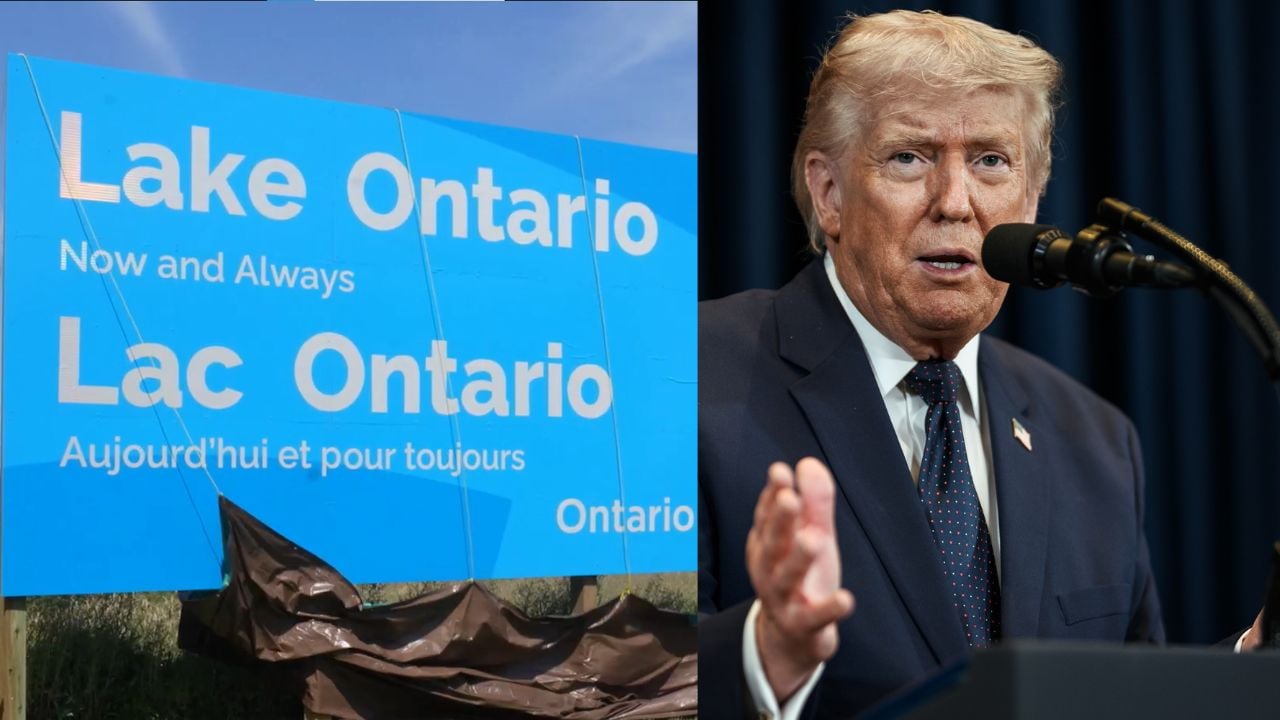
Donald Trump was not at the Toronto International Film Festival’s opening night, but one of his newest executive orders still became part of the show.
Before the September 10 world premiere of Being Heumann, TIFF CEO Cameron Bailey, chief programming officer Anita Lee and Toronto Mayor Olivia Chow each made a point of calling the body of water beside the city Lake Ontario. The references drew laughter and applause from the audience, according to Entertainment Weekly.
The remarks came two weeks after Trump signed an executive order directing the U.S. federal government to rename Lake Ontario “Lake America.” Canada has not adopted the new name, creating a situation in which the same international body of water is now labeled differently depending on which country’s official naming system is being used.
The opening film added another connection to the moment. Being Heumann follows disability rights activists challenging the U.S. government in the 1970s, and Chow drew directly from that history before delivering her own Lake Ontario line.
TIFF Kept Coming Back to Lake Ontario
Bailey brought up the dispute almost immediately while welcoming the audience to Roy Thomson Hall. After emphasizing that Toronto sits on the shore of Lake Ontario, he invited the crowd to repeat the name with him. “It’s Lake Ontario!” Bailey said, prompting applause and laughter that lasted long enough for him to pause. Vanity Fair, reporting from inside the premiere, described the response to the Lake Ontario references as thunderous.
Lee later made another deliberate reference to the lake by its Canadian name before Chow took the stage. The mayor spoke about how Being Heumann follows people organizing against the U.S. government while fighting for disability rights, then joked, “We have some experience with that.” She returned to the geographic dispute moments later and told the audience that Toronto’s waterfront “will always be Lake Ontario,” drawing another loud response.
The repetition was intentional. Rather than delivering a single political aside, the three speakers turned the lake’s name into a running opening night joke, with each mention reinforcing Canada’s refusal to adopt the wording ordered by the Trump administration.
Trump’s Order Changed U.S. Federal Usage
It’s Lake Ontario, now and always. pic.twitter.com/KNahtPAMeJ
— Doug Ford (@fordnation) August 29, 2026
Trump signed Executive Order 14422 on August 27. The order directs the Interior Department and U.S. Board on Geographic Names to replace Lake Ontario with “Lake America” in federal records and instructs federal agencies to use the new name on government maps, contracts, documents and communications.
The White House argued that the lake has major historical and economic importance to the United States, citing American trade, military history and investment in the Great Lakes system as part of the rationale. The order changes federal naming conventions inside the United States, but it does not determine what Canadian governments call the lake.
Canadian officials have continued using Lake Ontario. Ontario Premier Doug Ford made that position especially visible when he unveiled a large “Lake Ontario” sign at Fifty Point Conservation Area with the words “Now and Always” underneath it. The split has also reached digital maps, with Google Maps displaying “Lake America” for users in the United States while Canadian users continue to see Lake Ontario. Users elsewhere may see both names.
The White House Responded to the TIFF Remarks
The opening night comments prompted a direct response from the Trump administration. A White House spokesperson told Entertainment Weekly that “Canada has been a bad neighbor,” pointing to the broader trade dispute between the two countries and arguing that Trump was acting to protect American workers and industries.
The response placed the TIFF jokes inside a much larger period of tension between Washington and Ottawa. Canadian officials have pushed back on U.S. tariffs and other economic measures while also rejecting the attempt to change the lake’s name for Canadian use.
Inside Roy Thomson Hall, however, the argument was reduced to something much simpler. Bailey, Lee and Chow repeatedly used “Lake Ontario,” and the audience treated each mention as an applause line.
‘Being Heumann’ Gave the Moment Another Connection
TIFF opened its 51st edition with Siân Heder’s Being Heumann, which dramatizes disability rights activist Judy Heumann’s role in the fight for enforcement of Section 504 of the Rehabilitation Act. The film centers on the 1977 occupation of a federal building in San Francisco, where disability rights activists remained for 26 days while pressuring federal officials to implement regulations prohibiting discrimination against people with disabilities.
Ruth Madeley stars as Heumann, while Mark Ruffalo plays U.S. Secretary of Health, Education and Welfare Joseph Califano Jr. Heder told Reuters that the story focuses on people who had been ignored making themselves visible and forcing institutions to respond.
Chow drew from that history before making her own Lake Ontario remark, telling the TIFF audience that the film showed what could happen when people organized and remained persistent while challenging the power of the U.S. government. Being Heumann opens in select U.S. theaters on November 6 before streaming globally on Apple TV beginning November 13.