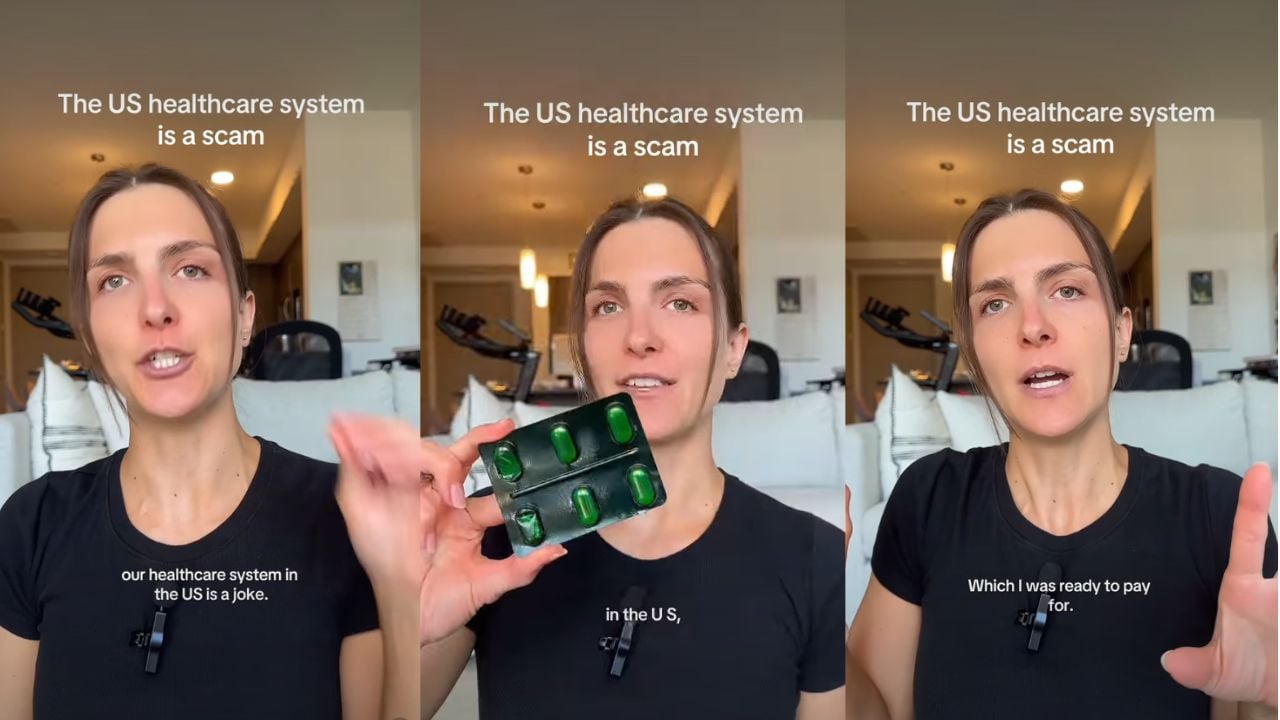
An American woman says a six-pill prescription that would have cost her $1,000 out of pocket in the United States ended up costing $25 through an international pharmacy route.
The woman, identified by NDTV as Victoria, shared the story in a viral Instagram video after she said her insurance provider refused to cover the medication.
Victoria said her doctor suggested sending the prescription to a Canadian pharmacy. She expected the quote to come back around $100 or $200, but said the medication was ordered from an Indian manufacturer for $10, with another $15 for international shipping.
The numbers in the video were easy to understand: six pills, a $1,000 U.S. price, and a $25 international order after insurance would not pay.
She Said the U.S. Price Was $1,000 for Six Pills
View this post on Instagram
“This medication was going to cost me $1,000 out-of-pocket in the US and I bought it for $25,” Victoria said in the clip, according to NDTV.
She described the price difference as a breaking point after her insurance denial. The Canadian pharmacy route, she said, sent the order to an Indian manufacturer and brought the total bill down to $25, including shipping.
Victoria called the U.S. healthcare system a “scam” in the video. In the article, that word should stay attached to her reaction, not presented as a legal or regulatory finding.
The Video Became a Drug-Price Debate
NDTV reported that social media users responded with their own stories about buying medication internationally or comparing U.S. drug prices with prices in India.
Some commenters said they had ordered medication directly from India. Others pointed to specific prescriptions that can be expensive in the United States but cost far less when sourced through international routes, including one commenter who mentioned rifaximin, according to NDTV.
The reaction spread because the video put a familiar frustration into one stark comparison. Victoria said she had insurance, a prescription, and a doctor involved, but the U.S. out-of-pocket price still came back at $1,000.
U.S. Drug Prices Are Often Far Higher Than Prices Abroad
The price gap in Victoria’s video is dramatic, but broader drug-price research has found large differences between U.S. prices and prices in other countries.
A 2024 RAND report, based on 2022 data, found that U.S. gross prescription drug prices were 278% of prices in 33 comparison countries across all drugs. For brand-name originator drugs, RAND found U.S. prices were 422% of prices in those comparison countries.
KFF polling found that 82% of U.S. adults said prescription drug costs are unreasonable. The same polling found that 59% were worried about being able to afford prescription drug costs for themselves or their families, and 43% said they had not taken medicine as prescribed in the past year because of cost.
Buying Medicine Online Comes With Legal and Safety Risks
Victoria’s video is not a blanket guide for buying medicine overseas. The price difference may explain why the clip spread, but U.S. consumers still face legal, safety, and verification issues when ordering prescription medication online or from outside the country.
The FDA warns consumers to be careful when buying prescription medicines online and says its BeSafeRx program is meant to help people identify safer online pharmacies. The agency warns against websites that sell prescription medicine without requiring a valid prescription or that offer medicine at prices that seem too good to be true.
The FDA’s personal importation guidance also describes limited circumstances for bringing prescription drugs into the United States. Anyone considering a lower-cost pharmacy option should talk with the prescribing doctor, verify the pharmacy, avoid websites that sell prescription medicine without a valid prescription, and confirm the medication source before paying.