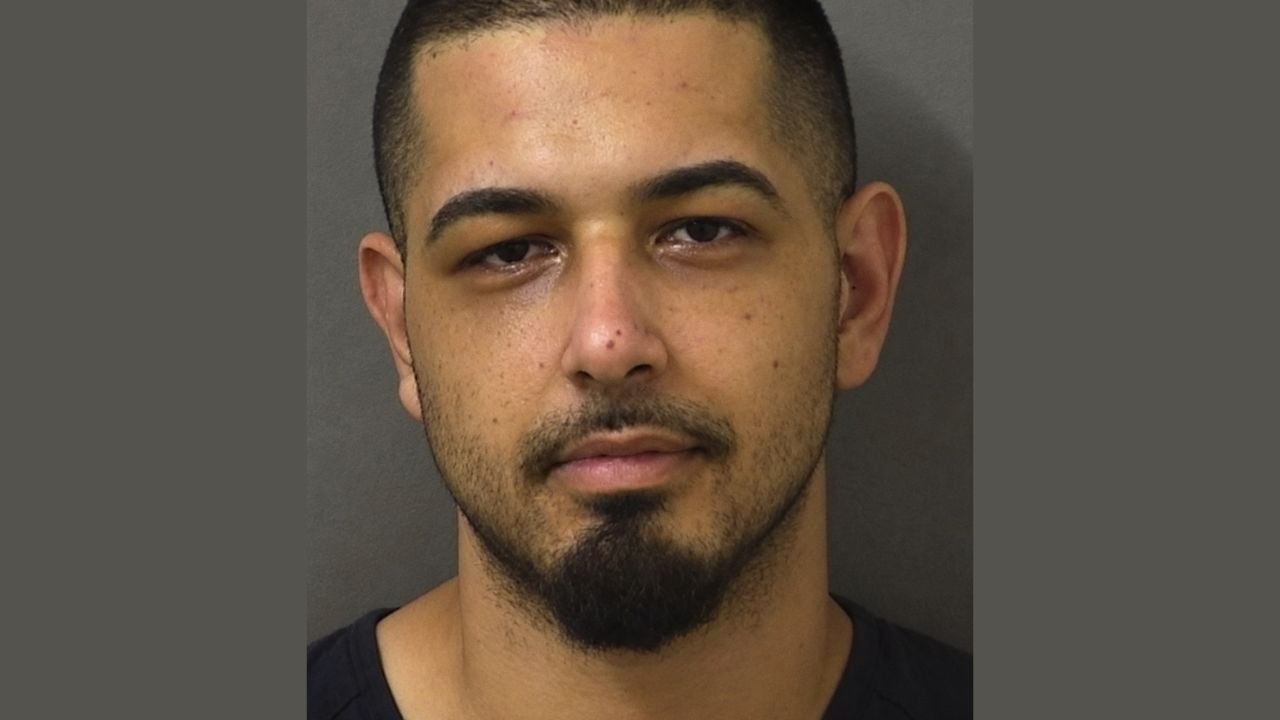
A Florida employee responsible for paying his company’s bills is accused of moving nearly $191,000 in company money into online accounts linked to himself while vendors went unpaid.
Bahaa Abughalia, 33, of West Palm Beach, was hired in January 2026 to manage accounts payable for an unnamed Riviera Beach business, according to Hoodline.
Police say Abughalia created five or six online accounts, including a Cash App account, and routed company funds into them. Investigators ultimately calculated the business’s loss at $190,788.91.
Then Abughalia stopped showing up for work. His employer received a message claiming he had been badly injured and was in a coma, but investigators say the story began unraveling when company records showed activity on his work computer while he was supposedly incapacitated.
Vendors Had Gone Unpaid for Three Months
Abughalia’s position gave him responsibility for accounts payable, putting him in the middle of the company’s outgoing payments. According to CBS12, court records say he frequently missed work or requested permission to work remotely, at times saying his young son was ill.
The financial problem became harder to miss when company vendors complained that their invoices had gone unpaid for roughly three months. Police say investigators eventually discovered that money intended for legitimate business expenses had instead been transferred into several online accounts associated with Abughalia.
Police Say He Set Up Several Online Accounts
Investigators say Abughalia established five or six online accounts used to move company funds, including a Cash App account. Law enforcement later subpoenaed bank and cryptocurrency records.
According to the probable cause affidavit described by CBS12, the accounts were linked to Abughalia through identifying information that included selfie verification, his driver’s license, email address and phone number. Investigators ultimately put the company’s fraudulent loss at $190,788.91.
Bank of America separately identified more than $3.4 million in high-dollar transaction credits that had passed through Abughalia’s personal account during a one-year period.
A Text Said He Was in a Coma
As questions mounted, Abughalia stopped coming to work entirely. On April 9, the company owner told police that a text message purportedly from Abughalia’s wife said he had been involved in a severe accident and was in a coma.
Company IT personnel found a problem with that explanation. Investigators say Abughalia had logged into his work computer on April 8, during the period when he was supposedly incapacitated.
Detectives went to Abughalia’s West Palm Beach residence in June and spoke with his wife, who was in the process of divorcing him. She told investigators that she had not sent the messages claiming her husband was in a coma. According to the court records cited by CBS12, she said one of Abughalia’s friends had sent them instead.
While investigators were at the residence, she contacted Abughalia. Police say he told her to tell officers that he was in the hospital and declined to return home while law enforcement was there.
He Now Faces Three Fraud and Theft Charges
Abughalia was eventually arrested and booked into the Palm Beach County Jail. He faces charges of grand theft involving more than $100,000, organized fraud and obtaining personal property with intent to defraud. The charges remain accusations, and Abughalia has not been convicted.
How Businesses Can Make Accounts-Payable Theft Harder to Hide
The Association of Certified Fraud Examiners recommends segregation of duties and specifically cautions against allowing the person who establishes a vendor to also approve payments to that vendor. Companies can also independently review vendor records and outgoing payments for unusual activity.
The ACFE’s anti-fraud guidance recommends looking for one-time vendors, expedited payments and similarities between employee information and vendor account information that could reveal concealed relationships. Businesses should also restrict payment-system and remote-access privileges to what employees actually need, review access logs when suspicious activity occurs and use bank alerts or secondary approval requirements for significant transfers.
If internal theft is suspected, preserving evidence can be as important as stopping additional payments. Businesses should secure accounting records, bank statements, invoices, emails, access logs and payment-platform information, restrict further unauthorized access and promptly contact the relevant financial institutions and law enforcement.