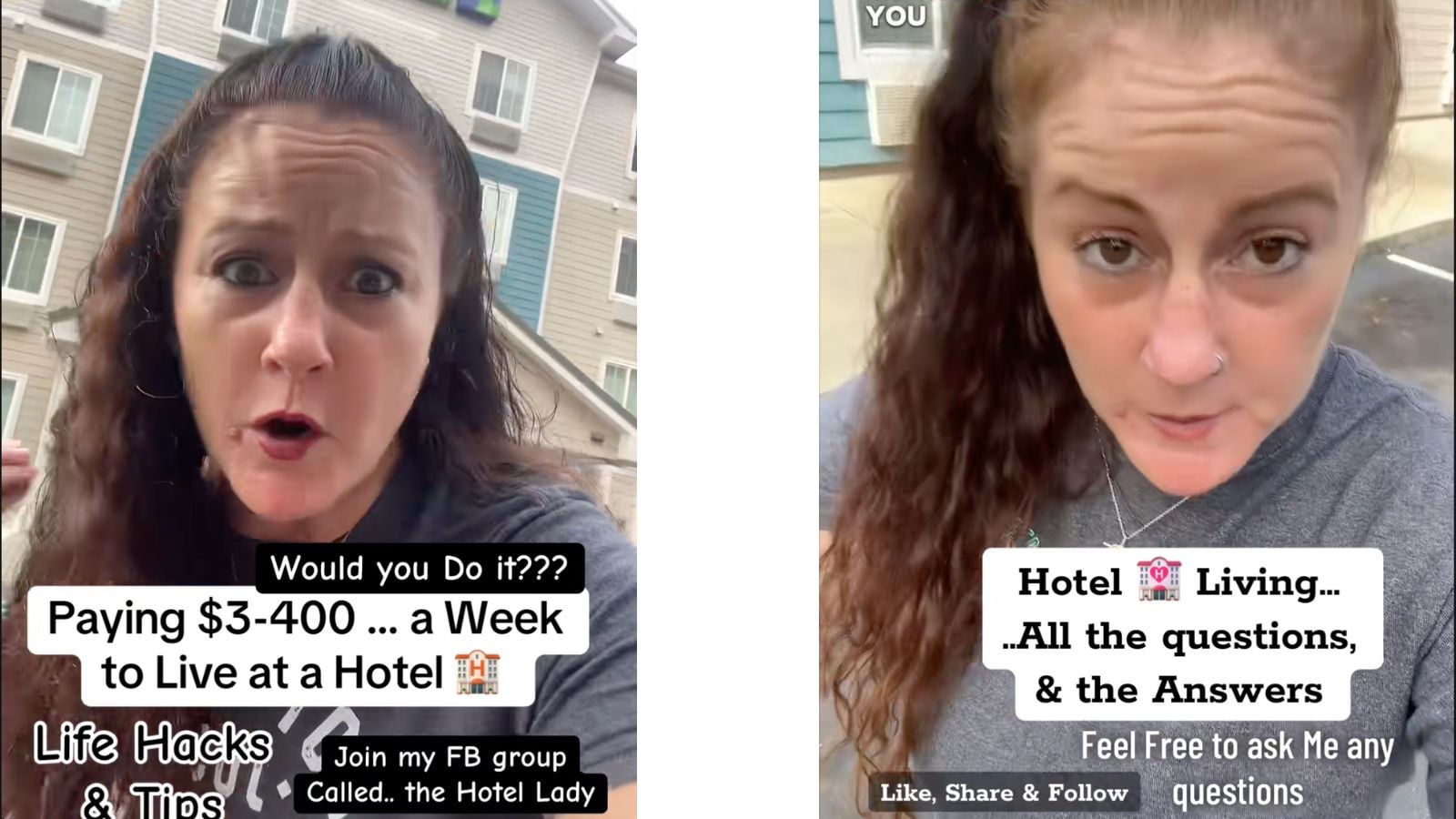
Try renting an apartment in America right now. Go ahead. You’ll need a credit score north of 620, proof that you make three times the monthly rent, first and last month upfront, a security deposit, and a background check. For a $1,499 apartment — the current national median for a one-bedroom — that means walking in with roughly $3,000 cash and $4,500 in provable monthly income just to be considered.
Or you could do what a Florida woman named Mandy Bowers did. Walk into a hotel. Pay $307. Get your keys.
She’s been doing that every week for over two and a half years.
The Math Isn’t Supposed to Work Like This
Bowers — who posts on TikTok as @mandybowers123123 — pays roughly $1,228 a month for her extended-stay hotel room in the Pensacola area. That number includes utilities, Wi-Fi, housekeeping, trash, and mail delivery. She brought her own coffee pot.
The median one-bedroom apartment in the United States goes for $1,499 a month. That’s before the electric bill. Before the internet bill. Before the renter’s insurance. Stack it all up and a standard renter is clearing $1,700, $1,800, maybe more — and they had to survive the application process to get there.
@mandybowers123123 HOTEL 🏩 Living… Questions & Answers #hotelliving #hotellife #budgetfriendly #lifehacks #fyp ♬ original sound – mandybowers123123❌
Bowers didn’t apply for anything. No lease. No deposit. No credit check. No background check. No proof of income. She lists every single one of these in her TikTok, ticking them off the way someone would recount the steps of a process they simply skipped.
A Tour That Doesn’t Try to Impress You
The video isn’t what you’d expect from something going viral. There’s no life-hack energy. No music. Bowers walks through her hotel room like she’s showing a friend around after they asked how she’s been living.
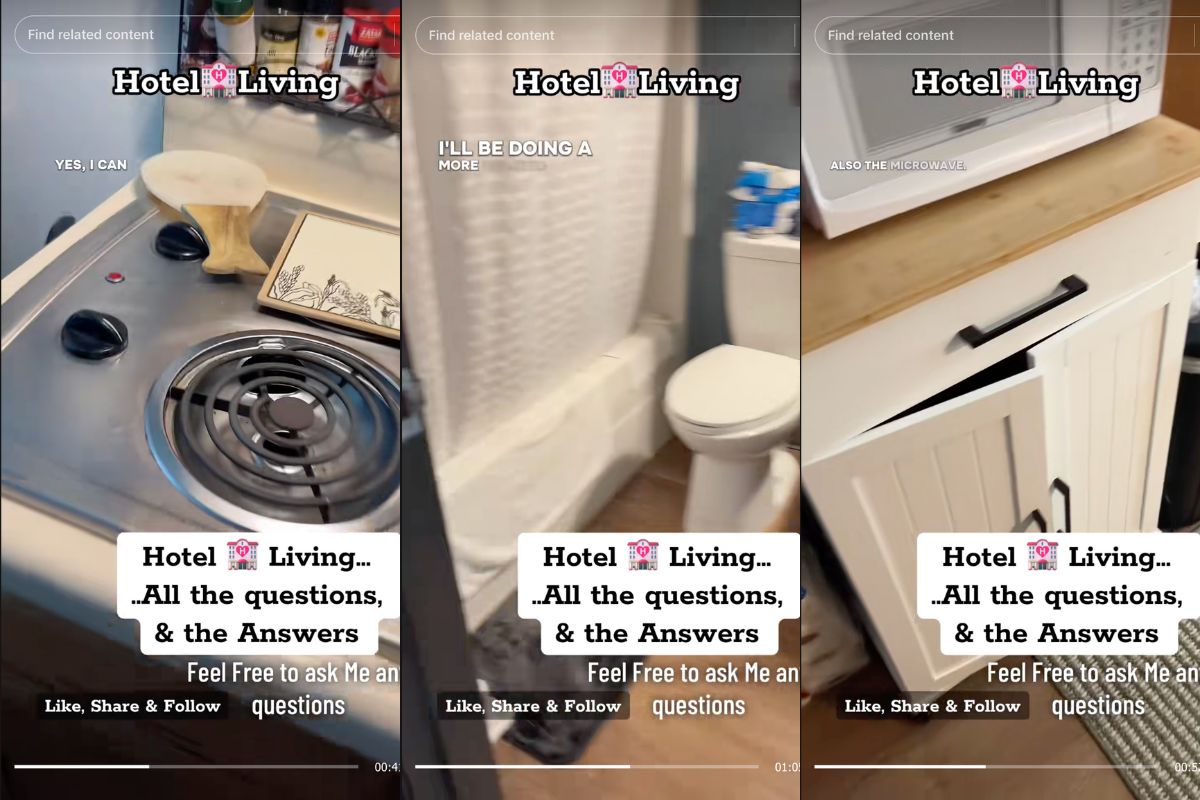
Two burners on the stove. No oven — she uses a toaster oven she’s looking to upgrade. A microwave. A mini-fridge. A coffee pot she brought from home. She gets her mail and packages delivered to the hotel. Housekeeping is included.
“We come in, give them all of their stuff, and I replace it with ours,” she says, describing how she swaps out the hotel’s items for her own each time she checks into a new room. At the time of filming, she’d only been back in this particular room for two days. The place was still mid-setup — her things not fully moved in, the space not yet arranged the way she likes it. She told viewers not to mind the mess.
After two and a half years of this, she’s earned enough hotel reward points for a complimentary blanket. She holds it up in the video. She’s also building a content series around hotel living, promising followers she’ll walk them through more of the process in future posts.
What She Said at the End
Bowers isn’t selling anything. She doesn’t frame hotel living as a trend or a hack. She doesn’t pretend her situation is something to aspire to.
“Life isn’t always perfect,” she says. “Some of us have a little bit harder times in life. We take different roads that wasn’t always great. Some that had roundabouts.”
“At the end of the day, it’s not about what you get. It’s about appreciating what you got. And I am happy with my life.”
She adds that this isn’t for everyone. She knows. She’s the one living it.
What the Internet Heard — and What It Felt
The clip gained traction after the account @HustleB___h_ broke down the numbers on X, and from there the split was immediate.
This is the future. And if you’re self employed you write off the motel room $rent on your taxes as a business expense. https://t.co/6Aq134pCCB
— Gary Aksamit (@GaryAksamit) March 5, 2026
One side did the math and couldn’t argue with it. People shared stories of doing the same thing — tech workers, travel nurses, people between leases who discovered that extended-stay hotels were cheaper and easier than the rental market. They pointed to perks that traditional apartments don’t offer: housekeeping, no maintenance requests, free breakfast at some chains, and the ability to leave without owing anyone two months’ notice.
The other side raised what you’d expect. The space is small. There’s no real kitchen. Bowers uses the word “we” multiple times throughout the video — “we come in,” “we get the rest of our stuff” — meaning she likely isn’t living in that room alone. Long-term hotel living comes with its own trade-offs too: no yard, no storage to speak of, no sense of permanence, and no address that doesn’t raise questions on official paperwork or job applications.
But the reaction that kept showing up wasn’t really on either side. It came from people staring at their own rent — the rent they applied for, qualified for, put down a deposit for, furnished an apartment for — and doing the math against a woman in a hotel room with two burners and a rewards-program blanket.