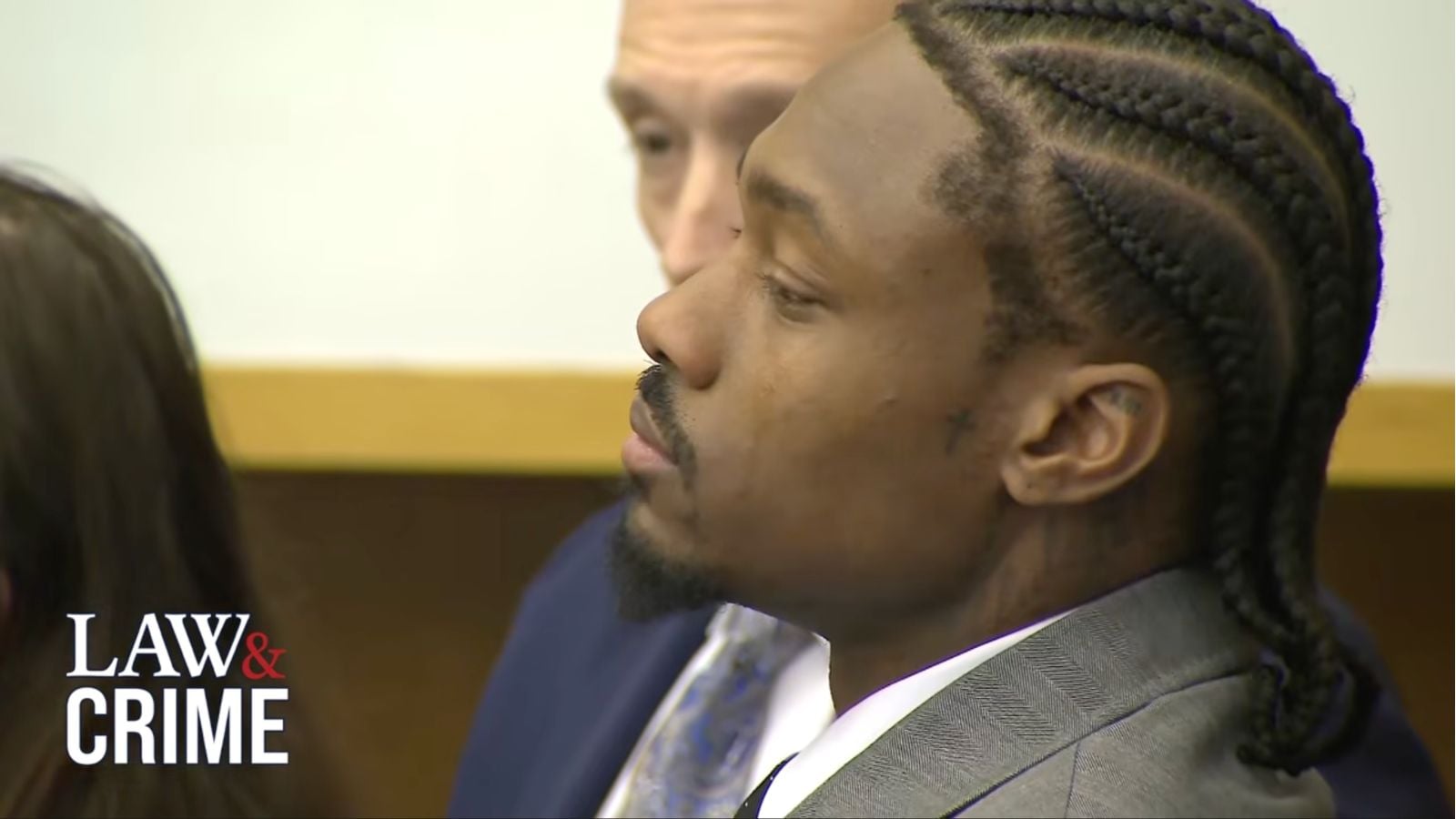
The jury needed an hour and a half.
That was enough time to hear the judge’s instructions, walk into the deliberation room, review a felony strangulation charge and a misdemeanor assault charge, and decide that none of it held up. Five women and one man. Ninety minutes. Not guilty on both counts.
When the verdict was read inside Norfolk County District Court in Dedham, Massachusetts, on Tuesday, Stefon Diggs did not speak. He did not raise a fist or exhale into the microphone. He cried. The 32-year-old former New England Patriots wide receiver, who had spent the past two days sitting in a suit sipping Red Bull while his life was picked apart in front of strangers, stood with his legal team and wept.
His mother was there. She had been there both days. A small group of supporters waited outside the courthouse. When Diggs and his mother were ushered into a car, a few of them cheered. He still said nothing.
What the Courtroom Saw
The accusation came from Jamila Adams, a 41-year-old personal chef living in Diggs’ Dedham home. Adams testified that on December 2, Diggs entered her bedroom during an argument over money, slapped her, and choked her. She paused on the stand to collect herself while describing it.
The case did not slowly unravel. It collapsed almost immediately.
Adams took no photographs of injuries and never sought medical treatment. She gave Diggs a birthday gift later that same day. Within the week, she was filmed laughing and dancing with friends in Brooklyn. She texted Diggs on December 11 to apologize and tried to keep her job. She did not report the alleged assault until fourteen days later, only after she was fired and declined to sign a nondisclosure agreement.
When the defense asked whether her attorney had demanded $5.5 million from Diggs, Adams said she did not understand the question. When pressed, she blurted out that Diggs had offered her $100,000 to recant. The judge ordered the jury to disregard it, then warned Adams without the jury present: “This is not an opportunity for you to interject your own narrative. If you continue to do so, your entire testimony may be stricken.”
What It Cost Him
Before this trial, Diggs had just finished one of the better seasons of his career. He caught 85 passes for 1,013 yards and four touchdowns and helped the Patriots reach Super Bowl LX. He had a three-year, $69 million contract. He was Cardi B’s partner. They had a son together, born November 2025.
The Patriots released him in March. No team signed him. His attorney, Mitchell Schuster, said teams were reluctant with felony charges over his head. His relationship with Cardi B ended in February. For five months, Diggs lived under the weight of a felony charge that a jury dismissed in the time it takes to watch a movie.
“It’s an emotional thing to have false allegations levied at you,” Schuster said outside the courthouse. “This has impacted him both personally and professionally.”
What a Verdict Cannot Fix
Stefon Diggs rant in the rain.
What happened in his trial is a bigger issue in our justice system and it needs to change. pic.twitter.com/ZHDo8pPdZy
— Kayce Smith (@KayceSmith) May 6, 2026
Within hours of the verdict, Barstool’s Kayce Smith posted a video of herself walking in the rain, earbuds in, speaking directly into her phone. She was not breaking news. She was angry. Within thirty seconds of Adams’ testimony, she said, you could tell she was lying. Diggs lost endorsements, lost his team, and had his private life torn open for what amounted to nothing. She said there should be consequences for people who bring accusations with zero evidence and cost someone everything. The video hit 848,000 views in ten hours. Thirteen thousand likes. She was saying what millions were already feeling.
Schuster felt it too. What he said next was bigger than football.
“People should focus on real victims of domestic violence,” he said. “Allegations like this do a tremendous disservice to those who are really afflicted and impacted.”
That is the knot at the center of this story. Every false accusation that collapses in a courtroom makes it harder for the next person telling the truth. Every time a man is publicly accused of something a jury says he did not do, and his career is damaged anyway, it raises a question the legal system was never built to answer.
Stefon Diggs walked out of that courthouse Tuesday a free man. Legally, the matter is closed.
But Diggs did not look like a man who had won something. He looked like a man who had survived something.
He did not speak to reporters. He got into a car with his mother and left. The jury said not guilty. The NFL has said nothing. He is still a free agent. Still the father of a newborn with a woman he is no longer with. Still carrying the weight of a headline that traveled faster than any verdict ever will.
A jury needed ninety minutes to see what happened in that courtroom.
The public may take considerably longer.