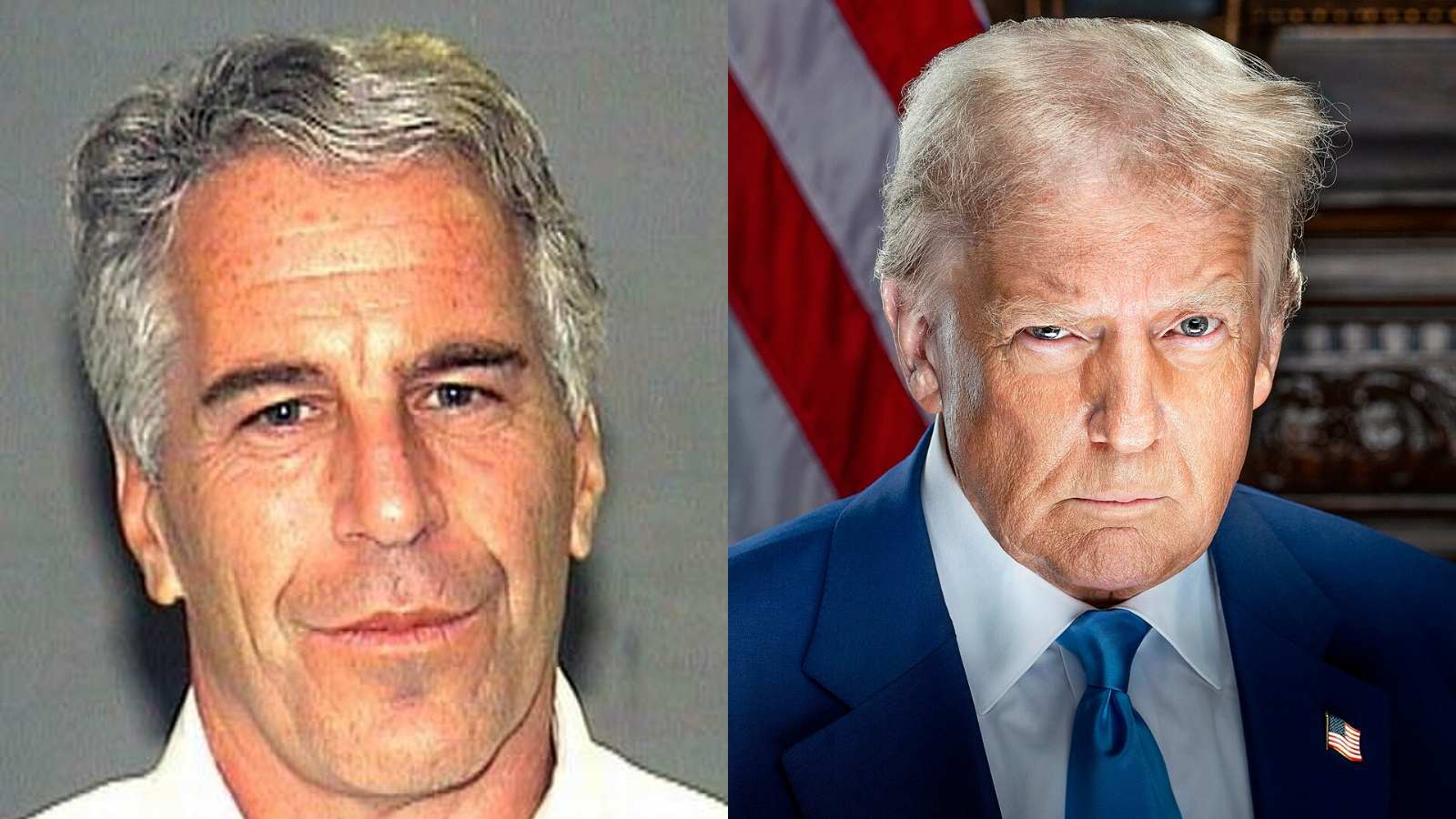
New York City has officially entered its “you absolutely cannot make this up” era. Sitting inside a pop-up library somewhere in Manhattan is a collection of one single title, spanning 3,437 physical books, with every page drawn from the roughly 3.5 million pages of Jeffrey Epstein-related documents released by the U.S. Department of Justice.
Before we go any further, Jeffrey Epstein was a wealthy financier who spent decades cultivating relationships with some of the most powerful people on the planet, we’re talking politicians, royals, and business titans. In 2019, federal prosecutors charged him with sex trafficking dozens of minors, alleging he ran an organized abuse network that operated across multiple properties, including a private island in the U.S. Virgin Islands.
He died in his cell in August 2019 while awaiting trial, in what the medical examiner ruled a suicide, though that ruling has been disputed publicly and loudly ever since. The files now sitting on those New York shelves are, in large part, the paper trail of everything prosecutors, investigators, and victims have been trying to make the public see for years.
According to NDTV, the temporary installation, curated by a U.S. transparency advocacy group, runs through May 21, 2026, and the name alone will stop you mid-scroll: “The Donald J. Trump and Jeffrey Epstein Memorial Reading Room.”
And yes, people online are already reacting exactly the way you think they are. Half the internet is treating it like a dark art project cooked up by extremely caffeinated political theater kids, while the other half is staring at the photos, wondering who looked at 3.5 million pages and said, “You know what; these need shelves.”
Somewhere between museum exhibit, protest piece, true crime obsession, and media spectacle, this thing has become the latest entry in America’s growing collection of bizarre public events that sound fake until you see the pictures.
So What Exactly Is Sitting on Those Shelves?
Someone just opened a pop-up in NYC displaying all 3.5 million pages of the Epstein files.
Walk in. Read. See for yourself.pic.twitter.com/kp1S1pxJMB https://t.co/CV3tWNPNsW
— Mario Nawfal (@MarioNawfal) May 12, 2026
According to The Straits Times, the exhibit contains “only one text on display,” except that this single text has been printed, bound, and stacked into thousands of volumes containing every page released by the DOJ in connection with the Epstein case. The outlet reports that the files have been divided into 3,437 separate books, arranged across shelves, creating a giant visual statement about scale, secrecy, and public obsession.
Wired covered the opening earlier this month and described it as a library dedicated entirely to the Epstein files, which honestly sounds like the kind of sentence that would have broken everyone’s brains ten years ago. Now it just joins the long list of surreal headlines people scroll past today. The physical size of the project is what really hits, though, because seeing millions of pages stacked floor to ceiling feels different from hearing somebody casually say, “There was a document release.”
For perspective, if a regular novel runs around 300 pages, you would need more than 11,000 of them to match the amount of paper sitting in that room. So suddenly, the files stop sounding abstract and start looking like the world’s most stressful bookstore section. The entire installation basically screams, “Here. You wanted transparency? Enjoy your mountain of paperwork.”
Here Is the Part Where It Gets Complicated
The installation is open til May 21. Ages 16+ only. You will need to make a reservation to enter the reading room https://t.co/3qM0Ddgq9C
In addition to the files, the installation features a timeline of Epstein’s relationship with Pres. Donald Trump and a tribute to Epstein’s…
— (((Orchid)))🌻 (@OrchidNYC) May 12, 2026
Per reports, regular visitors cannot freely browse the books because some released files reportedly contain unredacted names of victims, restricting public access, though journalists and lawyers receive limited exceptions.
That detail changes the entire mood around the exhibit. One minute it sounds like a provocative transparency stunt built for headlines and TikTok explainers, and the next minute it raises serious questions about privacy, ethics, and whether sensitive material should ever become part of a public-facing installation in the first place. I mean, the same shelves drawing crowds for their shock value may also contain information tied to people who never asked to become part of a spectacle.
The available reporting still leaves many questions unanswered. Nobody seems fully clear on how many pages include unredacted names, or what additional safeguards are in place for access to the documents. That uncertainty hangs over the entire project and keeps it from sliding into easy “gotcha” territory, because beneath the attention-grabbing presentation is a very real debate about transparency versus harm.
The Name on the Door Is Doing a Lot of Heavy Lifting
Now let’s talk about the title because, wow, subtlety absolutely did not get invited to this event. “The Donald J. Trump and Jeffrey Epstein Memorial Reading Room” sounds engineered in a lab to trigger instant discourse, and according to reports, the name is very much intentional. I mean, nobody accidentally prints that on signage and calls it a day.
The title turns the installation from a document archive into a cultural statement, with a giant, blinking neon arrow attached. By tying both names together in the branding, the organizers are clearly making a broader point about power, public accountability, and the relationships surrounding the Epstein story.
Whether people see that as bold activism, political provocation, or pure attention bait probably depends on which side of the internet they logged in from that morning.
What makes the whole thing especially fascinating is that the documents themselves are government records, while the presentation surrounding them is loaded with editorial intention. That tension is exactly why this story has exploded across media coverage. It is part archive, part performance art, part political messaging exercise, and fully designed to keep people arguing long after they leave the building.
The Timeline on Those Shelves Goes All the Way Back to 1987
This is the point where the exhibit stops feeling like a giant internet discourse magnet and starts reading like a very public attempt to connect decades of history into one long, uncomfortable narrative. According to Wired, the installation includes a detailed timeline tracking the reported relationship between Jeffrey Epstein and President Donald Trump over roughly twenty years, beginning with a reported first meeting in Palm Beach back in 1987.
The timeline reportedly covers several widely discussed moments involving the two men, including Epstein’s attendance at Trump’s 1993 wedding to Marla Maples. It then stretches all the way to 2007, when Trump allegedly witnessed Epstein behaving inappropriately toward a teenage girl at Mar-a-Lago, after which Epstein’s membership at the club reportedly came to an end.
Seeing those events laid out physically across an exhibit wall probably hits very differently than skimming them in scattered headlines years apart.
And honestly, that is part of what makes this installation so hard for people to ignore. The exhibit is clearly designed to overwhelm visitors with scale, detail, and emotional weight all at once. Wired also reports that the installation was built in support of Epstein’s survivors, which changes the emotional center of the entire room.
Candles placed across the floor reportedly represent more than 1,200 victims. That alone makes the exhibit stop feeling like pure political theater and start carrying the atmosphere of a memorial.
In response to Wired’s request for comment, White House spokesperson Abigail Jackson stated that Trump has been “totally exonerated on anything relating to Epstein” and added that he “has done more for Epstein’s victims than anyone.”
That response immediately became part of the exhibit’s wider media storm, which honestly feels inevitable given how charged the entire project already is. At this point, the reading room is no longer just a pop-up installation. It has turned into another front in a much larger public battle over memory, accountability, politics, and who ultimately gets to shape the story people walk away with.
Why This Moment Actually Matters Beyond the Headlines
It would be easy to dismiss the Epstein files library as pure stunt marketing for the outrage economy. Honestly, parts of it absolutely lean into spectacle. The dramatic title, the mountain of books, the restricted-access rules, and the endless social media reactions give the whole thing the chaotic energy of a prestige true-crime convention mixed with political performance art.
But underneath all the theater is a bigger conversation that the media world keeps running into over and over again. How much access should the public have to information involving powerful people, and where is the line when that information also includes deeply sensitive details connected to victims and survivors?
Those questions are sitting inside all 3,437 volumes, whether visitors can flip through them or not, and no provocative reading room title is going to settle them anytime soon.