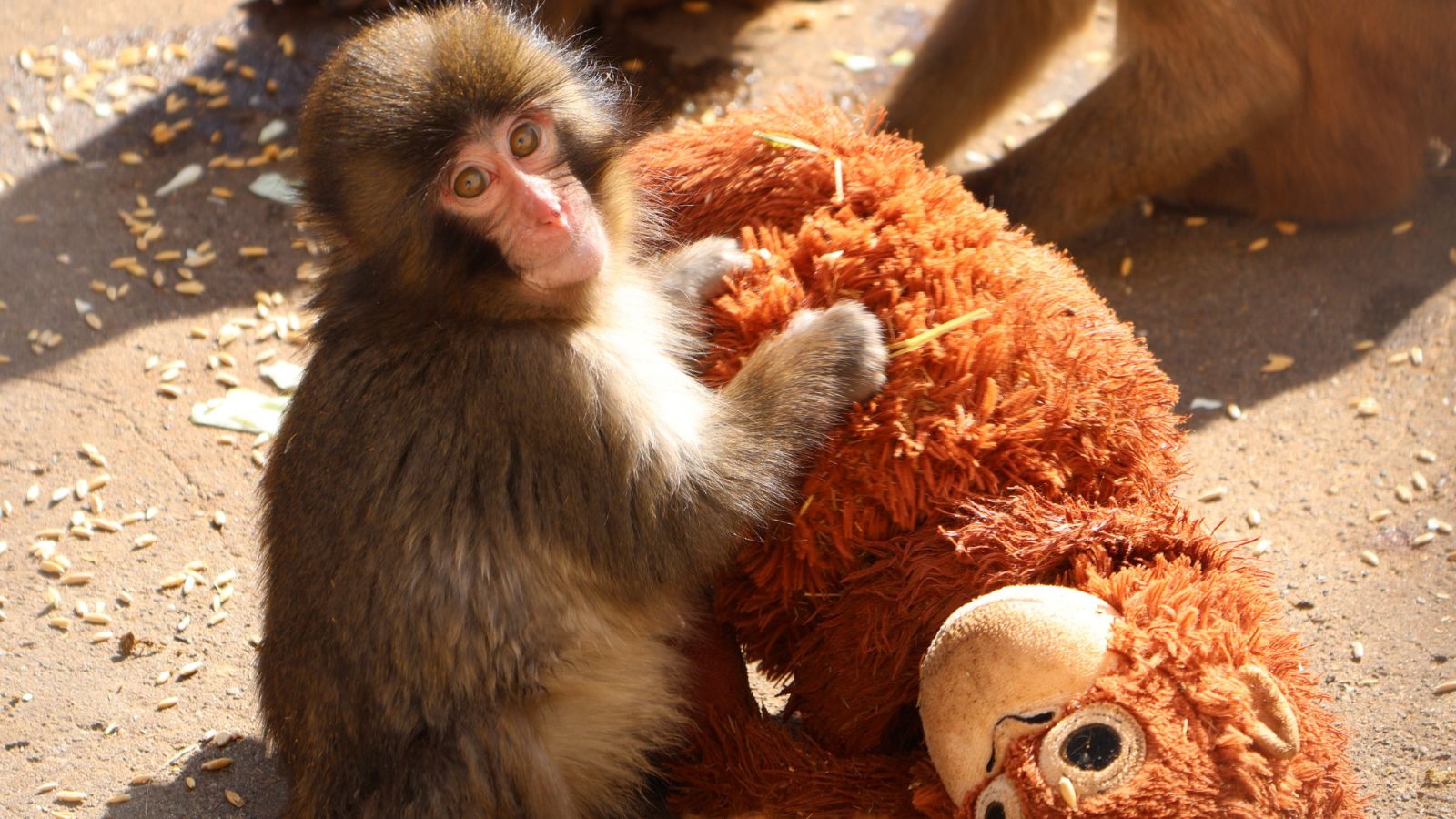
A single clip of a baby monkey grooming a stuffed toy — picking imaginary lice off a plush orangutan like it was alive — hit 2.2 million views and 153,000 likes in under 24 hours this week. Jon Stewart brought up the monkey on The Daily Show and his audience booed the moment he hinted at anything negative. Stephen Colbert pulled the same IKEA plush out on stage during his monologue. Tyler, the Creator reportedly declared his affection. A TikToker flew from America to Tokyo just to hold up a sign that read “We love you Punch,” then cried when the monkey got a hug.
All of this — for a seven-month-old Japanese macaque at a small zoo outside Tokyo that most of the world had never heard of three weeks ago.
The question isn’t whether Punch has taken over the internet. He has. The question is why it happened this fast, this intensely, and to this many people at once. An Oxford neuroscientist says the answer is built into your brain — and you have no say in the matter.
Fans are lining up at Ichikawa Zoo in Japan to see Punch, the seven-month-old macaque monkey who attached himself to a stuffed orangutan after being abandoned by his mother. @DavidMuir shares Punch’s story – and how he’s bonding with his fellow primates. https://t.co/f1MlvzYFzx pic.twitter.com/zrL6vYTG1D
— World News Tonight (@ABCWorldNews) February 26, 2026
You Were Hooked Before You Knew It
Morten Kringelbach, Professor of Neuroscience at the University of Oxford and founding director of the Centre for Eudaimonia and Human Flourishing, has spent years studying exactly this kind of response. His research, published in Trends in Cognitive Sciences, found that when humans see juvenile creatures — babies, kittens, small monkeys — the orbitofrontal cortex, the brain’s emotional engine, activates within a seventh of a second.
That’s before conscious thought. Before you process the image. Before you decide anything. Your brain has already chosen: protect this thing.
And once that door opens, Kringelbach says, it doesn’t close. Cuteness triggers empathy, which triggers compassion. Watching Punch get pushed away and still drag his stuffed orangutan back across the enclosure doesn’t just make people sad. It activates the same neural pathways that make humans care for their own children. The professor said Punch’s story reminds us of what it really means to be human — the drive to care for something vulnerable, even when it can’t ask for help.
‘This story reminds us of what it is to be human.’
Morten Kringelbach, Professor of Neuroscience at Linacre College and the Department of Psychiatry, explains what’s happening in your brain when you watch Punch the Monkey 🐵 pic.twitter.com/KQB4PTIube
— University of Oxford (@UniofOxford) February 25, 2026
This response, his research found, is universal. It doesn’t matter whether you’re a parent or not. Man or woman. It fires the same way in everyone.
The Backstory the Internet Couldn’t Resist
Punch was born on July 26, 2025, at Ichikawa City Zoo in Chiba Prefecture, Japan. His mother abandoned him shortly after birth — keepers believe extreme heat during labor caused the rejection. Staff bottle-fed him and raised him by hand for six months. When they introduced him to Monkey Mountain, the zoo’s 60-macaque troop, on January 19, the other monkeys wanted nothing to do with him.
Zookeepers gave him an IKEA Djungelskog orangutan plushie as a surrogate. He latched on instantly — dragging it everywhere, sleeping with it at night, fleeing to it after every rejection. Fans online named it “Oran-Mama.”
On February 5, the zoo posted Punch’s backstory to social media. Within days, the hashtag #HangInTherePunch was trending globally. ABC World News Tonight covered it. The University of Oxford posted Kringelbach’s analysis. Over 6,000 visitors showed up to the zoo on a single day during the Emperor’s Birthday weekend, forcing staff to restrict entry and shut down parking lots by mid-morning. CBS News correspondent Kathryn Watson posted that a third of her feed had become Punch content — and she was fine with it.
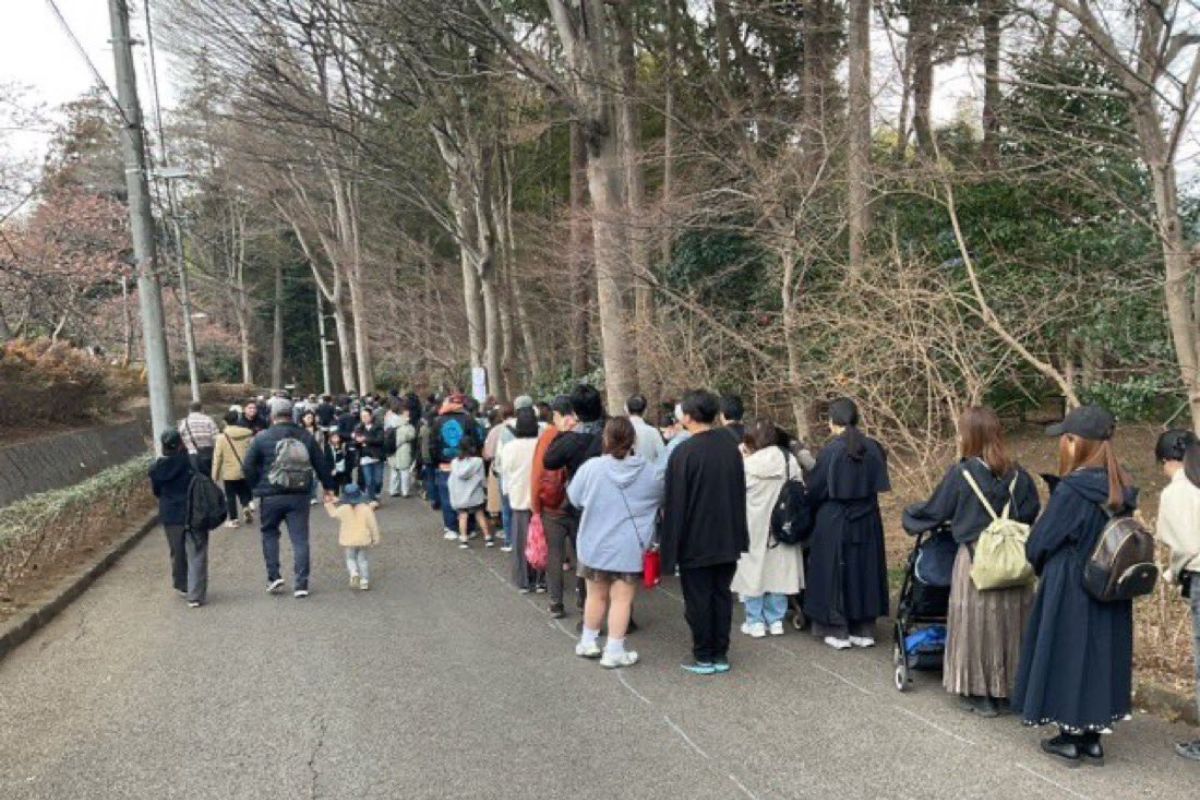
Then came the clip that nearly broke the internet’s collective heart: an adult macaque dragging Punch across the enclosure. Millions called it bullying. The zoo responded firmly. Punch had tried to interact with another baby, and the baby’s mother pulled him away protectively. Normal macaque behavior, not abuse. They asked the public to cheer Punch on rather than pity him.
He’s Starting to Figure It Out
This week, something shifted. On February 22, two older monkeys were filmed grooming Punch — a behavior that signals trust and acceptance in macaque groups. A day later, keepers reported zero scolding incidents and watched him play freely with other baby monkeys.
The biggest breakthrough was small and quiet: at mealtime, Punch — who used to cling to his keepers while the other monkeys ate — climbed down on his own and started eating with the troop.
TikToker Chris Olsen flew from the U.S. to Japan, posted photos of Punch being embraced by a troop member, and didn’t pretend he wasn’t crying about it.
@chris And thank god he did #punchthemonkey #tokyo #punch #cuteanimals #japan ♬ оригінальний звук – 🎧
His zookeeper, Shumpei Miyakoshi, kept it simple: he’s engaging with other monkeys now. You can feel him growing up.
Meanwhile, the IKEA plush Punch carries has sold out worldwide, with resale prices topping $350. IKEA Japan’s president visited the zoo personally and donated 33 more. Punch now has 11 in rotation — his keepers wash the one he sleeps with every morning.
The latest update from the zoo landed the way the best ones do — no drama, just progress. There was a moment when Punch got scolded. No injuries. He’s doing well.
Millions of people read it and exhaled.