
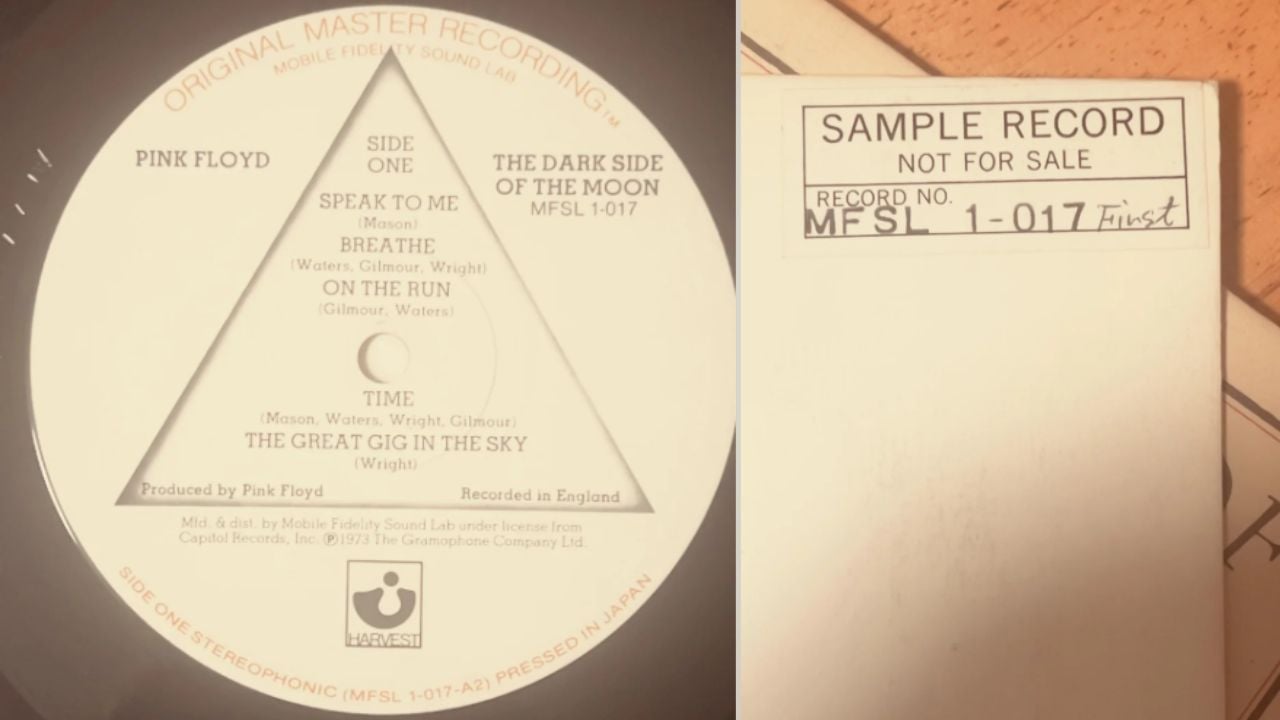
Reddit user Hippo-sox says they paid $1 for Pink Floyd’s The Dark Side of the Moon at a yard sale. They posted two photographs and asked fellow record collectors what they had found.
The record came in a plain white sleeve marked “SAMPLE RECORD / NOT FOR SALE.” In the Reddit discussion, commenters compared the find with different Mobile Fidelity Sound Lab pressings of the album.
A label close-up shows the catalog number MFSL 1-017, the Harvest logo and the words “PRESSED IN JAPAN.” Mobile Fidelity’s name and “Original Master Recording” branding also appear around the top of the label.
One responder suggested a value of about $300, depending on condition. Another proposed listing it for $2,000, setting off an argument over how much a Pink Floyd collector would pay.
A Suggested Asking Price Divided the Commenters
Posts from the vinyl
community on Reddit
The higher asking price came from encrcne, who said they sold records on Discogs for a living. “If OP lists it properly, it will sell within 48hrs,” they wrote.
Another commenter, aurora_records, wanted more research into comparable sales and the record’s condition. They challenged the idea that a buyer willing to pay substantially more than previous purchasers would appear so quickly.
Heritage Auctions recorded a $1,000 sale on April 18, 2025, for a separate copy it identified as a 1979 Mobile Fidelity test pressing. That lot was graded near mint to mint and came with a Heritage certificate of authenticity.
The Labels Complicate the Record’s Identification
Vernon Fitch’s Pink Floyd Archives dates Mobile Fidelity’s first commercial edition to 1979 and credits Stan Ricker with its half-speed mastering. Its cover featured the familiar prism artwork beneath an “Original Master Recording” strip.
The collector-run discography separately lists a 1978 test pressing with a white JVC label and orange printing, plus an early 1979 sample supplied to sales representatives.
Record dealer eil.com has also cataloged a 1979 sample issue with standard labels inside a white sleeve bearing the same sample wording.
The Turntable Became Another Point of Disagreement
MonkeyKingCoffee, who described owning a collection of 20,000 titles, urged the buyer to protect the record. “Don’t touch it. Don’t play it,” they wrote, recommending an archival sleeve and a visual condition check before considering a sale.
BigManWAGun wrote, “One more time ain’t gonna hurt it.” MonkeyKingCoffee’s concern was the equipment the buyer might use, warning that a poorly adjusted turntable could put the record at risk.