In a time when almost everyone is obsessed with defying the biological clock, the decision to die, on one’s own terms, has become an extraordinary act, one that society, politics, and the law grapple with in deeply complicated ways.
It’s a question that reaches beyond individual suffering and touches on cultural, moral, and political fault lines. At what point does the pain of living become unbearable, so unbearable that the mere continuation of existence is considered a form of torment?
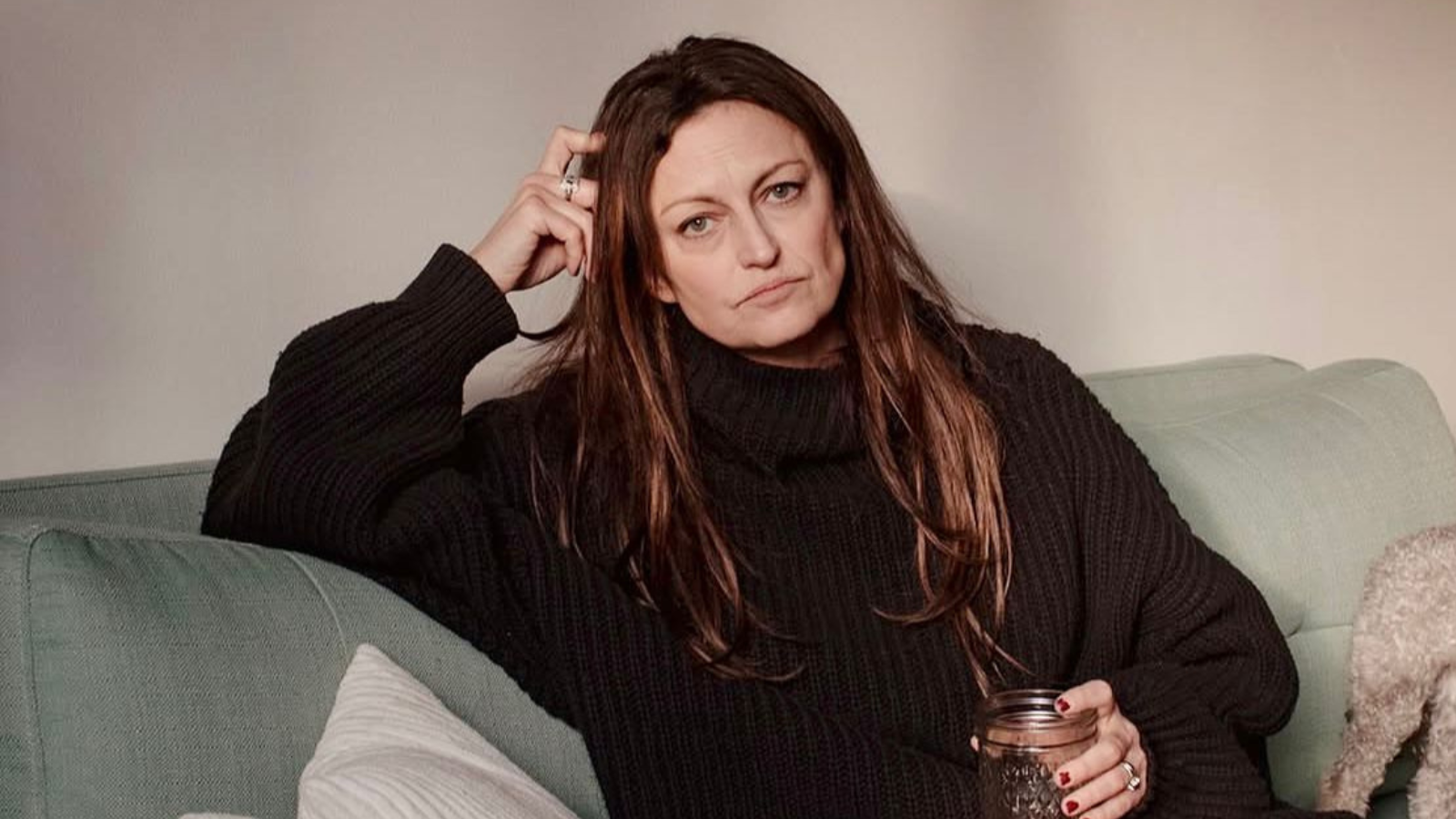
That’s a question that Claire Brosseau, a Canadian actress and comedian, now finds herself at the center of. Her battle for Medical Assistance in Dying (MAID) is not just a personal plea, but a call to reconsider how we view suffering in the context of mental illness.
When I came across Brosseau’s story, I had to stop to read it keenly. She is the kind of performer you would recognize from Just For Laughs or CBC radio, and right now, in early May 2026, she is standing outside the Ontario Superior Court of Justice fighting for the legal right to die. Not because she has cancer, nor because she is physically deteriorating. She is fighting because she has a mental illness, and the Canadian government has decided that people in her exact position must wait until at least March 2027 before the law catches up to their suffering.
That delay is the whole story. Canada has had MAID since 2016, and assisted deaths in the country have climbed every single year. For instance, in 2024, Health Canada recorded 22,535 requests for medical assistance in dying (MAID). Of these, 16,499 individuals ultimately received MAID.
But there is one group the law still excludes: people whose sole underlying condition is a psychiatric one. That is the group Brosseau belongs to, and that is what has put her in a courtroom at 49 years old, asking a judge to grant her permission to die.
Her diagnoses read like a long and exhausting list: bipolar I disorder, post-traumatic stress disorder, an eating disorder, anxiety and personality disorders, substance use disorder, and chronic suicidal ideation.
She has tried more than two dozen medications. She has gone through electroconvulsive therapy. She has been hospitalized multiple times. And she has said publicly that this fight did not start in adulthood. She was eight years old when she first wrote about wanting to die in her diary.
That is not impulsive. That is a lifetime of suffering that long predates any courtroom.
The Architecture of an Extraordinary Remedy
Her lawyer, Michael Fenrick, is not asking the court to rewrite federal law. What he is asking for is what he calls an extraordinary remedy: a one-off exemption that would allow a doctor to legally provide MAID to Brosseau specifically, even though the law currently excludes her.
The legal argument rests on the Canadian Charter of Rights and Freedoms, specifically the rights to life and to the security of the person. Fenrick is essentially asking the court whether those individual rights can, in truly exceptional circumstances, override Parliament’s decision to press pause on expansion.
Brosseau has already been assessed by two independent MAID assessors, and both concluded that her condition is irremediable and that she meets all medical eligibility criteria. The only reason she cannot access MAID is that her illness is psychiatric.
The medicine has already said yes. The politics said not yet. That friction, between clinical readiness and political hesitation, is exactly where this case lives.
The federal government’s position is that more time is needed to prepare healthcare providers and establish clinical guidelines before psychiatric MAID is opened up. Fenrick’s counter is that the machinery for assessment is already working, as Brosseau’s own case proves. In his framing, the delay is not protecting anyone. It is mandating continued suffering for people who have already cleared every bar the medical system has set.
The Silence of the Committee
There is another part of this story that made me stop and think for a moment. A Special Joint Committee of Parliament was supposed to study the expansion of MAID ahead of any legislative changes, the kind of body that exists to ensure Parliament actually hears from the people most affected.
Brosseau says she reached out to testify before that committee and felt ignored. She was not the only one who noticed. Several Canadian Senators have publicly stated that the committee showed bias and failed to meaningfully include the voices of people living with the conditions under review.
The criticism is that the committee leaned on secondhand clinical perspectives rather than the lived experience of long-term sufferers. For people like Brosseau, the language of protection, the idea that delay keeps vulnerable people safe, lands as something far more painful.
She has said that if she is blocked from a legal and controlled process, she may eventually die by suicide on her own terms anyway. That reframe is important. The argument is no longer about whether she will die. It is about whether the state will allow it to happen with dignity and medical support, or whether it will force her toward an uncontrolled death by refusing to engage.
A Career Defined by Contrast
Brosseau is described as physically healthy, with a small dog and a wide support network of friends and family. She has appeared in films like Phil the Alien and the Stephen King miniseries 11.22.63. She is fluent in two languages, trained at the Neighborhood Playhouse in New York, the kind of resume that signals someone who has built something real and sustained over decades. She has been on Video on Trial. She has done CBC radio. She performed at Just For Laughs.
She has herself described her life as a paradox: “an embarrassment of riches” in terms of the people around her, and yet an unrelenting internal suffering that those relationships cannot reach. The coverage tends to use her outward circumstances as a kind of shorthand for shock value, as if a woman with friends and a career cannot also be in genuine and irremediable psychiatric pain.
What those descriptions often skip past is what the MAID assessors actually found after evaluating her: that her condition meets the standard of irremediable. Some psychiatrists, like Dr. Mark Fefergrad, have publicly disagreed and said they believe she can still recover. But the formal assessors in her case reached a different conclusion, and that professional disagreement is precisely where the legal argument is being fought.
View this post on Instagram
The Limbo of the Law
As of early May 2026, no ruling has come. There is also a notable procedural wrinkle: federal lawyers reportedly missed a deadline on April 30 to respond to the constitutional challenge materials, and according to Fenrick, no formal explanation has yet come from the Attorney General’s office. He has said a judge could hear the motion within the next few months, ideally before summer. For someone who describes every day as a fight for survival, a window measured in months is not reassuring.
The federal government keeps pointing to March 2027 as the date the psychiatric exclusion will expire on its own. For Brosseau and those in the same position, that date does not feel like relief on the horizon. It feels like a sentence. This case will echo beyond one woman and one courtroom in Toronto.
Canada is already recognized as operating one of the most permissive assisted dying regimes in the world, and this challenge is pushing that framework to its outer edge. Whether the court treats Brosseau’s situation as a justified exception or a crack in the legislative dam will shape the direction of Canadian law for years to come.
What this story ultimately reveals is something genuinely hard for governments to sit with: the collision between the slow, grinding pace of legislation and the immediate, daily reality of individual suffering. While committees debate abstract risks, people are living in the gap between an approaching law and a life they can no longer carry.
Brosseau’s case asks a question with no clean answer: not when does the obligation to protect life end, but when does forcing someone to keep living become its own form of harm?