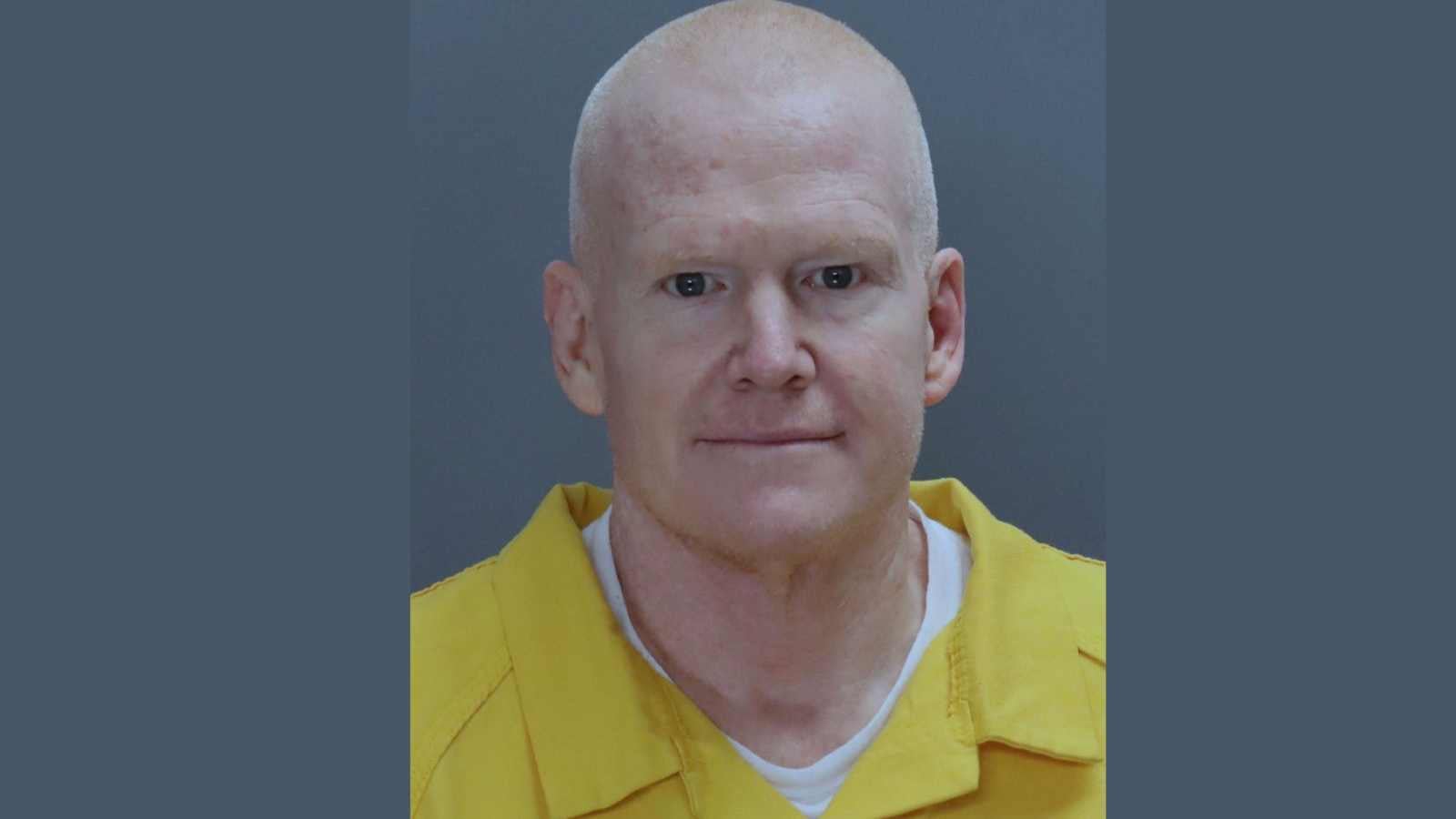
He spent over three years behind bars as a convicted double murderer, and then on a Wednesday morning in May, everything changed.
The South Carolina Supreme Court did something no one in that courtroom back in 2023 probably thought would ever happen: it tossed out Alex Murdaugh’s murder convictions entirely, shredded the life sentences that came with them, and handed prosecutors a blank sheet of paper.
For anyone who followed this case… and millions did, obsessively, that moment landed somewhere between jaw-dropping and stomach-churning. Because here is the twist no one saw coming.
The very thing that was supposed to end this chapter has cracked it wide open again, and this time the stakes are not just another life sentence. This time, prosecutors are talking about the death penalty.
Alex Murdaugh went from serving two consecutive life terms for the murders of his wife, Maggie, and his son, Paul, to sitting in a prison cell staring down the possibility of a lethal injection.
That is not a plot twist a screenwriter would dare pitch. That is just what happens when a case this messy, this layered, and this deeply human refuses to be resolved cleanly.
The court did not simply grant Murdaugh a new trial out of sympathy or for legal technicality-hunting. The ruling on May 13, 2026, was unanimous, five justices to zero, and the language they used was not polite.
They pointed their finger squarely at Becky Hill, the former Colleton County Clerk of Court, and described her interference with the jury as “egregious.” The court wrote that Hill had “placed her fingers on the scales of justice, thereby denying Murdaugh his right to a fair trial by an impartial jury.”
That is the kind of language courts do not throw around casually. These five justices essentially looked at the 2023 trial and said it was compromised beyond repair.
The Woman Who Blew Up a Verdict
Becky Hill’s name was always going to be inseparable from the Murdaugh saga, but nobody expected her footprint to be this massive. She was the clerk of court, the person whose job was to safeguard the process, to stand as a neutral custodian of the machinery of justice.
Instead, the South Carolina Supreme Court found that she “egregiously attacked Murdaugh’s credibility and his defense.” What exactly did she do? According to jurors who later testified, Hill told them to “watch his actions” and “watch him closely” when Murdaugh took the stand.
One juror, identified in court documents only as Juror Z, said Hill’s words made it seem like Murdaugh was already guilty before the defense had even wrapped up. Another juror said Hill called the day Murdaugh would testify “epic.” She told the panel not to be “fooled” by the defense’s evidence.
When deliberations began, she reportedly told jurors, “This shouldn’t take us long.” That is not a neutral court officer doing her job. That is someone with a verdict in mind walking into a jury room and nudging people toward it.
What makes it worse… and more bizarre, is why Hill allegedly did all of this. She was writing a book. A tell-all about the nationally televised trial called “Behind the Doors of Justice: The Murdaugh Murders.”
The book was eventually pulled from publication after plagiarism allegations surfaced, meaning her entire scheme of allegedly tilting a jury in her favor fell apart on both ends.
The South Carolina Supreme Court was not subtle about its contempt, writing that “Hill was quite busy behind the doors of justice, thwarting the integrity of the justice system she was sworn to protect and uphold.”
Hill did eventually plead guilty in December 2025 to obstruction of justice, perjury, and two counts of misconduct in office. Her sentence? Three years of probation.
She read a statement to the court that said, “There is no excuse for the mistakes I made. I’m ashamed of them and will carry that shame the rest of my life.” Three years of probation for conduct that blew up a murder trial and handed a convicted killer a path back into court.
From Life Sentence to Lethal Injection
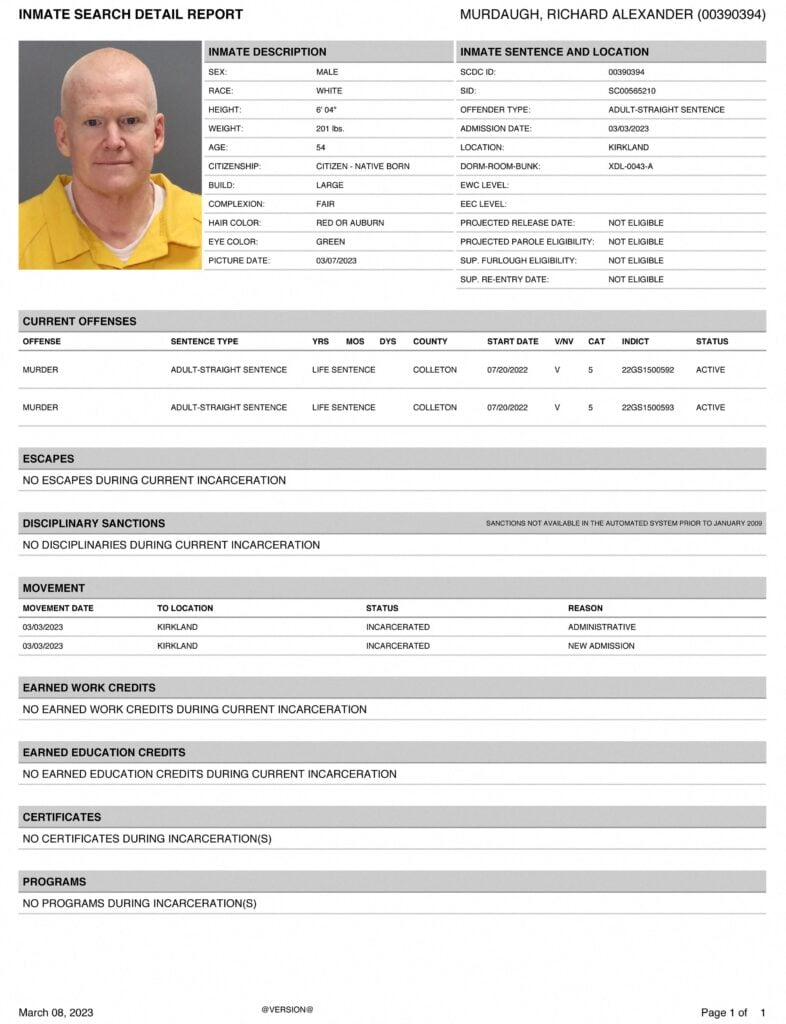
Here is where the story takes its darkest turn. The original trial never put the death penalty on the table. Murdaugh was tried, convicted, and sentenced to life without the possibility of parole. That was considered the maximum the state would pursue.
But now that the conviction has been vacated and a retrial ordered, the state of South Carolina has essentially reset the clock, and South Carolina Attorney General Alan Wilson made clear that when you reset the clock, you reset everything with it.
“In light of the Supreme Court’s decision, we’re back to square one on this case, and that means all our legal options are on the table, including the death penalty,” Wilson stated publicly on Friday, just two days after the ruling came down.
Wilson was equally firm that Murdaugh is not going anywhere in the meantime. Even with his murder convictions gone, Murdaugh remains in federal prison. He pleaded guilty to stealing roughly twelve million dollars from his own clients and is currently serving a 40-year federal sentence.
So the man celebrating a legal victory is still very much behind bars, just under a different set of charges. Wilson’s statement was blunt about that reality: “This decision does not mean Murdaugh will be released. He will remain in prison for his financial crimes. No one is above the law and, as always, we will continue to fight for justice.”
Murdaugh has maintained his innocence in the killings since the bodies of Maggie and Paul were discovered in June 2021 at the family’s Moselle estate. “I’m innocent,” he told the judge at his original sentencing. That position has not moved an inch.
The Retrial No One Thought Would Be This Complicated
Getting a fair retrial in this case is not going to be simple, and people close to the saga are already raising flags. Neil Gordon, the Augusta journalist who ghostwrote Becky Hill’s now-pulled book, put it plainly when the ruling came down: “I think Walterboro has gone through enough. I can’t possibly see how they can find an impartial jury in Colleton County. I would suggest moving it as far away from the Lowcountry as possible.”
He is not wrong. This case has been covered by every major outlet in the country, spawned streaming miniseries, multiple true crime podcasts, bestselling books, and documentaries.
Finding 12 people in South Carolina who have not already formed an opinion about Alex Murdaugh will be a legal and logistical puzzle the court will have to solve before a single witness takes the stand.
The Supreme Court also dropped a significant guideline for the retrial: the justices noted that in the original trial, evidence of Murdaugh’s financial crimes went “far beyond what was necessary” and created unfair prejudice.
They made clear that on retrial, “that will not be permitted.” That is a meaningful restriction. A major argument prosecutors leaned on in 2023 was that Murdaugh killed his wife and son to distract from the financial scandal closing in around him.
If the court limits how much of that financial crime evidence can come in, the prosecution has to rebuild parts of its case from the ground up.
And the defense has always pointed to a core evidentiary gap: no DNA, no blood spatter on Murdaugh or his clothing, and no murder weapon ever recovered, even though the killings happened at close range with powerful firearms.
The Take That Nobody Wants to Hear
Let us sit with something uncomfortable for a moment. Becky Hill walked away from all of this with three years of probation. Alex Murdaugh, whether guilty or innocent of murder, got a retrial and is now staring down a potential death sentence at a second go-around.
The woman whose conduct the state’s highest court described as “shocking” and “egregious” is at home. The man she allegedly helped railroad is back at the starting line, this time with his life potentially on the line rather than just his freedom.
There is something deeply uneven about that picture, and it is worth asking out loud whether the justice system, in correcting one injustice, is now prepared to weaponize the correction against the very person it wronged procedurally.
Prosecutors going from life sentences to the death penalty in a retrial is a legal maneuver that is, technically, permitted. But it raises a question that defense attorneys and civil liberties advocates have wrestled with for years: when a conviction is overturned because the state’s own process failed, should the state get to up the ante on punishment?
Wilson’s office would argue that truth demands it. But the optics of escalating from life in prison to potential execution, in a case where the last jury was found to have been improperly influenced, is going to fuel a debate that goes well beyond Alex Murdaugh.
This case was never just about one family on a sprawling South Carolina estate. It has always been a mirror held up to the legal system, and right now, that mirror is showing some very uncomfortable reflections.