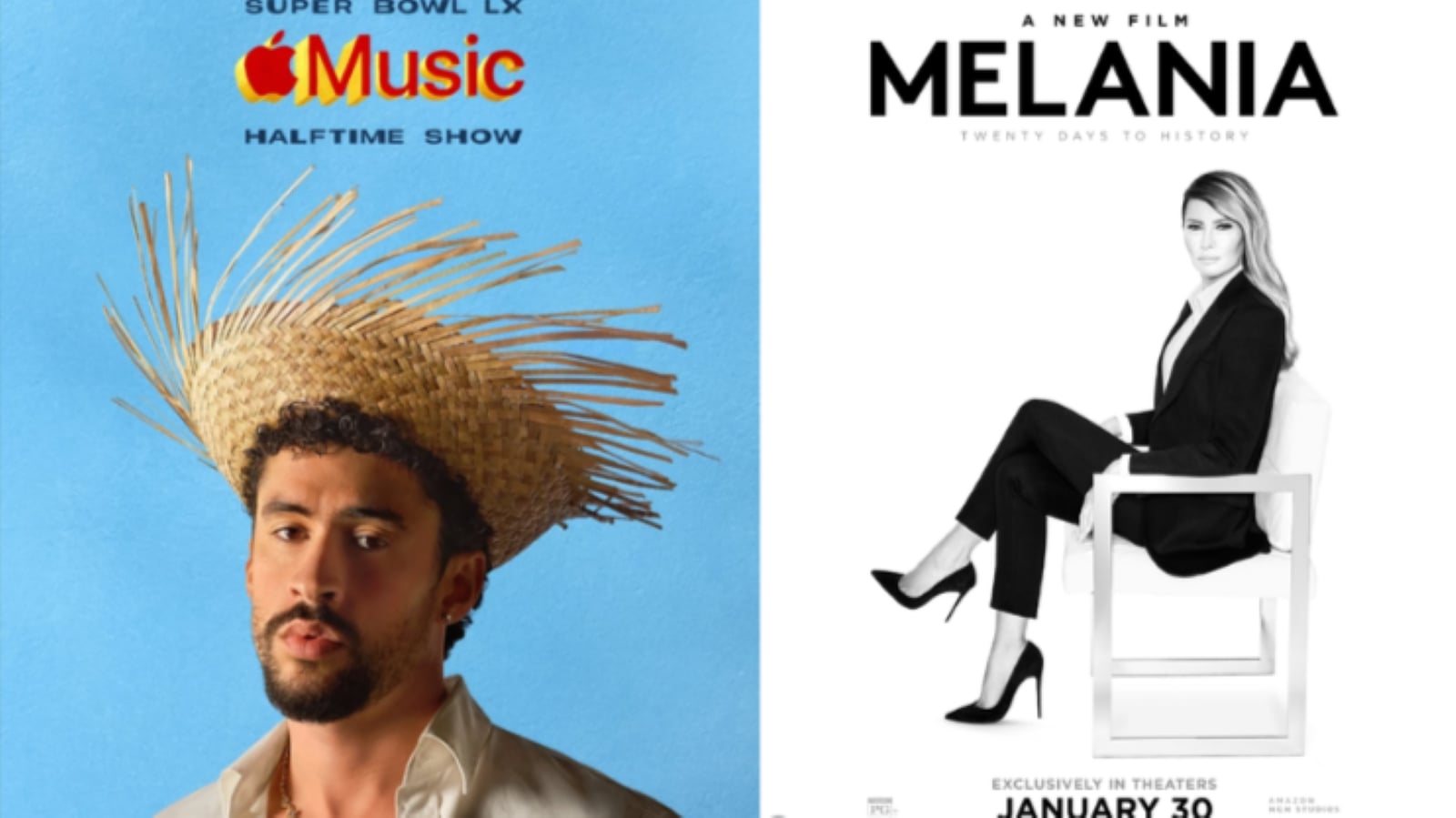
Big Tech can’t even agree on which America to bet on anymore.
Apple Music is the Super Bowl halftime show title sponsor under a deal announced in September 2022 that began with the 2023 game. The deal has been reported at roughly $50 million a year for five years. About $250 million for naming rights to the biggest stage in pop culture. Amazon MGM, meanwhile, poured a reported $75 million into Melania, between acquisition and marketing.
Neither bet was made on Super Bowl Sunday. That night just forced both bets onto the same screen.
The dueling halftime ecosystem made the contrast visible in a way quarterly earnings calls never could. Now we get to see which company read the cultural room correctly, and which one paid tens of millions to land on the wrong side of the audience.
Apple’s Bet: The Young, Global Future
Apple Music didn’t just sponsor a halftime show. It bought naming rights to one of the biggest recurring culture moments on the calendar, a deal analysts expected to be at least $50 million a year.
That sponsorship means Apple’s brand is stapled to the performance, the discourse, and the backlash, whoever the headliner is. This year, that meant Bad Bunny. Apple wasn’t playing it safe. It was betting that the future customer is younger, bilingual, and perfectly comfortable with America sounding like more than one language.
If you want the cleanest proof Apple is leaning into the moment, look at what happened immediately after. Apple pointed to a major post-show spike in Bad Bunny listening on Apple Music.
The bet is simple. In a few years, being the presenting sponsor of the year that Bad Bunny headlined the halftime show won’t look “political.” It will look obvious.

Amazon’s Bet: The Trump Brand Still Prints
Amazon MGM made the opposite kind of wager. It reportedly spent $40 million to acquire Melania and another $35 million to market it, a huge spend for a documentary.
Whether Amazon intended this as a culture-war flag or a cold business play, the message reads the same to audiences. Amazon was willing to spend real money to put the Trump brand into the pipeline, with a later Prime Video window part of the strategy.
And we already have early returns, because Melania hit theaters on January 30. It opened strong, around $7 million domestically in its first weekend, a record level start for a non-fiction film in the last decade. Then it fell hard. Box office dropped 67% in weekend two. That does not settle the bet, but it does underline the risk. This is what happens when your spend is headline-sized, and your audience is narrower than the hype.
The bet is that there’s a large, durable audience that wants this content, will reward the company for platforming it, and won’t be scared off by the blowback.
The Big Tech Split Screen
Apple and Amazon are two of the most data-driven companies on earth. They don’t drop tens of millions on pure vibes. So when Apple’s name sits on top of the halftime show, and Amazon ties serious money to a Melania Trump documentary, you’re seeing two different reads of the same country.
Not “what America is.” What audience is worth chasing, and what backlash is survivable.
The Parallel Media Bet
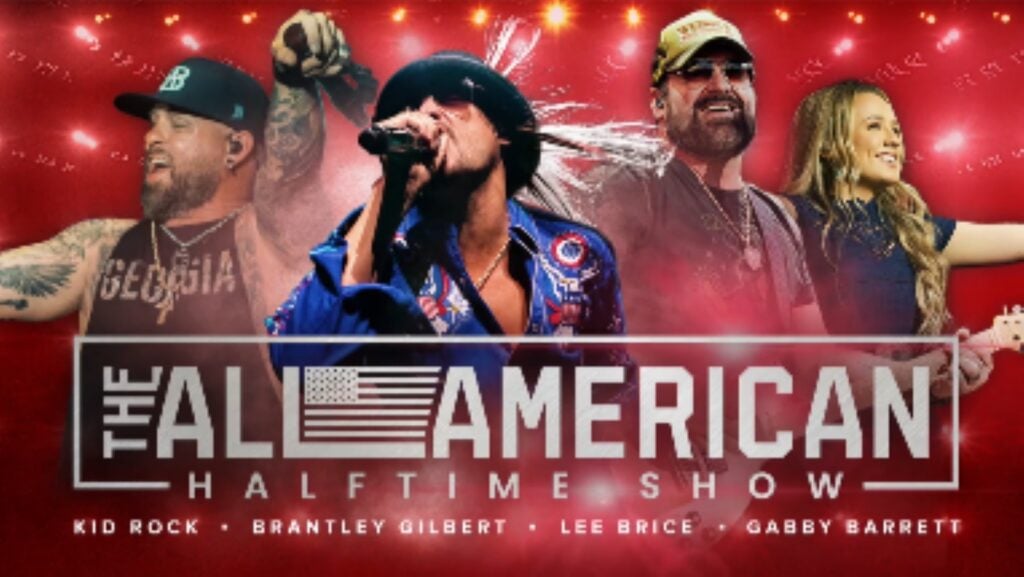
The Turning Point USA’s counter-show, dubbed “All-American Halftime Show,” made one thing obvious. There is a mobilized conservative audience that will show up for alternative programming built around identity and grievance. It’s real. It’s just smaller than the mainstream room.
The Split Screen Became a Scoreboard
Here’s what made Super Bowl night so clarifying. We got side-by-side market feedback.
Bad Bunny’s official halftime show drew over 135 million viewers. Turning Point USA’s counter-programmed “All-American Halftime Show” peaked at around 6.1 million live viewers. That is not nothing. It’s also not the main stage.
And the counter-show itself mostly avoided the caricature critics were hoping for. It was tightly produced, mostly music, and relatively light on speeches. The sharpest cultural signal came from Lee Brice previewing “Country Nowadays,” a song that turns culture-war grievance into everyday persecution.
So yes, the alternative audience exists. It mobilizes. It tunes in. But it is still the smaller of the two rooms. That’s the wager Amazon appears to be making. Not that everyone agrees. That a committed segment is valuable enough to monetize directly, even if the rest of the country rolls its eyes.
The Boycott Threats Cut Both Ways
In the days around Super Bowl Sunday, the predictable posts arrived. Some targeted Apple for putting its name next to Bad Bunny. The Amazon backlash was already in motion from Melania’s theatrical rollout, then got reheated by the halftime split-screen.
Most of this is noise. A minority of it is real. Both companies are betting they gain more than they lose.
Apple is betting its audience growth and global brand alignment outweigh whatever churn it triggers on the right. Amazon is betting that conservative curiosity and loyalty, plus the sheer scale of Prime, outweigh any backlash on the left.

The Math Gets Brutal From Here
By raw reach, Apple’s side of the night dwarfed the counter-show. But Amazon isn’t necessarily chasing the biggest audience. It’s chasing the most committed one, the kind that treats consumption like identity.
That strategy can work. It can also backfire fast if the content underperforms, the controversy burns hot, and the “new audience” never converts into actual retention.
So this is the real story. The culture war just became an ROI question. Not a think-piece question, a balance-sheet question.
The Verdict
Two tech giants. Two different reads of the American consumer.
Apple is betting on youth, scale, and global culture. Amazon is betting on grievance, loyalty, and the Trump media engine.
Someone is going to look wildly smart, and someone is going to look like they bought a very expensive problem. We’ll know which one when Apple’s next-cycle churn shows up, and when Melania’s theatrical slide, then its eventual Prime performance, tells the truth.
Will you make buying decisions based on Apple’s Bad Bunny halo effect or Amazon’s Melania investment, or is this all positioning that won’t matter at checkout? Sound off below.