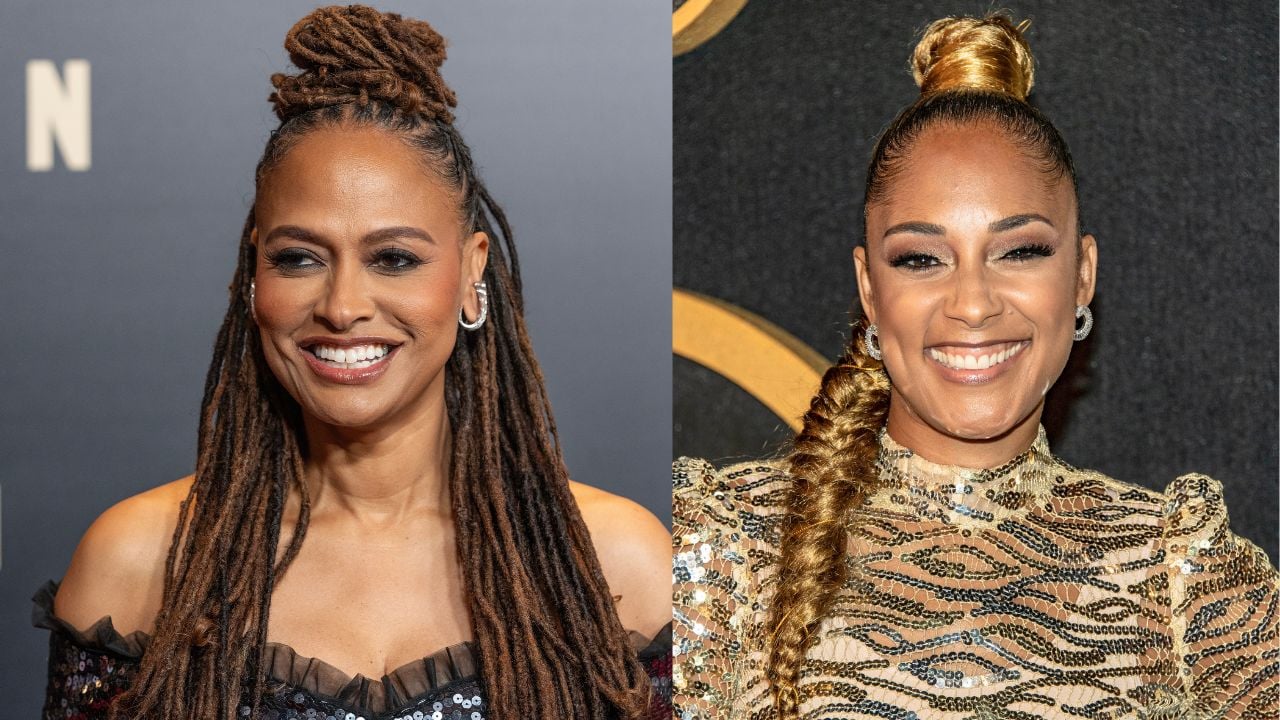
Sara Haines is facing renewed criticism over a conversation about race that aired on The View in 2017. Filmmaker Ava DuVernay and comedian Amanda Seales were among those responding after footage of the discussion resurfaced on Instagram.
The account Whiteness Studies posted the clip on Friday, November 6. The comments appeared beneath that repost, bringing an exchange from an earlier period of the ABC talk show back into public discussion.
In the footage, Haines described feeling unfairly excluded when her opinions about racial issues were dismissed because she is white. Her description of that experience as discrimination drew objections from her fellow panelists.
Haines was then in her first stint as a regular cohost. According to her ABC biography, she joined the panel in 2016, left in 2018 and returned in 2020, following her time on GMA 3: Strahan, Sara & Keke.
Ava DuVernay and Amanda Seales Respond to the Resurfaced Clip
View this post on Instagram
DuVernay responded with “smh,” the abbreviation for shaking one’s head. The filmmaker, whose work includes Selma, 13th and When They See Us, was among the recognizable names in the replies documented by Entertainment Weekly on November 8.
Seales, the stand-up comedian and Insecure actress, criticized what she characterized as white womaning in Haines’ remarks. She also directed her frustration at the program itself, writing that “this show is a miss on such a regular basis.”
Other commenters focused on the consequences of discrimination. One argued that losing the opportunity to contribute to a conversation in the way someone wants is different from losing work, educational opportunities or access to resources. The commenter also pointed to the damage discrimination can cause to personal relationships.
Whiteness Studies accompanied the video with a recommendation that Haines read Do the Work: A Guide to Understanding Power and Creating Change, coauthored by Roxane Gay and Megan Pillow.
Published in 2024, the illustrated guide examines how power operates in institutions and everyday life. Its publisher, Quarto, identifies redlining, voting rights and poverty among its examples of unequal power, alongside questions encouraging readers to examine their own assumptions and mistakes.
Haines Said She Wanted to Question a Movement’s Messaging as an Ally
In the original segment, Haines used Black Lives Matter as an example of a movement whose approach she might question. She described situations in which she disagreed with a particular message or strategy and wanted to explain her objections.
Her complaint concerned how people responded to that criticism. In her account, pointing out that she was white and had not experienced the same treatment prevented a discussion of the argument she was making. She believed her suggestions could be considered even when they came from someone outside the affected community.
Haines acknowledged the limits of her experience and said a white participant could recognize that she had never lived through the circumstances under discussion. She nevertheless wanted to contribute intellectually. “I’m an ally, I want to talk about it,” she said.
When challenged over her use of the word discrimination, Haines relied on a definition involving unjust treatment connected to differences such as race, age or sex. She maintained that the encounters she was describing fell within that definition.
Joy Behar and Whoopi Goldberg Challenged Haines’ Argument
Behar offered a different interpretation of those encounters. She told Haines that people were disagreeing with her and discounting her opinions, and questioned whether that was equivalent to discrimination.
Haines also made a qualification during the discussion: she was not saying that she experienced the daily pain faced by Black Americans.
Goldberg turned to the experience of being generalized about because of race. She suggested that the situation Haines described might help white people understand how Black Americans feel when others make assumptions about them as a group.
EW said it had contacted Haines’ representative at The View for comment, but its report did not include a response.