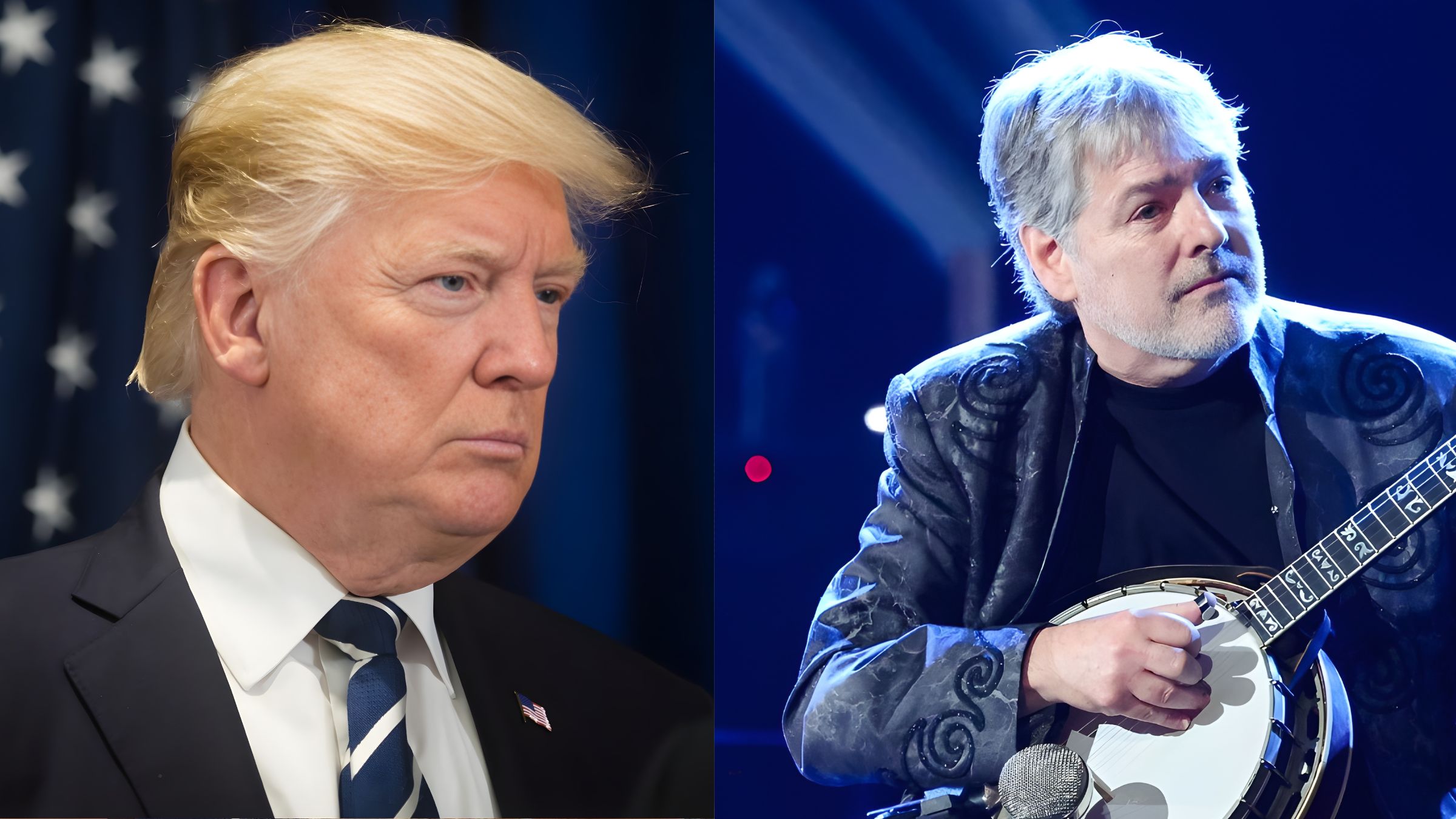
Another artist has stepped away from the Trump Kennedy Center, and the fallout is getting louder. This time, it’s Grammy-winning banjo virtuoso Bela Fleck, whose quiet withdrawal instantly turned into a very public political fight that now has artists, fans, and commentators choosing sides.
What could have been a simple scheduling change quickly became another flashpoint in the ongoing culture war surrounding the newly renamed Trump Kennedy Center.
Why Bela Fleck Walked Away
In a post that spread quickly across X, Fleck announced he had withdrawn from his upcoming performance with the National Symphony Orchestra at the Kennedy Center. His reasoning was clear and measured, but far from neutral in its impact.
He wrote that performing at the venue had become “charged and political” and said the focus should be on music, not ideology. Fleck added that he hopes to play with the NSO again in the future, at a time when art can be shared and celebrated without political tension overshadowing the performance.
For Fleck, the issue was not the music or the orchestra. It was the atmosphere surrounding the venue itself, which many artists now see as inseparable from politics after its renaming and leadership changes.
Richard Grenell Fires Back Hard
The response from Richard Grenell, president of the Trump Kennedy Center, was immediate and aggressive. Grenell rejected Fleck’s framing outright, accusing the musician of doing the very thing he claimed to be avoiding.
Grenell argued that Fleck made the venue political by withdrawing and accused him of caving to what he called the “woke mob.” He claimed that the pressure Fleck responded to would never be satisfied until artists perform only for Democrats.
Grenell doubled down on the center’s stated position, saying the Trump Kennedy Center welcomes everyone. Democrats. Republicans. And people who do not care about politics at all. According to him, the center wants performers who love entertaining all audiences, regardless of how they voted.
Fans and Critics Split Instantly
The reaction to Fleck’s decision was sharp and deeply divided, reflecting just how polarized the issue has become.
Some commenters dismissed Fleck entirely. One blunt reply mocked his relevance, claiming nobody even knows who he is. Others echoed that sentiment, calling his withdrawal “no great loss” and suggesting his absence would barely be noticed.
But Fleck also received strong support. One longtime fan praised his decision, saying it was entirely appropriate given what they described as a political takeover and illegal renaming of the Kennedy Center. Another commenter celebrated the move, calling the venue a disgrace and applauding Fleck for taking a stand.
Was the Performance Ever Political?
A large group of critics focused on one key point. They argued that it was not political at all until he made it so. According to them, the Kennedy Center is a venue like any other, and Fleck had already agreed to perform there.
Several commenters said withdrawing after signing a contract was the real political act. One longtime fan accused Fleck of throwing a tantrum that deprived attendees and workers of his talent. They argued it would have been better to perform as planned and voice concerns directly from the stage if he felt compelled to speak.
That argument raises an uncomfortable question for artists. Does refusing to perform reduce political tension, or does it amplify it?
Art, Neutrality, and the Cost of Refusal
At the heart of this controversy is a deeper debate about what neutrality actually looks like. Fleck says he wants art without politics. Grenell says refusing to play is itself a political statement that excludes half the country.
You can see why this keeps escalating. Artists fear being used as symbols. Institutions fear being boycotted into irrelevance. Audiences feel caught in the middle, wondering why music venues are now battlefields.
Each new cancellation adds pressure on the next artist scheduled to perform. Stay silent and risk backlash from peers. Speak up and face political attacks from the other side.
Why This Keeps Happening
The Trump Kennedy Center has become more than a performance space. It now represents identity, loyalty, and resistance depending on who you ask. That makes every booking feel like a statement, even when artists insist it is not.
Bela Fleck likely intended to step away quietly and preserve his focus on music. Instead, his withdrawal became another data point in a growing list of refusals that are redefining what it means to perform “apolitically” in 2025.
The Question Everyone Is Arguing About
Is refusing to perform an act of conscience, or an act of division? Should artists adapt to changing institutions, or draw clear lines and walk away?
The comments are not slowing down. Neither is the controversy.
Where do you stand?