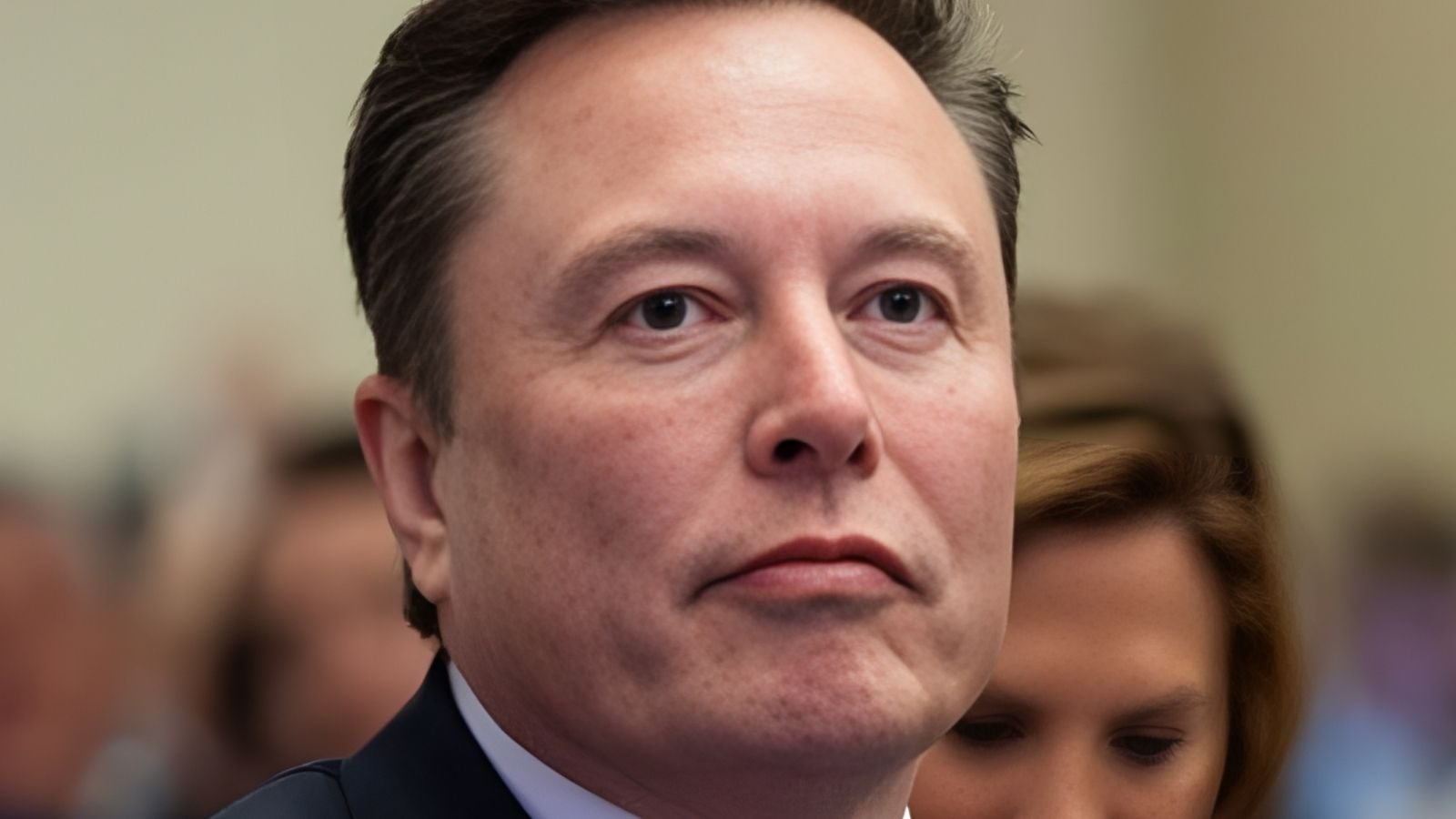
Elon Musk has once again ignited intense debate online after posting a short but explosive four-line message on X.
The post contains just five words, yet it has already generated millions of views and triggered a broader conversation about wealth, influence, masculinity, government power, internet culture, and the psychology of modern billionaires.
On the surface, the message appears unserious — almost like a late-night meme or a deliberately provocative joke designed to flood timelines and trigger reactions. But because it came from Musk, many users immediately began dissecting it for deeper meaning.
And that is what makes the post significant.
At this stage, Musk is no longer simply a businessman posting random thoughts online. He is one of the most influential individuals in technology, artificial intelligence, social media, transportation, defense infrastructure, and global politics. Every public statement he makes now operates on multiple levels simultaneously.
Bitches
Money
No Taxes
Party— Elon Musk (@elonmusk) May 10, 2026
The Message Reads Like a Distilled Version of Internet Power Culture
The structure of the post itself is notable. Each line represents something deeply embedded in modern online aspiration culture. Taken together, the message resembles a compressed manifesto of hyper-individualism — the idea that the ultimate goal of success is complete personal freedom without restraint.
That interpretation becomes especially interesting coming from Musk, whose public image increasingly revolves around resisting institutions, regulations, government oversight, media criticism, and traditional corporate norms.
The “No Taxes” line immediately became the focal point because it taps into a long-running ideological divide in American politics and business culture.
For critics, it reinforces the perception that billionaire elites want the benefits of society without contributing proportionally to the systems that sustain it.
For supporters, it reflects frustration with government waste, bureaucracy, overregulation, and what many entrepreneurs see as punishment for productivity and innovation.
Musk’s Personal History Makes the Post More Loaded
The message also lands differently because of Musk’s own history. Over the years, Musk has repeatedly positioned himself as someone fighting against systems he views as restrictive or inefficient.
That includes clashes with regulators, opposition to certain labor rules, public criticism of government agencies, battles over taxes and subsidies, attacks on mainstream media, and arguments against excessive bureaucracy.
At the same time, Musk has cultivated an image built around excess ambition, internet irreverence, and anti-establishment energy. Unlike traditional CEOs who speak cautiously through press releases and polished interviews, Musk often communicates like a poster first and a corporate executive second.
That approach allows him to dominate online conversation in ways few public figures can. But it also means his jokes frequently blur into ideology. Supporters interpret posts like this as rebellious humor. Critics interpret them as glimpses into how powerful elites actually think.
The Post Also Reflects a Broader Shift in Online Masculinity
Another reason the message spread so quickly is because it mirrors a broader online culture increasingly built around themes of wealth, dominance, freedom, escaping systems, rejecting authority, and personal gratification.
Much of internet culture today rewards exaggerated confidence, anti-government sentiment, and displays of status. In that environment, short provocative statements often function almost like slogans. Musk understands this dynamic extremely well.
His posting style frequently bypasses detailed arguments entirely and instead relies on emotionally loaded shorthand that supporters can project meaning onto. That strategy keeps him constantly at the center of conversation.
Grok’s Response and Critics Backlash
One of the most widely shared moments came after a user tagged Musk’s AI chatbot Grok and asked:
“@grok, what does Elon mean and can you draw a diagram?” Grok replied by describing the post as:
“A cheeky, satirical list of ultimate party/life goals: fun company (slang “bitches”), cash, zero taxes, and nonstop celebration—likely nodding to personal freedom and zero government hassle.” It also generated an image to accompany the explanation.
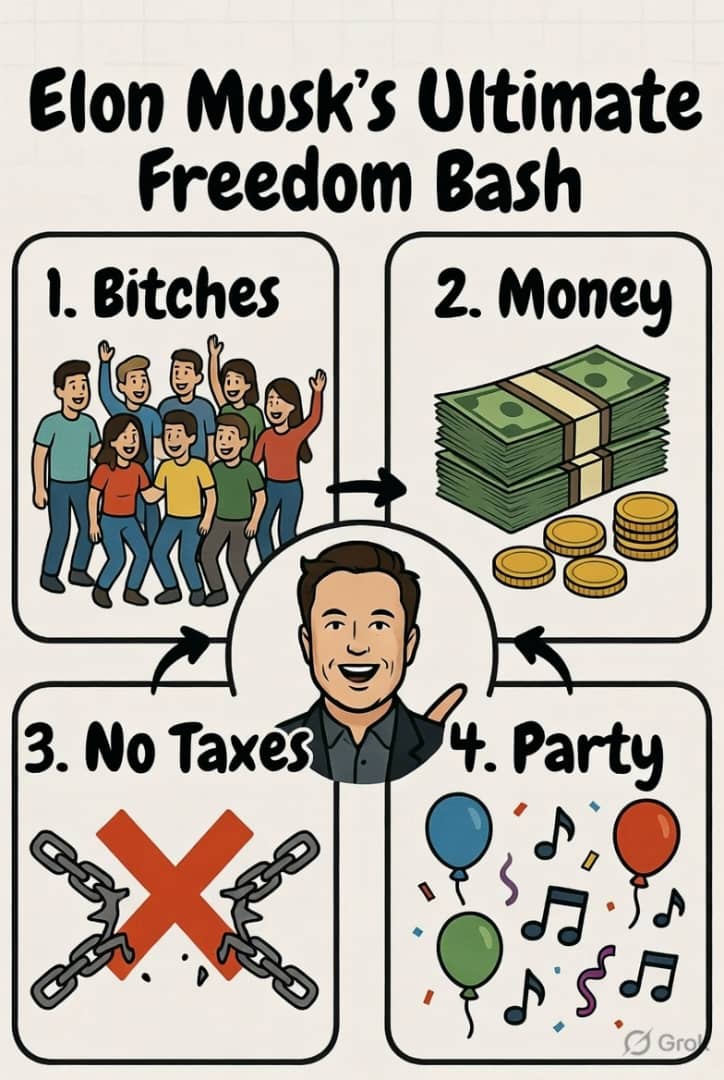
Critics quickly seized on the post as evidence of what they see as growing detachment among wealthy elites. Some argued the message glamorizes excess and irresponsibility during a time when many people are struggling with inflation, housing costs, healthcare expenses, and economic instability.
One commenter wrote: “How about you pay some taxes though so we can get Universal Healthcare.” Another asked: “Why are we having our society led by such unserious people…” Others dismissed the message as childish behavior from someone with enormous political and technological influence.
The criticism reflects a broader anxiety surrounding modern billionaire culture — especially the concern that individuals with extraordinary power increasingly communicate through memes, trolling, and internet spectacle rather than traditional leadership norms.
Do you think Elon Musk’s post was simply internet humor, or did it reveal something deeper about modern wealth, power, and elite culture?