Christopher Nolan makes some of Hollywood’s most technically ambitious movies, but he still has no interest in owning an iPhone.
The director believes constant access to a smartphone would consume the unstructured stretches of time that allow him to think through stories and consider what he might make next.
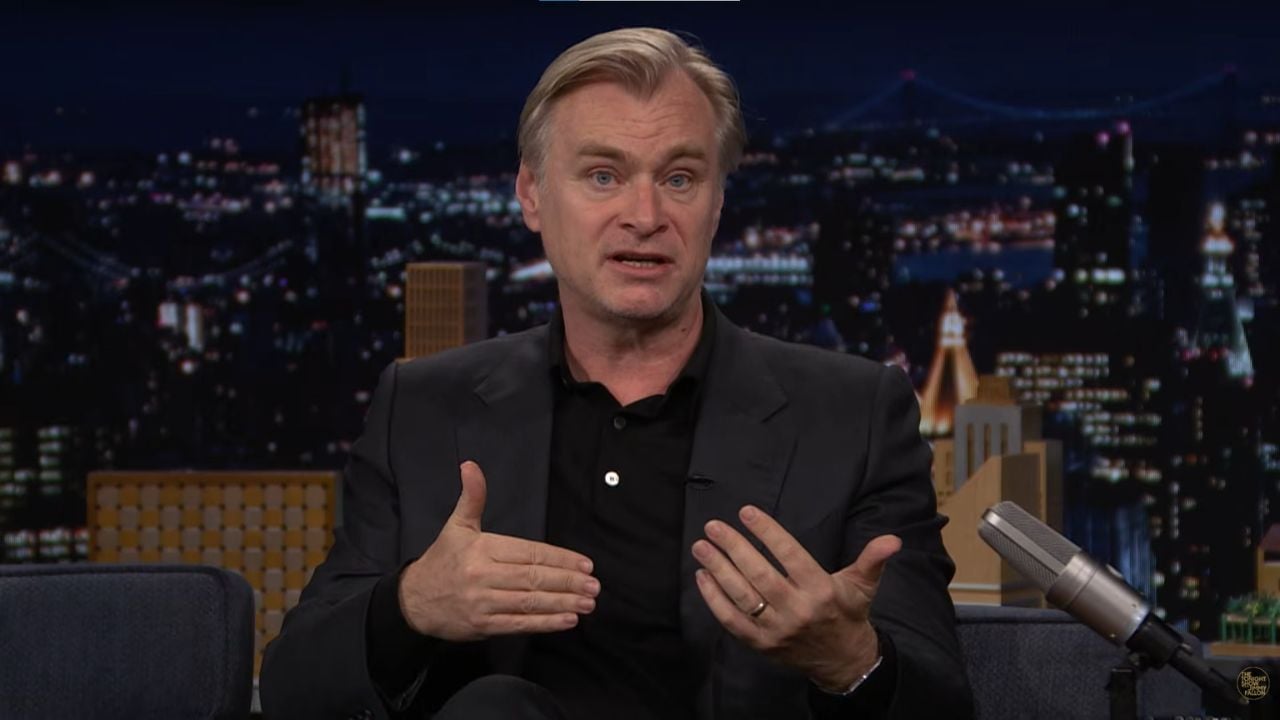
During a July 23 appearance on The Tonight Show Starring Jimmy Fallon, Nolan confirmed that he occasionally carries a basic flip phone while traveling. He has resisted upgrading because he suspects he would quickly become dependent on a smartphone.
His limited use of personal technology extends beyond phones. Nolan does not communicate through email, writes scripts on a computer without an internet connection and maintains a no-phone policy on his film sets.
Nolan Values the Time He Spends ‘Just Thinking’
“I have a flip phone, like a dumb phone, I use when I travel and stuff,” Nolan told Fallon, according to Entertainment Weekly. “That’s kind of great.” When Fallon asked whether he was ever tempted to buy an iPhone, Nolan acknowledged that he would probably enjoy having one too much.
“I would be horribly addicted,” he said. “I would lose those pockets of time that I really value where you’re just thinking.” Nolan described looking through a window and considering what his next film might become.
The director has resisted being characterized as completely opposed to technology. He previously said he appreciates what modern tools can accomplish but limits his personal exposure to anything that interferes with writing and concentration.
Emma Thomas Warns Actors Before Nolan Calls
Nolan’s lack of a personal cellphone creates an unusual system when he wants to contact actors. His wife and longtime producing partner, Emma Thomas, typically sends a message first so they know to answer an unfamiliar number.
Matt Damon described the process while explaining how Nolan offered him the role of Odysseus in The Odyssey. “Emma had texted me, ‘Are you around for a call today?’ Because Chris famously doesn’t have a phone,” Damon told PEOPLE.
Nolan then called from an available telephone at Universal Studios. Damon said the number appeared without any recognizable identification because Nolan simply picked up whichever line was available. “He doesn’t know what number it’s going to be,” Damon said.
The call initially sounded like a casual conversation before Nolan revealed that he was already preparing another film and wanted Damon to play its central character.
Large Productions Keep Nolan Surrounded by Information
Fallon questioned how Nolan could oversee a production as large as The Odyssey without carrying a smartphone. “I am surrounded by people helping me all the time,” Nolan replied. “It would actually be pretty hard for me to get away from the information that people are trying to give me.”
Assistants, department heads, producers and studio personnel can deliver updates directly, allowing Nolan to remain involved without personally monitoring messages throughout the day.
He also confirmed that cellphones are not permitted on his sets. Jon Bernthal, who plays Menelaus in The Odyssey, said his wife encouraged him to embrace the break from his device, telling him the experience sounded “like church.”
His Analog Habits Extend to Scripts and Email
View this post on Instagram
Nolan has said that he does not use email and writes on a computer that is disconnected from the internet. His assistant handles incoming electronic messages and prints anything he needs to read. “If I’m generating my material and writing my own scripts, being on a smartphone all day wouldn’t be very useful for me,” he previously explained, according to Business Insider.
He also prefers delivering sensitive screenplays in person. Before Oppenheimer, Nolan traveled to Ireland with the script and waited while Cillian Murphy read it in a hotel room. Nolan said the face-to-face approach allows him to see how an actor responds to his writing before the screenplay begins circulating more widely.
“It’s being able to sit with somebody who’s just read what you’ve written and get their take on it,” he said, “see how they connect with it in a very human, face-to-face way.”