
A Tyler, Texas, tax preparer is accused of helping wealthy clients shelter more than $1.5 billion in income through trusts that federal prosecutors call fraudulent. The Justice Department estimates that the arrangements cost the U.S. Treasury more than $200 million in unpaid taxes.
Thomas Weickgenant was indicted alongside Duncan John MacDonald, Sarah Duren and Richard Ronald Cayce. Prosecutors say the group sold clients an elaborate way to avoid taxes while continuing to control and benefit from the income and assets they supposedly transferred to trusts.
Weickgenant is also accused of preparing false client tax returns and obstructing IRS investigations into the trusts.
A Dallas federal grand jury returned the 24-count indictment on September 22, 2026, and the Justice Department announced it on October 14. Local station KLTV reported that Weickgenant was booked into the Smith County Jail on an IRS courtesy hold October 11 and booked out October 13.
Trusts Were Sold as a Way to Shield About 90% of Clients’ Income
The defendants allegedly marketed arrangements described as copyrighted, irrevocable, complex, non-grantor, discretionary spendthrift trusts. Their high-income customers were told they could assign earnings to the trusts and defer federal income tax indefinitely, even while retaining access to and control over their money and property.
According to the Northern District of Texas, clients were directed to shield roughly 90% of their income. The promoters allegedly charged fees that frequently exceeded $100,000, collectively collecting millions of dollars from customers.
Prosecutors also accuse the group of encouraging some clients to backdate trust paperwork and file amended tax returns seeking refunds for earlier years.
Weickgenant Allegedly Told Clients to Resist IRS Investigations
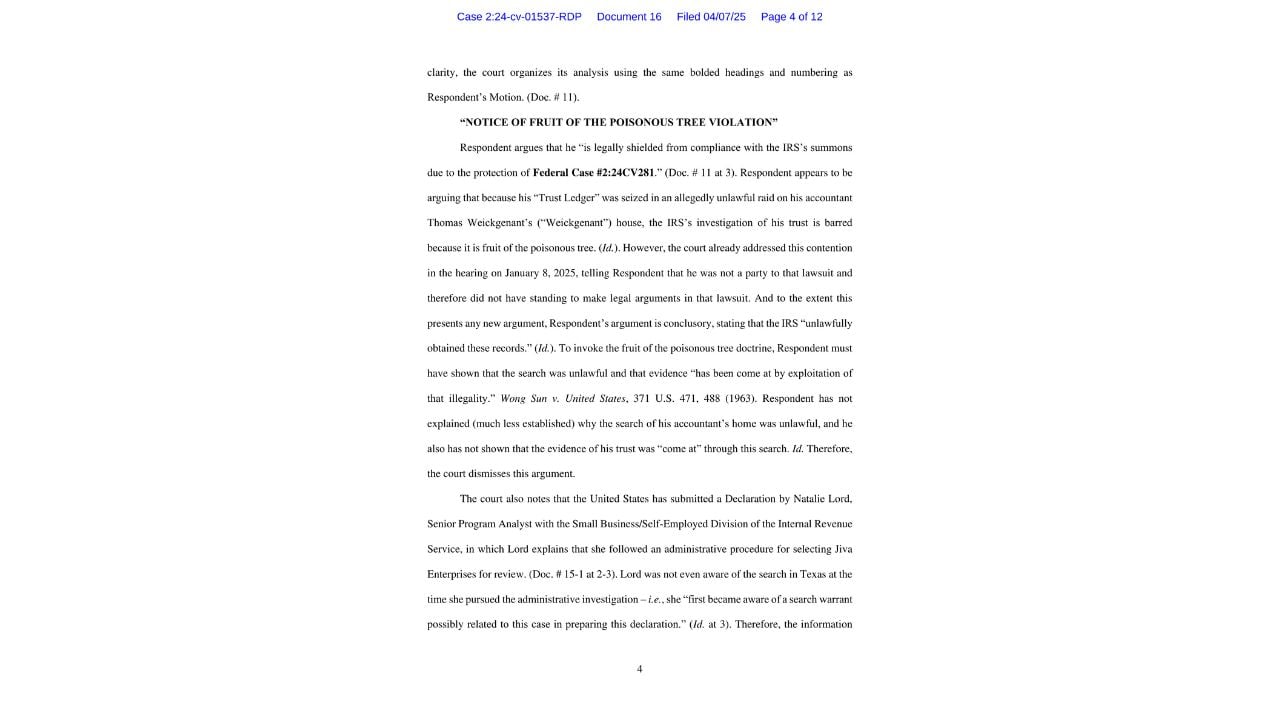
Prosecutors allege that as the IRS scrutinized the trusts, Weickgenant instructed customers not to speak with investigators. They also accuse him of encouraging at least one client to disregard a federal court order requiring compliance with an IRS summons.
In an April 2025 opinion in a separate Alabama civil IRS summons case, U.S. District Judge R. David Proctor addressed an investigation into Jiva Enterprises’ 2022 trust tax return. The taxpayer, Kanti Sunkavalli, identified Weickgenant as his accountant and submitted a nondisclosure agreement bearing Weickgenant’s signature.
Sunkavalli argued that the agreement and other objections prevented the IRS from compelling the records. The judge rejected those arguments and denied the motions challenging the summons. That ruling resolved a civil dispute over the taxpayer’s obligation to comply with the IRS, rather than determining Weickgenant’s guilt in the new criminal case.
The Trust Sellers Allegedly Hid Their Own Fee Income
MacDonald and Duren, whom prosecutors describe as common-law spouses, allegedly evaded taxes on millions of dollars they collected from selling the trusts. Investigators accuse them of concealing MacDonald’s ownership of the business, misleading federal authorities and routing income through trusts and accounts held under other people’s names.
The indictment also alleges that the couple paid personal living expenses through those entities and filed false tax returns. Cayce, identified as the owner of a distributorship that licensed the trust product, allegedly received millions in fees that he failed to report on his own returns.
A $2 Million Investment Allegedly Went Toward a Rolls-Royce and Yacht

MacDonald faces a separate set of accusations involving investors who believed they were purchasing shares in a business developing digital trusts. Prosecutors say he solicited $2 million for the venture and instead used the money on personal luxury purchases, including a Rolls-Royce Ghost and a down payment on a yacht.
The Justice Department published photographs of MacDonald with the Rolls-Royce and of the yacht when announcing the charges. It also alleges that he solicited the investment while subject to a court injunction restricting sales of securities that were not registered with the Securities and Exchange Commission.
MacDonald Previously Received Five Years for an Investment Fraud Scheme
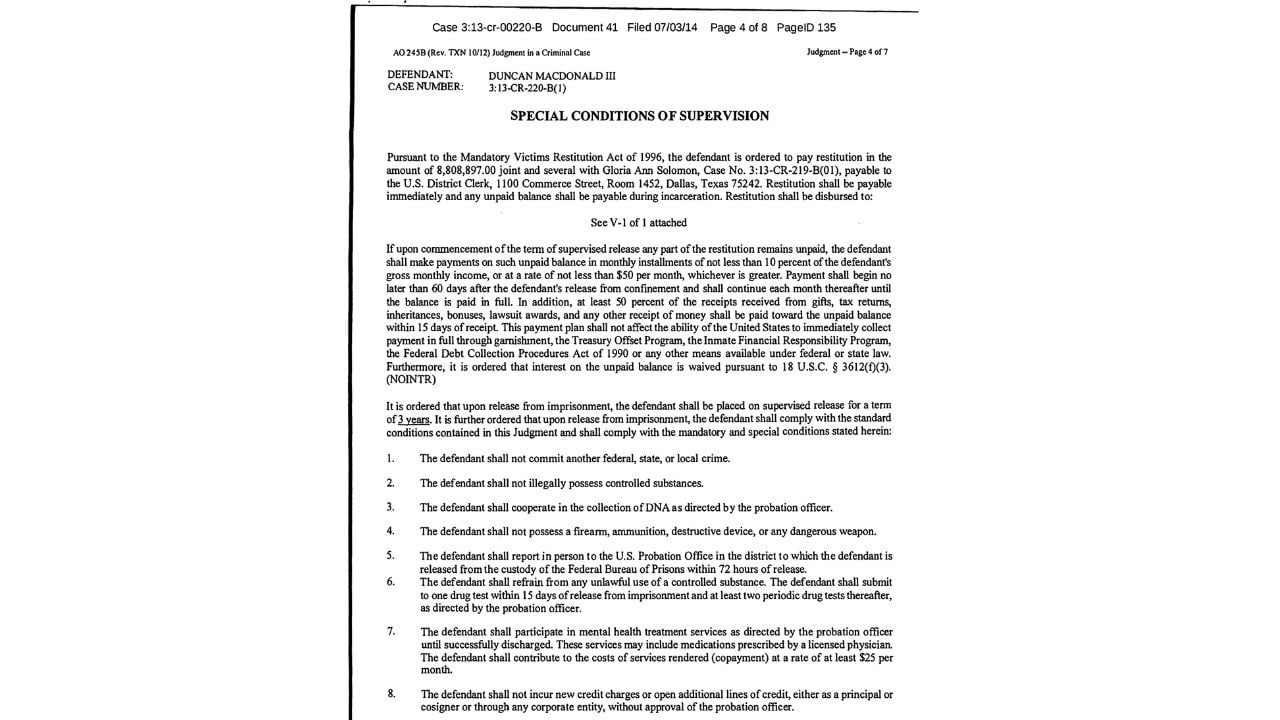
MacDonald’s earlier conviction came from a different business. In 2014, he was sentenced to 60 months in federal prison after pleading guilty to conspiracy to commit wire fraud involving Global Corporate Alliance, a company that marketed investments connected to medical-insurance programs.
An SEC enforcement filing includes MacDonald’s signed factual account from his guilty plea. He admitted that the company had inflated enrollment figures by thousands and generated no revenue from the investment program, using money from newer investors to pay earlier participants. The SEC had alleged that nearly $10 million was raised from about 80 investors.
Weickgenant Faces Seven Counts in a 24-Count Indictment
The September indictment contains 24 counts across the four defendants. Weickgenant faces one count of conspiracy to defraud the United States, five counts of aiding in the preparation of false tax returns and one count of corrupt interference with the IRS.
The Justice Department lists maximum prison terms of five years for the conspiracy offense and three years for each false-return and interference count, if convicted. MacDonald is separately charged with tax evasion, wire fraud and transactions involving criminally derived property, among other offenses. Some of his charges carry a maximum of 20 years per count. These are statutory maximums, not sentences imposed on the defendants.
IRS Criminal Investigation is investigating. The prosecution is being handled by Assistant Deputy Chief William Montague, Trial Attorney Max Willner-Giwerc and Assistant U.S. Attorney Eric B. Chen. The new charges are allegations, and the defendants are presumed innocent unless proven guilty.
Why Assigning Income to a Trust Does Not Make It Tax-Free
The IRS explains that a trust can serve legitimate estate-planning and financial purposes, but a person generally cannot eliminate tax on earnings simply by directing that income into a trust. The tax treatment depends on who earned the income and who retains powers over or benefits from the assets, not on labels such as “irrevocable” or “non-grantor.”
Anyone offered a trust marketed as a way to eliminate most income tax should seek an independent assessment from a qualified tax attorney or CPA who is not selling the arrangement. Promises of indefinite tax deferral, demands to backdate paperwork and instructions to avoid IRS inquiries warrant particular scrutiny.