The dust of the Colorado Desert has barely settled on the Empire Polo Club, and already the chatter isn’t about the breathtaking visuals or the career-defining vocals that echoed through the Indio night… It’s about the bill.
If you were one of the lucky thousands amidst the sea of bodies during the second weekend of Coachella 2026, you felt it… that electric, suspended-in-amber sensation when a performance transcends the setlist and becomes something spiritual.
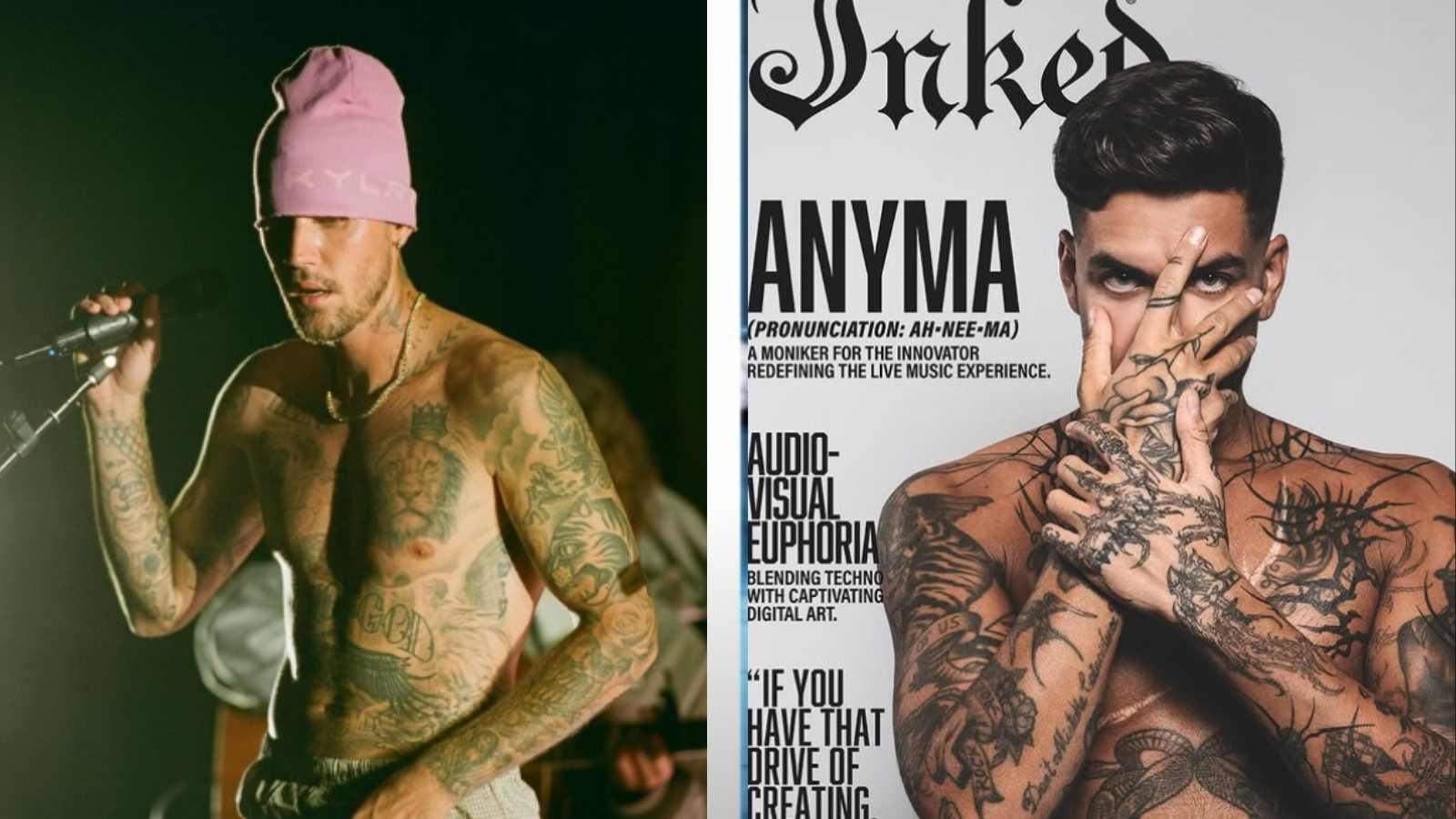
But in the cold, calculated world of municipal regulation, that “something spiritual” has a price tag, and this year it hit a collective $44,000. When Justin Bieber and the techno-visionary Anyma allowed their sets to drift past the strictly enforced 1:00 a.m. curfew, they didn’t just deliver encores; they triggered a financial landslide for festival organizers, Goldenvoice.
It is the perennial dance of the desert: the collision between unbridled creative momentum and the rigid, ticking clock of local governance. For those of us who have spent years navigating the landscape of live music, there is something profoundly frustrating about the math behind these moments.
How do we quantify the worth of an extra two minutes of a cultural touchstone performance? Is it simply a matter of dollars and cents, or are we witnessing the inevitable friction between a global cultural phenomenon and the sleepy reality of the city that hosts it?
The truth is, these fines are rarely about the noise level or the inconvenience to the neighbors; they are a tax on the sheer, undeniable gravity of the performers themselves.
When the crowd refuses to leave, and the artist refuses to stop, the resulting “overtime” isn’t an error… it is a surrender to the atmosphere, a refusal to let the magic dissolve just because the clock struck one.
View this post on Instagram
The Price of an Encore
There is a long-standing, often unspoken tradition at Coachella that involves the slow, inevitable creep of the clock toward that dreaded, arbitrary cutoff time. Some might look at the $44,000 penalty and see a lack of discipline or a failure of management, but allow me to offer a different perspective.
Consider for a moment that these fines are not failures, but rather the most honest form of admission for the quality of the art being presented. Live performances are increasingly sterilized, chopped to perfection, and timed to the millisecond, so the willingness to blow past a deadline is an act of defiance.
It says, quite loudly, that the experience of the people in the front row is more important than meeting the production schedule. When Anyma pushed his set nine minutes into the danger zone on Friday, or when Justin Bieber held the audience captive for two minutes past the threshold on Saturday, they weren’t disrespecting the City of Indio; they were honoring the contract they had with their fans.
We often talk about the “value” of a music festival ticket, but we rarely calculate the premium on those final, breathless moments where the set list goes out the window.
View this post on Instagram
If you are an artist at the peak of your career, and you have a hundred thousand people hanging on your every breath, stopping because of a municipal ordinance feels like a betrayal of the medium. The $44,000 paid by Goldenvoice is effectively a “magic tax.” It is the cost of ensuring that the memory of that night isn’t cut short by a sound technician pulling the plug.
Perhaps we should stop viewing these fines as penalties and start viewing them as a transparent cost of doing business in a world where legendary moments are becoming increasingly rare. If the organizers are willing to pay the price to keep the show going, it speaks volumes about what they believe the audience deserves.
Decoding the Desert Math
For those keeping score at home, the logistics behind the fine are as dry as the Indio climate. The City of Indio and the festival organizers, Goldenvoice, operate under a long-standing agreement that dictates a strict end time of 1:00 a.m. on Friday and Saturday nights.
The structure of the penalty is designed to be a deterrent, but given the massive revenue generators these sets have become, one has to wonder whether it serves anything more than a minor line item in a budget spanning millions.
The agreement stipulates a $20,000 fine for the first five minutes past the deadline, with additional penalties accruing for each minute thereafter. Anyma’s performance on Friday, April 17, extended until 1:09 a.m., totaling nine minutes of overtime. That nine-minute deviation cost the festival $24,000.
Then came Saturday, April 18, which featured one of the most highly anticipated headlining sets of the decade. Justin Bieber, in a move that seemed calculated to maximize the emotional payoff, ran over by just two minutes.
@sotrueian I AM DREAMINGGGGG OH MY GOD #justinbieber #coachella #beautyandabeat #coachella2026 #festival ♬ original sound – ian
That brief, two-minute extension resulted in a $20,000 hit. When you do the math, $24,000 for nine minutes and $20,000 for two, you start to see the absurdity of the scaling.
The “first five minutes” rule is the primary culprit here, as it effectively creates a high-cost barrier regardless of whether you go over by one minute or five. It creates a strange incentive where, if you are going to go over, you might as well stay on stage for the full five minutes to get your money’s worth.
While these figures sound astronomical to the average listener, in the ecosystem of a festival that generates nine-figure revenue, these penalties are essentially the cost of a high-end production rig.
They aren’t going to bankrupt the event, and they certainly aren’t going to stop the next headliner from chasing that perfect, final chord.
The Long Road of Curfew Conflicts
This isn’t a new story, and frankly, it is a rhythm as familiar as the festival itself. We have watched for years as legends and icons have wrestled with the ticking clock in the desert. In 2009, we saw the sheer audacity of Paul McCartney, who pushed his set 54 minutes into the night, costing the festival a hefty $54,000.
In more recent memory, the 2023 lineup, an absolute powerhouse of talent including Bad Bunny, Frank Ocean, and The Weeknd, racked up an astonishing $168,000 in fines across a single weekend.
It seems that the bigger the star, and the higher the cultural stakes, the more likely the curfew is to be treated as a mere suggestion rather than a hard limit.
Even Lana Del Rey, whose 2024 performance was a focal point of that year’s discourse, found herself at the center of a $28,000 penalty for exceeding the limit by 13 minutes.
View this post on Instagram
What we are witnessing is the inherent tension between the scale of modern live entertainment and the limitations of an aging regulatory framework. The City of Indio is, understandably, looking out for the peace and quiet of its residents, ensuring that the ground-shaking bass doesn’t rattle windows indefinitely into the morning hours.
Yet, the artists and the fans are operating in a different world, a globalized, hyper-connected space where the “moment” is the product. When you have invested millions in a stage design, a light show, and a performance intended to define a season, the idea of abruptly cutting the power feels like a relic of a bygone era.
We have to ask: at what point do these municipal agreements need to evolve? As long as the festival continues to pull in massive crowds and generate significant economic activity for the region, the fine will remain a static, somewhat performative gesture… a ritual of compliance that both parties seem more than happy to participate in, provided the show is good enough to justify the price.