
Two Washington, D.C., residents are facing federal charges in an alleged housing and identity-theft scheme that prosecutors say used stolen or fabricated identities to obtain apartment leases without paying rent or related bills.
The U.S. Attorney’s Office for the District of Columbia announced the case Oct. 2 after a seven-count superseding indictment charging Maliktra Derenorcourt, 27, and Philippe Oliver Gadie, 34, was unsealed.
Prosecutors allege the operation had run since at least November 2023 in Washington and surrounding areas. The group allegedly used stolen Social Security numbers, fabricated identifiers known as credit privacy numbers and false employment documents to obtain residential leases. The Justice Department said estimated losses are in the hundreds of thousands of dollars.
Federal court records show both defendants have appeared in the pending case in U.S. District Court for the District of Columbia.
Four Apartment Complexes Anchor the Charged Wire-Fraud Counts
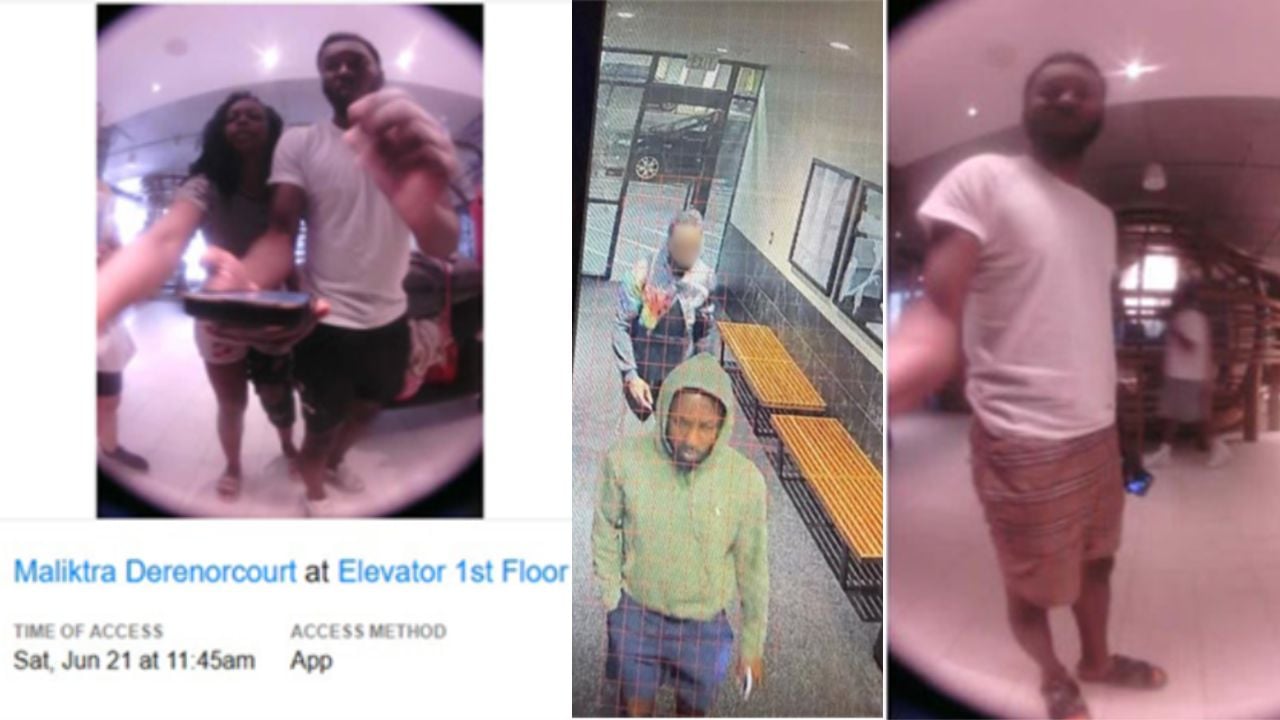
The superseding indictment ties the four substantive wire-fraud counts to applications involving Jefferson Marketplace, First Residences, Pinnacle NoMa and the Maren. The filing also references other properties in its broader overt-act allegations.
Prosecutors allege Derenorcourt, Gadie and others obtained leases using stolen Social Security numbers, fabricated identifiers and false employment records. After obtaining access, members of the group allegedly lived in the units themselves or sold access to other people for less than the value of the lease.
The indictment also alleges members communicated through encrypted messaging services including Telegram. In one January 2024 exchange described by prosecutors, Derenorcourt allegedly asked Gadie how much he would charge for a credit privacy number with good credit. Gadie allegedly replied that the price was $600.
Another allegation says Gadie submitted a 15-month lease application for Jefferson Marketplace using a victim’s identity and a fabricated employment letter purporting to come from Randstad. Prosecutors allege a similar employment letter was later used with an application at First Residences.
The Justice Department said nearly all of the apartments obtained through the alleged scheme eventually entered eviction proceedings for nonpayment. Prosecutors accuse the group of exploiting the time required to complete the eviction process by applying for additional apartments while earlier cases were still pending.
Cash App Account Allegedly Used a Victim’s Identity for Hundreds of Transactions
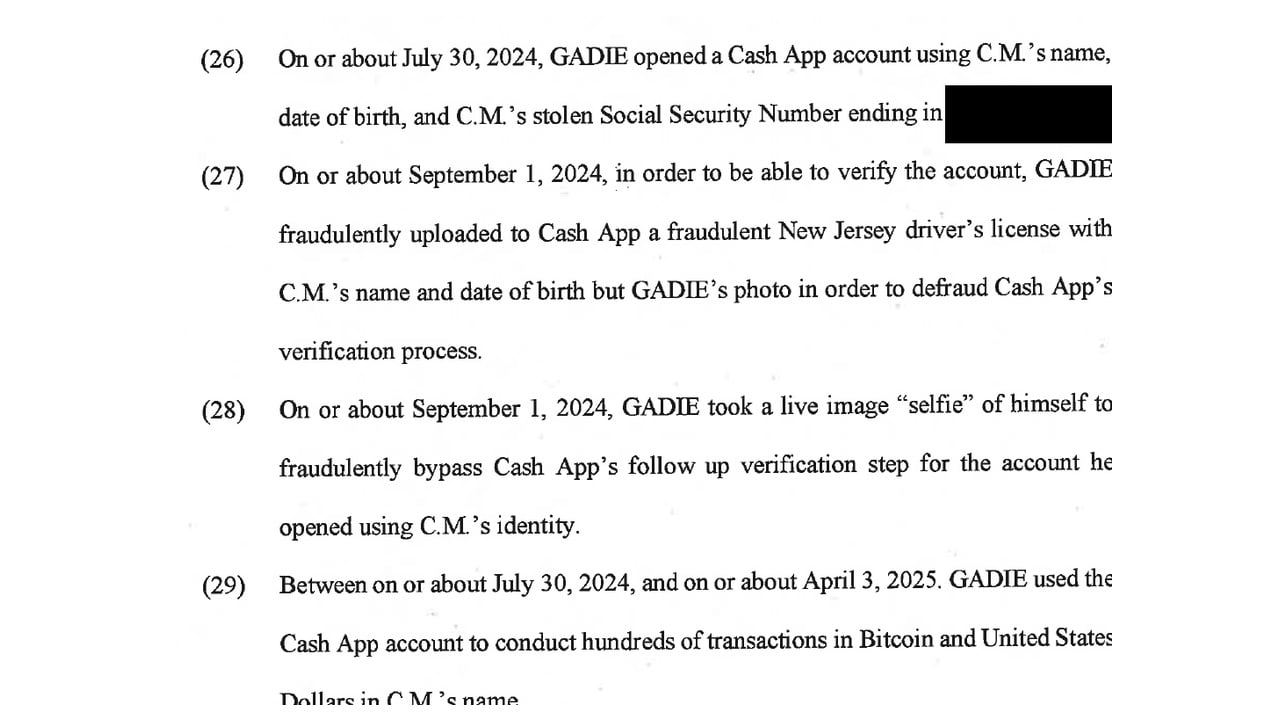
Prosecutors allege Gadie opened a Cash App account on July 30, 2024, using a victim’s name, date of birth and stolen Social Security information.
The indictment says Gadie later uploaded a fraudulent New Jersey driver’s license carrying the victim’s name and date of birth but Gadie’s photograph. Prosecutors allege he also took a live selfie of himself to bypass a follow-up Cash App verification step.
Between July 2024 and April 2025, the indictment alleges Gadie used the account to conduct hundreds of transactions in Bitcoin and U.S. dollars in the victim’s name.
The indictment also describes an August 2025 transaction in which Gadie allegedly used his PayPal account to pay an apartment application fee for another person. The Justice Department separately alleges Derenorcourt assisted the broader scheme by posing as female identity-theft victims.
The Seven Federal Counts Are Split Between the Two Defendants
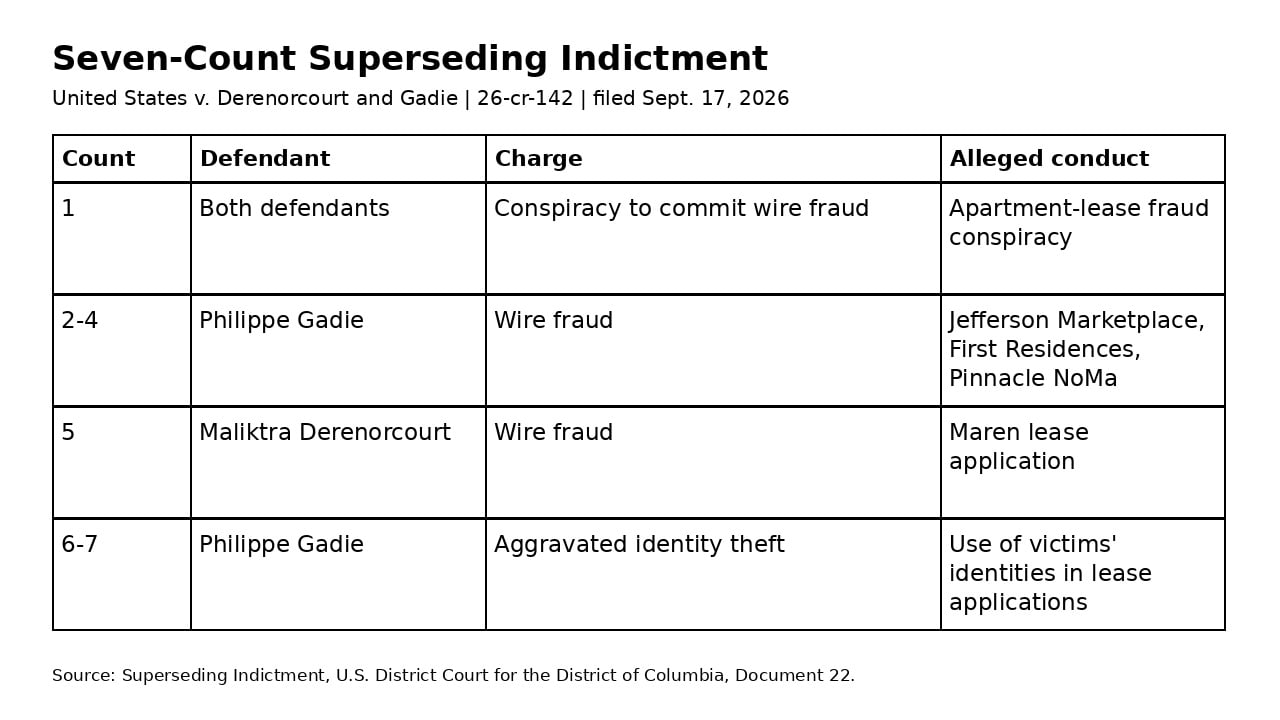
The superseding indictment charges both defendants in Count One with conspiracy to commit wire fraud.
Gadie is additionally charged with three substantive wire-fraud counts tied to alleged apartment applications at Jefferson Marketplace, First Residences and Pinnacle NoMa. Derenorcourt is charged with a separate wire-fraud count involving an alleged June 2025 application at the Maren.
Gadie also faces two aggravated identity-theft counts tied to the alleged use of victims’ identities in the Jefferson Marketplace and Pinnacle NoMa applications.
The indictment includes a criminal forfeiture allegation seeking property or money traceable to the charged offenses.
Derenorcourt Pleaded Not Guilty; Gadie Was Arrested Oct. 1
Derenorcourt was arraigned on the superseding indictment Sept. 28. The federal docket records a not-guilty plea to the conspiracy and wire-fraud counts against her. Her personal-recognizance release remained in place.
Gadie’s executed arrest warrant shows he was arrested in Washington on Oct. 1. At his initial appearance that day, the government requested temporary detention and the court ordered him temporarily detained pending further proceedings.
An arraignment and detention hearing for Gadie was scheduled for Oct. 7 at 3 p.m. Derenorcourt’s case is proceeding separately under the same federal docket.
The charges are allegations. Neither defendant has been convicted in this case.
Rental Identity Theft Can Leave Records in a Victim’s Name
The Federal Trade Commission’s IdentityTheft.gov provides specific recovery steps for people whose identities were used to rent an apartment or house.
The FTC advises victims to ask the landlord whether information about the rental was reported to a background or tenant-screening company. If so, the victim can request the screening report, provide an FTC Identity Theft Report and ask for fraudulent rental information to be removed.
The landlord can also be given a copy of the Identity Theft Report and asked to stop reporting information associated with the fraudulent lease.
The Social Security Administration recommends that people who believe their Social Security number is being misused review their Social Security earnings record, obtain credit reports from all three major credit bureaus and report identity theft through the FTC.