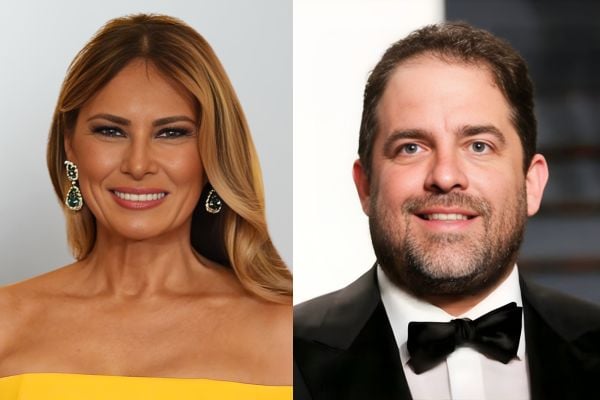
Hollywood comebacks are rarely quiet. This one is loud before the cameras even roll.
Brett Ratner, once one of the industry’s most bankable directors, is stepping back into the spotlight after years of absence. His return is tied to a project that was always going to draw attention. A new film connected to Melania Trump.
The reaction was instant.
Some people asked why now. Others asked why him. And many asked why this project of all projects became the vehicle for his return.
Ratner hasn’t directed a film since 2017. That gap isn’t a creative break. It’s the result of serious allegations that pushed him out of Hollywood’s inner circle.
Now, with this comeback, the scrutiny is back. Stronger than before.
A Director Who Disappeared From Hollywood
Before 2017, Brett Ratner was everywhere.
He directed blockbuster franchises, worked with A-list stars, and moved easily through Hollywood’s most powerful rooms. That changed fast.
Multiple women accused Ratner of sexual harassment and misconduct. The allegations surfaced during a broader reckoning in the entertainment industry. Studios cut ties. Projects vanished. His name became radioactive.
Ratner denied wrongdoing, but the damage was immediate.
By the end of 2017, he had left mainstream filmmaking. No new movies. No public redemption tour. No quiet indie comeback, just absence.
For years, his career stayed frozen in that moment.
Why This Comeback Is Different
Directors attempt comebacks all the time. Many do it quietly.
This isn’t quiet.
Attaching Ratner’s return to a film connected to Melania Trump adds layers of attention that most comeback projects avoid. Politics. Power. Optics.
Even people who don’t follow film news noticed.
The project instantly became more than a movie. It turned into a test case.
Can someone who has been sidelined by allegations return without addressing the past?
Does time alone soften public judgment?
Who gets second chances, and who decides?
Those questions now surround every update about the film.
The Melania Trump Factor
Any project involving Melania Trump carries built-in controversy.
Supporters frame her as private and misunderstood. Critics see her as inseparable from a polarizing political legacy. Neutral observers still watch closely.
Pairing that visibility with Ratner’s return ensures nonstop attention.
This isn’t just a creative decision. It’s a statement, even if no one involved says it out loud.
Public curiosity isn’t focused on the plot.
It’s focused on the choice.
Increased Scrutiny Comes With the Territory
Ratner’s long absence doesn’t buy him silence.
It does the opposite.
Every part of this production is now under a microscope. Casting decisions. Financing. Distribution plans. Promotional strategy.
Commentators are revisiting old reporting. Social media users are resurfacing past accusations. Industry insiders are debating what this signals behind the scenes.
People aren’t only watching the film.
They’re watching the industry’s response to it.
Silence from studios once spoke volumes. This project speaks even louder.
The Kennedy Center Premiere Adds Fuel to the Fire
The controversy doesn’t stop at who is directing the film.
The movie is set to premiere at the Trump Kennedy Center, a venue already loaded with political symbolism. That detail alone escalated backlash.
The Kennedy Center has long been seen as a cultural space meant to rise above partisan lines. Tying it to a Trump-linked project directed by a filmmaker accused of sexual harassment hit a nerve fast.
Critics argue the choice blurs culture, politics, and power in the worst way. Supporters frame it as reclaiming space from what they see as ideological gatekeeping.
Either way, the optics are brutal.
A controversial director.
A politically charged subject.
A nationally symbolic venue.
For many observers, this decision didn’t just invite scrutiny. It guaranteed it.
Instead of focusing on the film itself, attention shifted to questions about institutional endorsement, cultural influence, and who gets access to prestigious platforms.
The premiere location didn’t soften the backlash. It amplified it.
Hollywood’s Unfinished Reckoning
The timing matters.
In recent years, Hollywood promised change. Accountability. Better systems. Fewer quiet comebacks.
Audiences remember those promises.
Ratner’s return reopens a conversation many thought had settled. Not because of new allegations, but because unresolved ones never really disappear.
For critics, this comeback feels premature. For others, it raises legal and ethical questions about exile versus evidence.
There’s no consensus.
And that uncertainty fuels the attention.
What Happens Next
The film hasn’t been released. Reactions are already locked in.
Some viewers will refuse to engage. Others will watch out of curiosity. Industry observers will track how partners respond and who stays silent.
Ratner’s career won’t reset overnight. This project won’t erase the past. It will force it back into the open.
That’s the cost of returning this way.
A comeback tied to controversy doesn’t restart a career. It reopens a case in the court of public opinion.
Is this a second chance or a miscalculation?
Does time away change how accusations are viewed?
Should some doors stay closed?
The conversation isn’t going away.