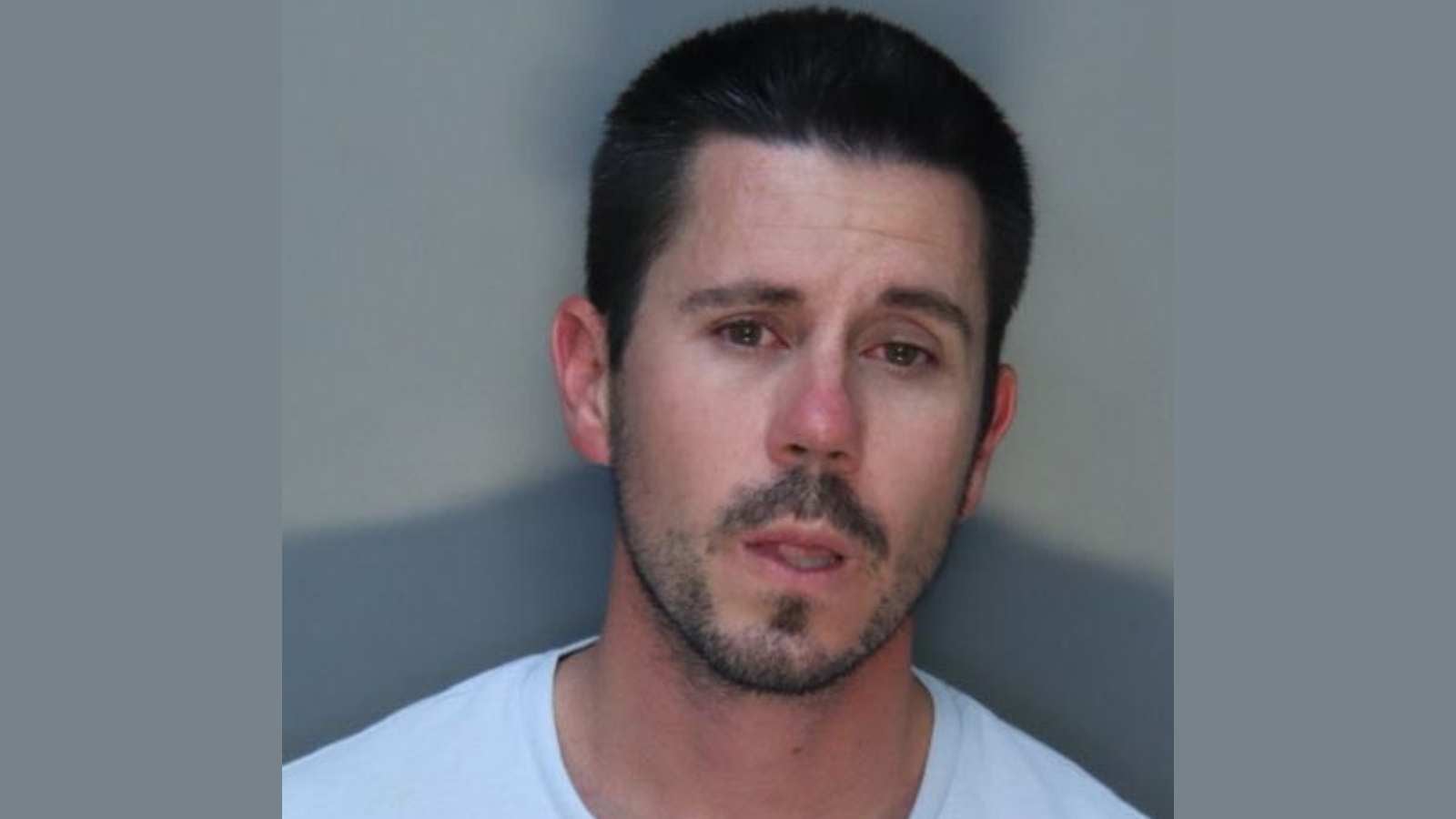
It’s often said that trust is the foundation of any society. It’s something we rely on without thinking, a given that we believe keeps the world in its place. Institutions, especially those like the United States Secret Service, are supposed to represent the pinnacle of this trust, symbols of unwavering protection and discipline. Yet, the disturbing incident involving Secret Service officer John Andrew Spillman begs the question: What happens when the very people we count on to keep us safe become the ones who shatter that trust?
This breach, seemingly out of nowhere, reveals just how fragile the line between protector and predator can be. The latest instance to highlight this contrast involves the United States Secret Service, an agency long synonymous with professionalism and untouchable vigilance. But a breach occurred in the dead of night on May 4, 2026, at the DoubleTree by Hilton in Miami, where one of their own officers, John Andrew Spillman, was arrested on a misdemeanor charge of indecent exposure.
This wasn’t just any ordinary case of indecency; this was an off-duty Secret Service officer, someone tasked with protecting high-profile individuals and safeguarding public events, accused of making a woman fear for her life in a hotel hallway. The very place she believed to be secure, protected by the shields of institutions designed to keep the world’s dangers at bay, became a stage for something much darker.
From the Lobby to the Hallway
The night began innocuously enough, as so many public safety failures do. Spillman, 33, a member of the Secret Service’s Uniformed Division, was off-duty, having completed his assigned security duties the day before. As he crossed paths with the woman in the hotel lobby, his presence went unnoticed until it didn’t.
According to the police report, obtained and reviewed by NBC6, Spillman followed the woman from the lobby to the sixth floor of the hotel, prompting unease in her. She and her companions hastily retreated into their room, locking the door behind them, feeling threatened by the officer’s approach.
The eerie twist in this story wasn’t just that a Secret Service agent, sworn to protect, was the source of the threat, but that the very institution that represents national security had become the cause of a woman’s fear. It was, as the report suggests, a quiet pursuit through a place once assumed safe, a place where the general public might never think twice about the security they take for granted.
The Irony of Protection Gone Wrong
The hotel, typically a neutral venue for business meetings and conventions, became the unexpected backdrop for a breach of public trust. Spillman’s arrest, found naked and “masturbating at the end of the hallway” near the women’s room, reveals more than just a singular act of misconduct. It’s the revelation of a deep irony: the very people assigned to protect the public, to ensure their safety, become the source of harm.
For an agency like the Secret Service, where the gravity of their responsibilities is not just a job but a matter of national security, this moment cuts deeply.
The agency’s swift and stern response acknowledges the severity of the situation, emphasizing that this incident “stands in stark contrast to the professionalism and integrity” expected of its officers. Yet for the woman, her perception of security has been irreparably altered, and the broader cultural shift in the boundaries of safety has been quietly chipped away.
Behind the Badge: The Double-Edged Sword of Trust
It’s easy to focus on the sensational aspects of this incident, the graphic details of Spillman’s arrest, the immediate headlines that followed. But the more enduring question this case raises concerns the broader societal implications. How can we reconcile our expectation of safety with the reality that those entrusted with our protection are still human?
Spillman’s actions aren’t an isolated incident within the Secret Service. The agency has a documented history of misconduct scandals and is an outlier in law enforcement. Throughout history, we’ve seen the collapse of public trust in figures in positions of authority, only to confront the complexities of human nature: those tasked with enforcing the rules often find themselves caught in their own flaws.
Spillman’s actions threaten more than legal consequences; they jeopardize the Secret Service’s integrity and public trust. The agency’s administrative response reflects its duty to uphold standards, but the incident exposes how fragile our reliance on such institutions truly is. When the protectors falter, we are left to grapple with the personal cost, the fear of being violated by the very system we rely on.
A System in Need of Reflection: What Now for Public Trust?
BREAKING: WTF? Trump’s Secret Service agent just got arrested for following women around a hotel and masturbating!
Is EVERYBODY in the Trump administration a sexual predator? This is absolutely unbelievable…
Secret Service Agent John Spillman (yes, that is his real name) has… pic.twitter.com/wXcgnpGK2E
— Gianl1974 (@Gianl1974) May 5, 2026
As this case moves forward, the repercussions for the Secret Service will likely extend beyond Spillman’s individual fate. We’ll continue to watch how the internal investigation unfolds, but this moment serves as a metaphor for the shifting dynamics between authority figures and the public.
For now, the details of the night remain murky. Questions about whether Spillman was under the influence, whether surveillance footage captured the incident, and what else might have occurred off the record remain unanswered. These are the facts we often cling to, believing that they will somehow make sense of the inexplicable.
But as much as the law will determine Spillman’s fate, it’s the emotional and social reverberations that will linger. This incident, though isolated, reflects a larger cultural pattern.
We live in a time where the boundaries between those who serve the public and the public themselves are more porous than ever. Where once security was synonymous with safety, now, it often feels like an illusion. A Gallup survey found that overall confidence across 14 major U.S. institutions has remained below 30% for three consecutive years, a reminder that trust in public systems is already fragile, even before incidents like this one.
A Lingering Thought
The reality that a woman felt the need to flee from a law enforcement officer in a secure hotel setting is not just a failure of one man; it tells us that safety is never guaranteed.
As the case progresses, the central question becomes how we repair trust in protection systems shaken by failure. This moment calls for reflection on institutional responsibility and the challenge of restoring confidence.
There are no easy answers, but this event serves as an uncomfortable mirror, reflecting not just the failings of an individual but the larger cracks in the structures we have built to safeguard us. And it’s in these cracks that the unsettling truth resides: no matter how polished the façade, institutions, too, can crumble.