
There is a specific, quiet kind of thrumming anxiety that settles into a woman’s chest around the twelve-month mark after giving birth. The “grace period” is officially over. The “Newborn Bliss” (which Kylie Kelce famously calls a total phenomenon, not a reality) has faded into the rearview mirror.
The world, your Instagram feed, your well-meaning aunt, the lady at the grocery store, stops asking how the baby is sleeping and starts looking, however subtly, at how you are fitting back into your old life. Or more specifically, your old jeans.
Kylie Kelce, the undisputed Queen of Delco and the woman who somehow manages to keep a household of four daughters and a retired NFL legend from descending into total anarchy, is officially done with the charade.
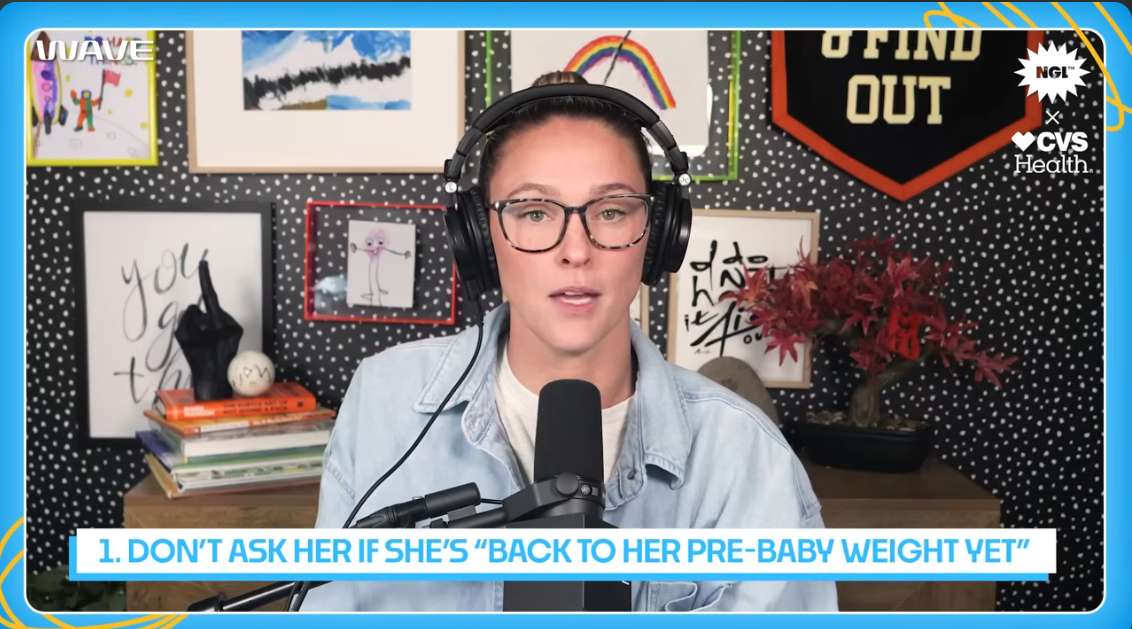
A year after welcoming her fourth daughter, Finnley (born March 30, 2025), Kylie is drawing a line in the sand. In a recent, raw episode of her chart-topping podcast, Not Gonna Lie, she issued a stern warning to the “bounce back” brigade: “Don’t you dare.”
It wasn’t just a quip; it was a manifesto. And it’s one that every woman who has ever felt the “one-year itch” to disappear back into her pre-baby self needs to hear.
The Myth of the “One-Year Reset”
For years, society has treated the first birthday as a finish line. We celebrate the cake smash, but we also expect the mother to have “smashed” her postpartum goals by then.
We’ve been conditioned to believe that by 365 days, the hormones should be balanced, the career should be back on track, and the “mummy tummy” should be a distant memory. Kylie, 33, isn’t just debunking this; she’s incinerating it.
“I have worn my maternity jeans recently, and I will continue to do it until I can button back up my old jeans… if that ever happens,” she shared with her trademark candor. “My body doesn’t feel like my body. You grew a human for almost a year.
Why do we think we should be ‘back’ in a few months? Give yourself a year just to settle, let alone recover.” This isn’t just “mom talk.” It’s backed by a growing body of research that the medical community is finally acknowledging.
A 2025 systematic review published in the European Journal of Midwifery found that a staggering 47% to 94% of women in high-income countries continue to experience physical or mental health problems well into the first year postpartum.
We aren’t talking about “tiredness,” we’re talking about hypertension, pelvic floor dysfunction, and “late-onset” postpartum depression that often peaks right when everyone assumes you’re “fine.”
The “Phat Ass” Incident- When Athleticism Meets Aesthetics
The pressure hit a fever pitch earlier this year after a clip of Kylie and Jason curling (yes, the Olympic sport with the brooms) went viral on their New Heights podcast. While most fans were focused on the comedy of Jason Kelce on ice, the comment section took a dark, familiar turn.
Total strangers began dissecting Kylie’s physique in her gray athletic leggings. Instead of seeing a former Division III field hockey standout or a mother of four mastering a new skill, the internet saw a “postpartum body” to be appraised.
Kylie’s response? Absolute gold. She officially inducted herself into the “Philadelphia Phat Ass Association,” but then she got serious. “Can you lay off? God,” she vented. “I’m fully squatted down. I’ve got a couple extra pounds on since I just gave birth. Why is the zoom-in directly on my backside?”
It highlights a bizarre cultural paradox: we praise women for being “strong” and “athletic,” but the moment that strength includes the literal physical expansion required to house a human life, we treat those extra inches as a failure of discipline rather than a triumph of biology.
The Science of “The Second Year”
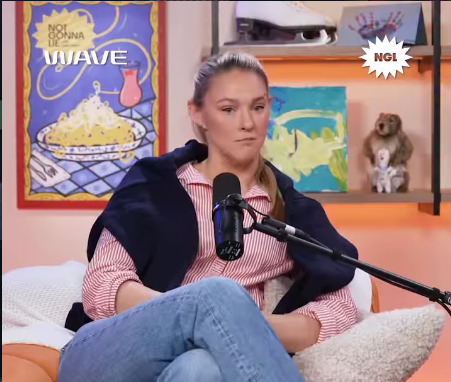
While the “Fourth Trimester” (the first three months) gets all the press, Kylie is tapping into what researchers call the “Postpartum Plateau.” Data from a 2025 longitudinal study suggests that stress levels for mothers often increase between six and twelve months.
Why? Because the external support evaporates. The meal trains stop. The “how are you doing?” texts dwindle. But the physical demands, the “touched out” feeling Kylie described so vividly on the Sunday Sports Club podcast, remain.
“I remember pumping and telling Jason, ‘Don’t touch my shoulder. Don’t touch my foot. Just… don’t,’” she recalled of her earlier postpartum journeys. That sensory overload doesn’t just vanish because the baby can eat Cheerios.
Kylie’s “Don’t You Dare” isn’t just about the gym; it’s about the mental load of being expected to perform “normalcy” when your internal chemistry is still a construction site.
Is “Body Positivity” Making It Harder?

Now, here is where we need to have a slightly tingly conversation. While Kylie’s “real talk” is a breath of fresh air, there is a growing, contrarian argument that the modern “Love Your Curves” movement might accidentally be adding a new layer of pressure.
Come with me. For decades, women were told to hide their postpartum bodies. Now, we are told we must celebrate them. We are told to “love our tiger stripes” and “revere our C-section scars.” But what if you don’t? What if, a year later, you look in the mirror and just… miss your old self?
Kylie touched on this with refreshing honesty when she discussed her “rough plan” for plastic surgery. She admitted she wants to eventually “put her boobs back where they belong” after nursing four children.
The contrarian reality is this: Forcing women to “love” their changed bodies can be just as exhausting as forcing them to “fix” them. By demanding “reverence” for stretch marks, we are still centering the woman’s value on her physical form.
The truly radical act, the one Kylie seems to be gunning for… is neutrality. Your body is a vessel that did a job. You don’t have to “love” the ridges on your stomach to be a good mother, and you don’t have to “fix” them to be a valid woman. You just have to be allowed to exist in them without a public commentary.
The “Kelce Way” to Support
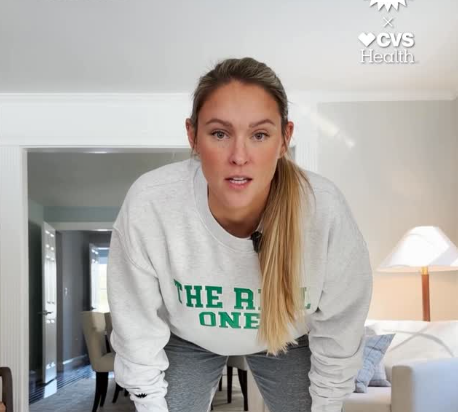
Kylie’s guide for the public (and the people in your life) is simple, blunt, and arguably the most important PSA of 2026: Stop saying “You look great”: Kylie argues that this implies the most important thing about a new mom is her appearance. Instead, tell her she’s a “badass” or that she’s “doing an amazing job.”
Fed is Best: She famously told her podcast listeners, “Fed is best, motherfudgers,” to end the breastfeeding vs. formula wars. The “One Year” Rule: If you wouldn’t comment on a woman’s weight if she hadn’t had a baby, don’t comment on it now.
And she isn’t wrong. We must stop treating a woman’s body as public property just because it performed a public service. For too long, we’ve allowed a culture that views the postpartum period as a “recovery” from a deficit, rather than an evolution into a more powerful state of being.
To look at a mother, whether she is six months or six years out, and expect her to “return” to a previous version of herself is not just unrealistic; it’s an insult to the transformation she endured. We need to be firm in the realization that there is no “back” to go to.
There is only the woman standing in front of you now, tempered by the fire of creation, and she doesn’t owe anyone a return to the girl she was before she brought life into this world.
Looking Ahead
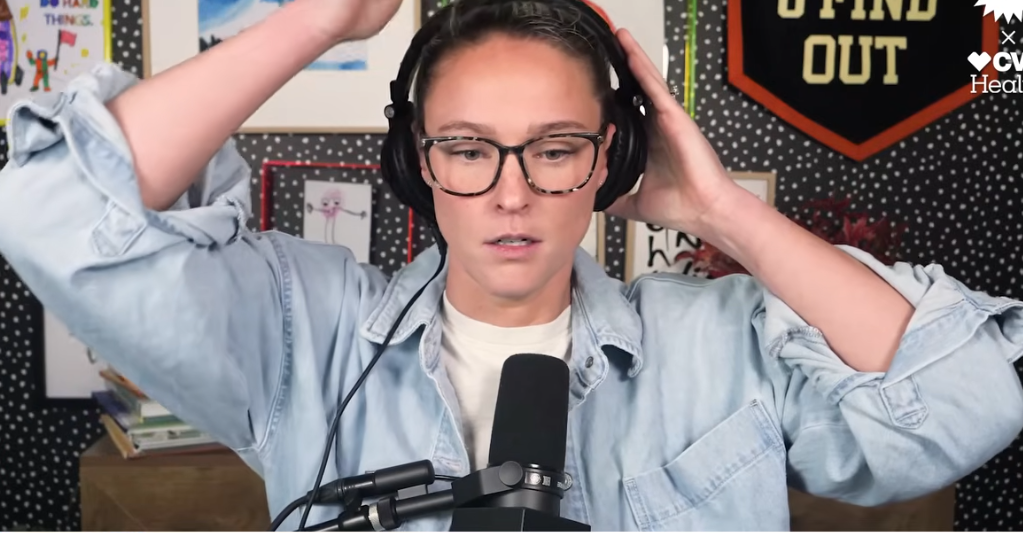
As the Kelce family moves into a new era, with Jason enjoying retirement and Kylie’s podcast “dethroning” the likes of Joe Rogan, the spotlight on their domestic life is only getting brighter. But Kylie is using that light to incinerate the pedestals we put mothers on.
She isn’t a “supermom” because she looks a certain way in gray leggings; she’s a powerhouse because she refuses to lie about how hard the “normal” stuff actually is. A year after Finnley, Kylie isn’t “bouncing back.” She’s moving forward.
And she’s inviting every other woman to stop sprinting toward a version of themselves that doesn’t exist anymore. Ultimately, Kylie’s defiance serves as a necessary funeral for the “superwoman” archetype that has haunted mothers for generations.
By refusing to perform the expected miracle of physical and emotional erasure, she is teaching us that the most “human” thing a woman can do is occupy the space she has earned.
It’s a quiet, fierce reclamation of identity that suggests our value isn’t found in how quickly we can shrink ourselves back into a pre-parental mold, but in how boldly we inhabit the expanded, complicated, and beautifully weathered versions of who we have become.
In the world according to Kylie, the goal isn’t to recover your old self; it’s to finally stop apologizing for the new one.