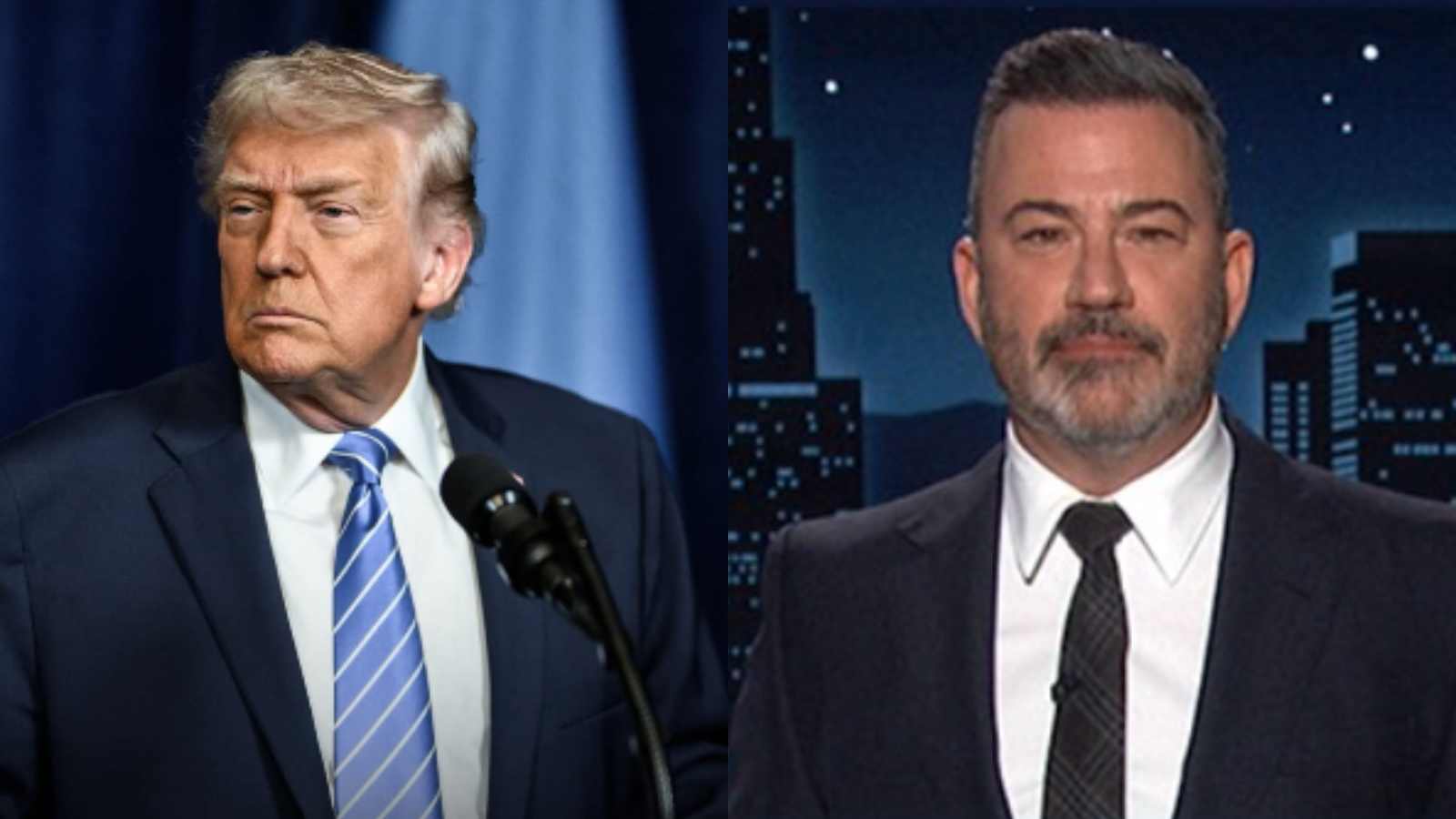
The screen flickers, the monologue begins, and for a few minutes, the noise of our fractured digital landscape seems to coalesce into something almost, dare I say… orderly.
On Monday night, Jimmy Kimmel occupied that exact space, standing before a crowd in sunny Los Angeles to dissect a weekend so bizarre it felt less like a news cycle and more like a fever dream curated by a malfunctioning algorithm.
We often talk about the “noise” of the modern era, but what Kimmel laid bare was something louder… a frantic, high-velocity collision of legacy feuds, religious provocations, and the uncanny valley of artificial intelligence.
It was a monologue that didn’t just chase the headlines; it tried to capture the sheer exhaustion of a public trying to distinguish between a political statement and a surrealist performance.
For those of us who track these cultural shifts, the stakes felt different this time, as if the guardrails of public discourse hadn’t just been moved, but entirely dismantled for sport.
The Resurrection of the Celebrity Feud
The monologue kicked off with a return to a classic trope: the celebrity vendetta. Kimmel pointed out that after previous dust-ups with music heavyweights like Bad Bunny and Taylor Swift, the focus has shifted back to a familiar target: Bruce Springsteen.
The “Boss,” fresh off a high-energy, three-hour set at the Forum, found himself the subject of a social media post by the President, which Kimmel described as “petty and childish.” The post featured a photograph of Springsteen that had been noticeably doctored to suggest the musician had undergone excessive plastic surgery.
Jimmy Kimmel’s critique was sharp, contrasting the 76-year-old rock star’s legendary stamina with the “stumpy, blotchy” reality of the man behind the post. It was a classic Kimmel takedown, highlighting the irony of a public figure mocking another’s appearance while surrounded by the “plastic” elite of Mar-a-Lago.
However, the Springsteen jab was merely the opening act for what Kimmel termed the “most bananas posting spree yet.” The narrative took a sharp turn toward the ecclesiastical when the President targeted the Vatican. Kimmel recounted the six-word sentence that stopped him in his tracks: “Pope Leo is weak on crime.”
The absurdity of treating the Pontiff like a soft-on-crime district attorney sent the host into fits of laughter. The social media rant suggested that Pope Leo only held his position because he was American and was placed there to handle the administration… a claim Kimmel ridiculed by suggesting the “white smoke” of the papal election was being blown in a very different direction.
This intersection of high-stakes diplomacy and schoolyard insults creates a unique kind of cultural whiplash that few but Kimmel are equipped to navigate.
The Messiah Complex and the “Jesus” AI
This is absolutely wild! I had to verify this was in fact an actual post from Trump and yes, it absolutely is 🤦🏻♂️
President is posting AI generated images of himself as Jesus. This is absolutely disgusting and 100% blasphemy.
If you are a conservative Christian still supporting… pic.twitter.com/ca9QybCGHh
— Cyrus Janssen (@thecyrusjanssen) April 13, 2026
Perhaps the most unsettling segment of the night focused on a now-deleted AI-generated image that depicted President Donald Trump in a messianic light, seemingly standing in for Jesus Christ.
Kimmel meticulously walked the audience through the bizarre details of the image, noting the “normal-sized hands” and the presence of F-16 fighter jets soaring above the religious figure. The most jarring detail, however, was Kimmel’s observation that the man being “healed” in the image bore a striking resemblance to Jeffrey Epstein.
This “detour into messiah status” reportedly did not sit well with the Christian community, leading to the rare event of the post being scrubbed from the account, a move Kimmel found notable given that threats against entire civilizations usually remain active on the feed.
The rather opposite take on this specific event is where the conversation gets truly interesting. While the mainstream reaction is to label these posts as “cowardly” or “insane,” there is a cynical brilliance to the strategy.
By posting and then deleting an image of oneself as a religious savior, you occupy the news cycle twice: once for the audacity of the post and once for the mystery of its removal. It is a form of digital gaslighting that forces the media to play a game of “did that really happen?”
Donald Trump claims his AI-generated TruthSocial post was depicting him as a doctor, not Jesus Christ:
“Only the fake news could come up with that one” pic.twitter.com/MVKsJV197j
— Pop Base (@PopBase) April 13, 2026
During a subsequent press event involving “DoorDash Grandma” and McDonald’s delivery to the Oval Office, the President claimed the image was actually him as a “doctor” for the Red Cross.
Kimmel’s response was a mix of awe and disgust, questioning whether the offense lay in the leader’s lack of intelligence or in his low regard for the intelligence of the American public.
The Erasure of the Digital Paper Trail
Perhaps the most fascinating aspect of this entire ordeal is the “deleted” nature of the AI post. We are living in a post- permanence world, where the act of deleting a post is just as performative as the post itself.
Kimmel’s critique of the digital footprint… or the lack thereof, speaks to a broader, unspoken anxiety about the stability of truth in 2026. If the history of a presidency can be rewritten or edited in real-time, what does that mean for the electorate?
The fact that the AI image was scrubbed does not remove its impact on the digital consciousness; it only adds a layer of mystery and conspiratorial fervor to the narrative.
As an observer of these trends, it becomes increasingly clear that the “feud” aspect of this… the Springsteen jabs, the Kimmel responses, is merely the theater. The real story, the one that usually gets buried in the nightly monologue, is how these figures have successfully integrated themselves into the feed’s logic.
They are no longer just people; they are content streams. And as long as they can command the feed, they remain the dominant force in our culture, regardless of whether the specific post is deemed “bizarre” or “offensive.”
View this post on Instagram
The Fog of Digital War and Legal Woes
Beyond the social media theater, the monologue touched on the very real-world consequences of a fractured administration. Kimmel highlighted the collapse of peace talks in Pakistan involving JD Vance and the subsequent, confusing announcement of a blockade in the Strait of Hormuz, a body of water already under blockade.
The host painted a picture of a leader more focused on golfing and “checking out” women at his clubs than on the thousands of soldiers currently deployed.
Kimmel’s description of the President hitting the links with his grandson, Donald Trump III, while claiming military victories that haven’t occurred, served as a grim reminder of the disconnect between the “content stream” of social media and the reality of global politics.
The evening concluded with a look at the crumbling legal defenses surrounding the administration. Kimmel noted the dismissal of a $10 billion defamation lawsuit against the Wall Street Journal regarding a birthday message for Jeffrey Epstein. The judge’s ruling, citing a lack of malice, was framed by Kimmel as another “smackdown” in a long line of judicial rebukes.
Between the legal losses, the bizarre interactions with Florida Governor Ron DeSantis, and the ongoing mystery of Melania’s public distance from the Epstein files, the monologue served as a comprehensive autopsy of a weekend where the line between reality and a “South Park” episode vanished entirely.
In Kimmel’s world, the only way to settle the Pope-President feud is “in the Octagon on the White House lawn,” a joke that feels uncomfortably close to the timeline we currently inhabit.