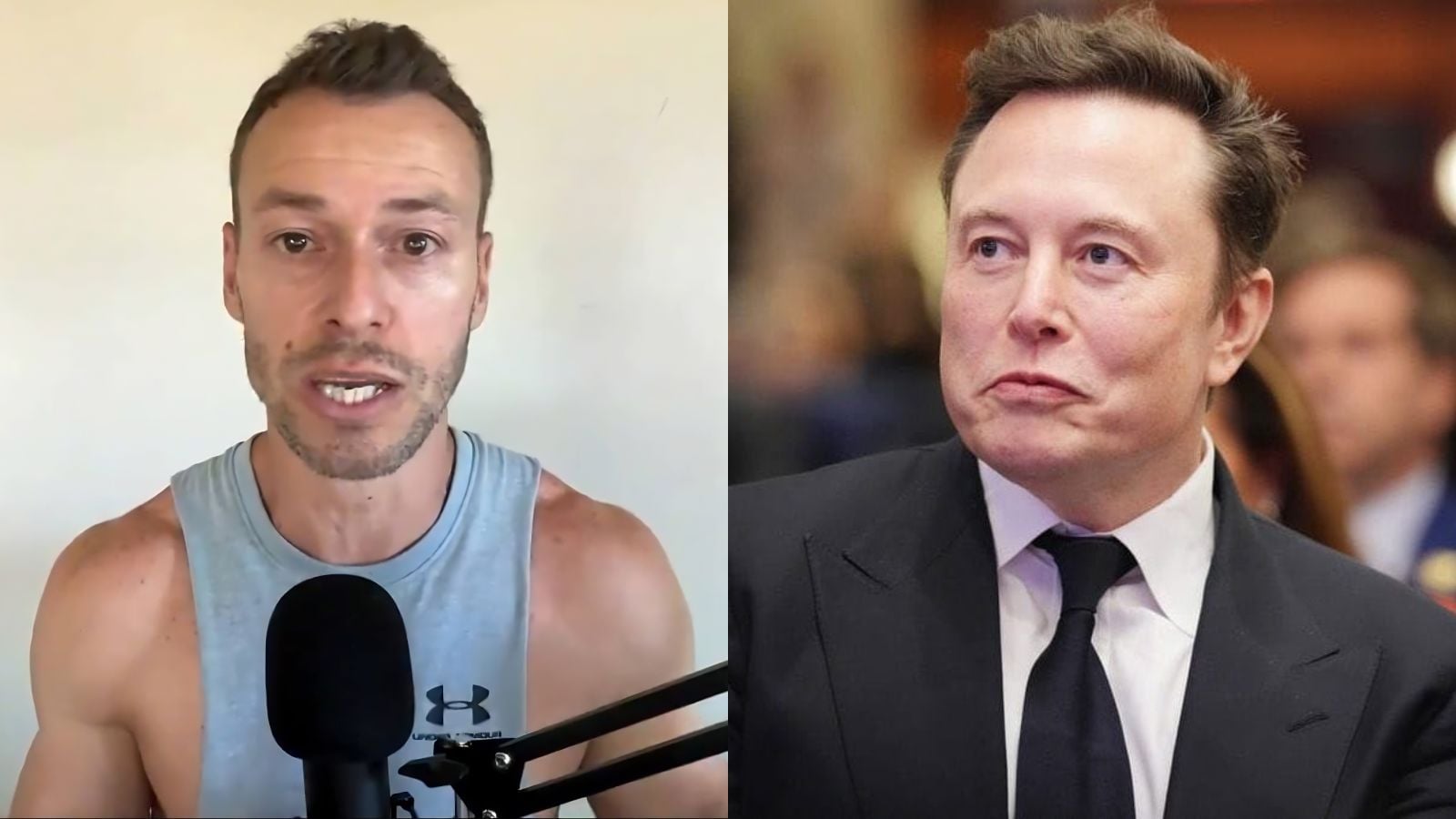
A longtime Brian Krassenstein critic of Elon Musk shocked social media this week after revealing that he had purchased a Tesla Cybertruck — only to later announce that he had traded it in following intense backlash from followers.
The situation quickly turned into a viral debate about politics, consumer choices, environmental messaging, and whether people can separate products from the personalities behind them.
Krassenstein, who has publicly clashed with Musk for years online, said his original decision had nothing to do with politics and everything to do with safety and practicality for his family.
Krassenstein Said Safety Data Led Him to the Cybertruck
In his first post, Krassenstein acknowledged that the purchase would likely anger some people who follow him.
“I might get hate for this too but I bought a Cybertruck,” he wrote.
He explained that having a young family played a major role in the decision.
“With a young family, safety was important and so is not polluting the atmosphere with $5 a gallon gasoline.”
Supporters of Tesla quickly pointed out that the Cybertruck currently holds both an IIHS Top Safety Pick+ award and a 5-star NHTSA safety rating, making it one of the most highly rated pickup trucks in the United States in terms of crash safety.
For many Musk supporters, the moment represented something bigger than just one purchase. They argued it showed that even critics are being pulled toward Tesla products because of performance, safety data, and technology.
I might get hate for this too but I bought a Cybertruck.
With a young family, safety was important and so is not polluting the atmosphere with $5 a gallon gasoline. pic.twitter.com/XJqFqR6O9r
— Brian Krassenstein (@krassenstein) May 6, 2026
Backlash Followed Almost Immediately
The reaction online was swift and intense. According to Krassenstein, he lost around 6,000 followers after publicly revealing he bought the Cybertruck.
Several hours later, he announced that he had decided to trade it in.
“I’ve listened. I’ve reflected. I’ve grown,” he wrote.
Krassenstein said he replaced the Cybertruck with a gas-powered vehicle that he sarcastically described as being more aligned with the expectations of some followers.
“After losing 6,000 followers for buying a Cybertruck, I realized I needed a vehicle that better aligns with my followers’ environmental expectations and moral values.”
“So I traded it in for a beauty that gets 7 MPG and personally accelerates glacier melt every time I tap the gas pedal.”
He added:
“The good news is it has absolutely no connection to Elon Musk.”
The Situation Sparked Debate Beyond Just Cars
The exchange quickly evolved into a broader conversation about political tribalism and consumer behavior.
Some people argued that refusing to buy a product solely because of a CEO’s politics makes little sense if the product itself performs well.
Others insisted consumers absolutely should factor in the beliefs, statements, and political influence of powerful corporate figures when making purchasing decisions.
Krassenstein’s comments appeared aimed directly at what he sees as ideological inconsistency. His remarks suggested that some critics would rather support a less environmentally friendly vehicle than be associated with anything connected to Musk.
That tension has increasingly surrounded Tesla in recent years as Musk’s political profile has grown more polarizing.
I’ve listened. I’ve reflected. I’ve grown.
After losing 6,000 followers for buying a Cybertruck, I realized I needed a vehicle that better aligns with my followers’ environmental expectations and moral values.
So I traded it in for a beauty that gets 7 MPG and personally… https://t.co/O9Ia2axqc3 pic.twitter.com/nBD80T5j0P
— Brian Krassenstein (@krassenstein) May 7, 2026
Tesla’s Brand Has Become Increasingly Political
Tesla was once embraced almost universally by environmentally conscious and progressive consumers. But Musk’s political commentary, ownership of X, and support for conservative causes have dramatically shifted public perception around the brand.
For supporters, Musk represents innovation, free speech, and technological ambition.
For critics, he has become a deeply divisive political figure whose influence extends far beyond cars and rockets.
That divide has created unusual moments like this one, where even a vehicle purchase can trigger major online backlash.
At the same time, Tesla supporters often argue that the company’s products continue to attract buyers across ideological lines because of performance, charging infrastructure, software integration, and safety ratings.
A Culture War Now Surrounds Even Car Purchases
What began as a simple vehicle purchase turned into another example of how politically charged consumer decisions have become in the social media era.
Krassenstein’s experience highlighted how brands tied to polarizing public figures can create pressure from both supporters and critics alike.
The incident also underscored the unusual position Tesla now occupies in American culture. The company is no longer viewed by many people as just an automaker. For supporters and critics alike, it has become wrapped up in larger battles involving politics, identity, technology, and ideology.
Do you think consumers should separate products from the politics of the people behind them, or should a CEO’s public image influence buying decisions?